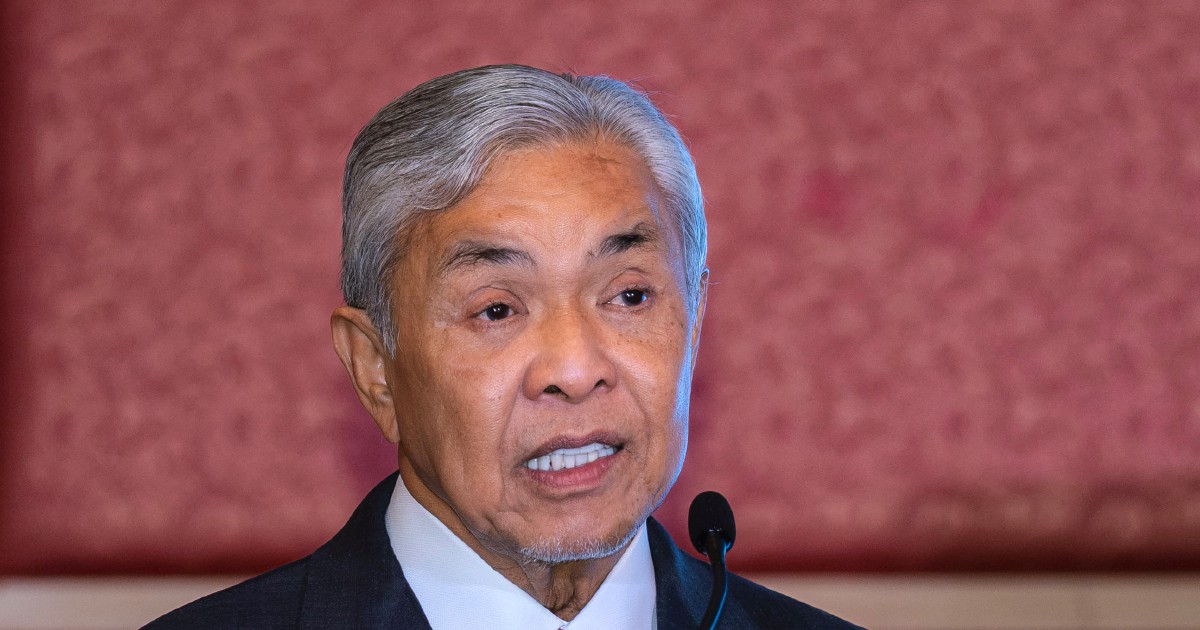
The Immigration Department stands at a critical juncture, according to Deputy Prime Minister Datuk Seri Dr Ahmad Zahid Hamidi, who has articulated an ambitious vision to reshape the institution's role within Malaysia's broader development framework. Speaking in Cyberjaya, Zahid challenged the department to move decisively beyond its established function as the nation's gatekeeper and instead position itself as a multifaceted institution capable of driving economic prosperity whilst fortifying national security objectives.
This reframing of the Immigration Department's mandate reflects growing recognition within Malaysia's leadership that border management agencies can serve multiple strategic purposes simultaneously. Rather than operating solely as enforcement and regulatory bodies, modern immigration systems increasingly influence trade facilitation, foreign investment patterns, and the movement of skilled labour—all critical components of economic competitiveness in Southeast Asia's interconnected regional economy. By recalibrating the department's priorities, Malaysia appears intent on harnessing immigration policy as a development tool whilst maintaining rigorous security protocols.
The four mandates outlined by Zahid represent a comprehensive transformation agenda that acknowledges contemporary challenges facing Malaysia's economy and security landscape. The first pillar emphasises the department's potential to facilitate legitimate economic activity by streamlining border processes and enabling smoother movement of goods, services, and talent. This approach recognises that efficient immigration administration reduces transaction costs for businesses, improves Malaysia's competitiveness relative to regional competitors, and signals to international investors a professional, modern governance framework.
Strengthening national security forms the second critical mandate, representing the department's enduring core responsibility reimagined for the contemporary threat environment. As transnational organised crime, human trafficking, and irregular migration present escalating challenges across Southeast Asia, the Immigration Department must deploy sophisticated intelligence, data analytics, and international cooperation mechanisms to identify and mitigate security risks. This mandate acknowledges that security and facilitation need not be mutually exclusive—rather, professional immigration administration enhances both objectives through targeted screening and information-sharing protocols.
The third mandate centres on digital transformation, positioning the Immigration Department as a leader in technological modernisation across Malaysia's public sector. By implementing advanced systems for visa processing, biometric identification, risk assessment, and inter-agency data sharing, the department can dramatically improve efficiency whilst enhancing transparency and reducing corruption vulnerabilities. Digital infrastructure also enables the department to handle increased transaction volumes without proportional increases in staffing, improving fiscal sustainability whilst extending services to remote areas where many Malaysian citizens and foreign visitors require immigration services.
Zahid's articulation of these mandates signals the government's acknowledgment that institutional silos within Malaysia's bureaucracy must become more permeable and cooperative. The Immigration Department cannot achieve its expanded mandate operating in isolation; it requires coordination with the Ministry of International Trade and Industry regarding foreign workers and investment facilitation, collaboration with security agencies on threat assessment, and partnership with the Digital Economy Corporation and other technology-focused entities on system modernisation. This integrated approach reflects sophisticated governance thinking about how institutions can simultaneously serve multiple national objectives.
For Malaysia's business community, particularly those engaged in international commerce, tourism, and foreign direct investment, these mandates carry significant practical implications. A more responsive, digitally sophisticated Immigration Department could substantially reduce delays in visa processing, improve predictability in border operations, and signal to potential investors Malaysia's commitment to modern administrative standards. Given the competitive dynamics within ASEAN, where Singapore, Thailand, and Indonesia are simultaneously upgrading their immigration systems, Malaysia's evolution in this domain influences its relative attractiveness as an investment and business destination.
The security dimensions of Zahid's vision also reflect Malaysia's position within increasingly complex regional security arrangements. Enhanced immigration administration supports Malaysia's participation in intelligence-sharing frameworks, counter-terrorism cooperation, and regional migration management initiatives. By professionalising immigration operations and deploying contemporary technology, Malaysia strengthens its capacity to contribute meaningfully to regional security cooperation whilst protecting domestic interests against transnational threats that frequently exploit porous or inefficient border management systems.
Digital transformation of the Immigration Department carries particular significance for Malaysia's aspirations within the broader digital economy landscape. A department operating at technological frontiers serves as demonstration of Malaysian capability in systems integration, cybersecurity, and citizen-centric digital service delivery. Successful implementation of advanced immigration technology platforms can generate exportable expertise and solutions that contribute to Malaysia's position as a regional technology and innovation hub. Additionally, modernised systems create data assets valuable for policy analysis and strategic planning across multiple government domains.
Implementing this comprehensive vision requires sustained institutional commitment, adequate resource allocation, and organisational leadership capable of navigating the complexities of simultaneous expansion across multiple operational domains. The challenge lies not merely in articulating ambitious mandates but in translating them into concrete operational improvements that measurably enhance both economic facilitation and security outcomes. This demands investment in personnel capability development, technology infrastructure, process redesign, and performance management systems that reward both efficiency and security excellence.
The announcement reflects Malaysia's recognition that in an interconnected regional economy and increasingly complex security environment, immigration administration represents far more than routine border control. Successfully executing Zahid's four mandates could position the Immigration Department as a model institution within Malaysia's public sector—simultaneously demonstrating that government bodies can become drivers of economic growth whilst maintaining security vigilance. For Malaysian residents, businesses, and visitors, this transformation promises a more responsive, efficient, and professionally administered immigration system aligned with contemporary international standards.

