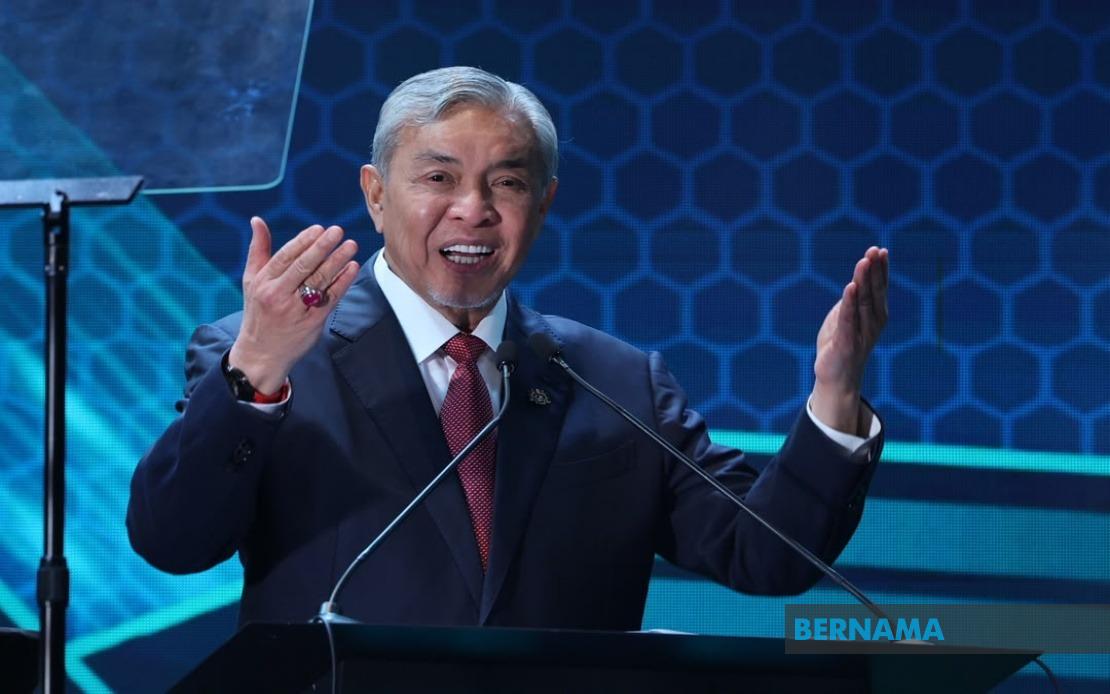
Deputy Prime Minister Datuk Seri Dr Ahmad Zahid Hamidi has laid out an ambitious roadmap for Malaysia's Immigration Department (JIM), calling for the agency to evolve from a traditional border control body into a strategic institution that simultaneously drives economic competitiveness and strengthens national security. Speaking at the 2026 Immigration Day celebration in Cyberjaya on July 21, Ahmad Zahid presented a four-point mandate designed to guide JIM's comprehensive transformation, framing the initiative as essential for positioning Malaysia competitively in an increasingly complex global landscape.
The Deputy Prime Minister articulated that JIM's evolution cannot proceed through piecemeal reforms or ad-hoc initiatives. Instead, he emphasised the need for a unified strategic vision embedded across all departmental policies, systems and operational procedures. This holistic approach reflects recognition that siloed improvements often fail to achieve systemic change. Ahmad Zahid stressed that the immigration sector's role extends far beyond processing travel documents and conducting border inspections—it must become integral to national economic strategy whilst maintaining robust security frameworks.
The first pillar of this mandate addresses economic facilitation, directly acknowledging that immigration procedures significantly influence foreign investment decisions. Ahmad Zahid highlighted how inefficient processes, unnecessary delays and bureaucratic complexity undermine Malaysia's attractiveness as an investment destination. He cited the United Arab Emirates as a comparative model, pointing to its integrated approach linking immigration policy with talent attraction and investment promotion through mechanisms such as its Golden Visa programme offering extended residency periods. The UAE achieved record foreign direct investment of RM196.6 billion in 2025, securing ninth position globally as an investment destination for the fourth consecutive year—a benchmark Ahmad Zahid positioned as worthy of emulation.
Securing national borders whilst facilitating legitimate economic movement represents a delicate balance that Ahmad Zahid recognised requires sophisticated operational frameworks. He acknowledged that contemporary security threats operate across borders with unprecedented speed and complexity, rendering traditional reactive enforcement models inadequate. Migrant smuggling operations have become increasingly sophisticated criminal enterprises, whilst human trafficking networks continuously evolve their methods. These developments necessitate intelligence-driven, proactive security strategies that transcend departmental silos, requiring close coordination amongst all national enforcement bodies rather than isolated JIM operations.
Digital transformation constitutes the third strategic pillar, with Ahmad Zahid emphasising that technology adoption must transcend mere efficiency gains. He advocated for leveraging big data analytics, artificial intelligence, predictive analytics systems, biometric identification technologies and smart border infrastructure to enable faster, more accurate and secure decision-making processes. This technological framework would enable JIM to shift from reactive to predictive security postures, identifying potential threats before they materialise. Rather than simply accelerating existing processes, Ahmad Zahid envisioned technology enabling the department to fundamentally rethink operational approaches and service delivery models.
The integrity and professionalism pillar reflects concern that enforcement authority can be misused or undermine public confidence. Ahmad Zahid stressed that JIM personnel must exercise disciplined judgment, comply rigorously with established procedures and demonstrate moral courage in making decisions aligned with institutional values rather than external pressures. This emphasis on principled conduct acknowledges that departmental reputation depends not merely on security effectiveness but on demonstrating consistent professionalism, transparent decision-making and humanitarian sensitivity in handling vulnerable populations including asylum seekers and trafficking victims.
Ahmad Zahid's framing positions immigration policy as foundational infrastructure for national competitiveness, reflecting broader regional trends where Southeast Asian governments increasingly recognise talent mobility and investment inflows as critical development drivers. Malaysia's positioning as a regional financial and technology hub depends substantially on attracting skilled international workers and facilitating business operations, making streamlined immigration administration a competitive necessity. The Deputy Prime Minister's emphasis on learning from UAE precedents suggests receptiveness to international best practices whilst tailoring applications to Malaysian contexts.
The transformation mandate carries significant implications for Malaysian business communities, particularly technology firms, multinational corporations and professional service providers dependent on international mobility. Companies frequently cite immigration bureaucracy as a deterrent to regional headquarters establishment or talent recruitment. Enhanced efficiency in visa processing, work permit issuance and skilled migration pathways could substantially improve Malaysia's competitive positioning against regional competitors including Singapore, Thailand and Vietnam, each aggressively pursuing foreign investment and talent attraction.
Security considerations remain paramount given Malaysia's geographical position and persistent transnational challenges including people smuggling, irregular migration and document fraud. Ahmad Zahid's emphasis on intelligence-driven operations and technological integration suggests acknowledgment that conventional border control resources prove insufficient against sophisticated criminal networks. Predictive analytics and biometric systems could enhance detection capabilities whilst reducing processing delays for legitimate travellers and investors. This dual mandate—simultaneous security strengthening and facilitation expansion—requires sophisticated calibration to avoid recreating the delays and inefficiency that currently undermine competitiveness.
The presence of Chief Secretary Tan Sri Shamsul Azri Abu Bakar and other senior government officials underscored administrative commitment to this transformation agenda. However, success requires sustained resource allocation, institutional culture change and inter-agency coordination extending beyond rhetorical endorsement. JIM personnel must navigate the inherent tension between security caution and facilitation imperatives, requiring comprehensive training in risk-based decision making and customer service orientation alongside security protocols.
Ahmad Zahid's vision positioning JIM as a strategic institution serving triple functions—security sentinel, economic catalyst and public trust symbol—represents ambitious institutional transformation. Realising this mandate requires moving beyond traditional civil service paradigms that compartmentalise functions and prioritise process compliance over outcomes. The coming years will reveal whether this strategic framework translates into tangible improvements in processing speeds, investment facilitation, security outcomes and public confidence. Malaysia's economic trajectory and regional competitiveness may increasingly hinge on whether JIM successfully navigates this complex transformation agenda.

