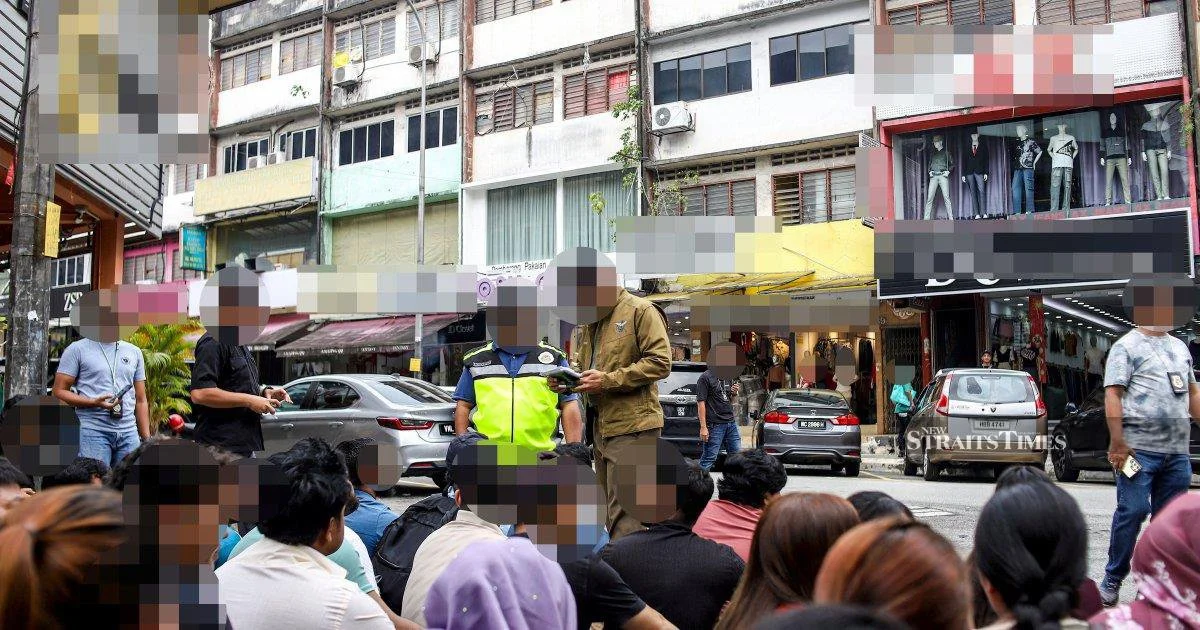
Immigration authorities conducted a substantial enforcement operation in Kuala Lumpur's Jalan Kenanga precinct today, apprehending 111 undocumented migrants working within the area's sprawling wholesale clothing sector. The coordinated raid reflects ongoing efforts by Malaysian immigration agencies to tighten border control and workplace compliance across the capital's commercial districts.
Jalan Kenanga has long established itself as a vital hub for Malaysia's garment wholesale trade, serving as a distribution point for locally manufactured and imported apparel destined for retailers throughout the nation. The concentration of labour-intensive operations across numerous shops and warehouses has historically presented enforcement challenges, particularly regarding undocumented workers and irregular employment arrangements.
The scale of today's operation underscores the persistent challenge posed by undocumented migration within Malaysia's informal economy sectors. While precise figures on irregular migration remain contested, authorities and civil society observers agree that substantial numbers of undocumented workers operate across manufacturing, retail, construction, and domestic service sectors. The wholesale clothing industry, characterised by rapid turnover and fragmented supply chains, has proven particularly susceptible to such arrangements.
Such enforcement sweeps typically generate complex questions about the underlying economics driving irregular employment. Wholesale traders operating on thin margins face competitive pressure to minimise labour costs, while migrant workers—many fleeing poverty or conflict in source countries—accept precarious conditions lacking legal protections or formal contracts. This structural mismatch between labour demand and supply creates conditions where undocumented employment persists despite regulatory frameworks and periodic enforcement actions.
Immigration operations of this magnitude require significant resource deployment and coordination among federal and state authorities. Planning typically involves intelligence gathering, surveillance, and timing to maximise apprehension rates whilst managing public order considerations. The targeting of specific commercial precincts suggests that authorities maintain intelligence about irregular employment concentration, allowing them to focus limited enforcement resources strategically.
Detained migrants face processing through the immigration system, including identity verification, documentation review, and consideration of their cases under Malaysia's immigration legislation. Those confirmed as undocumented typically proceed through formal deportation procedures, though practical complexities often extend detention periods. Processing costs borne by the government and humanitarian concerns regarding detainee conditions have periodically prompted policy discussions among Malaysian stakeholders.
For affected businesses, enforcement operations create operational disruptions and potential liability exposures. Legitimate traders complying with employment regulations may face labour supply disruptions when raids remove workers from circulation. This reality incentivises formal compliance whilst simultaneously creating competitive disadvantages for ethical employers contending with competitors utilising undocumented labour. The enforcement environment thus generates ongoing tensions within affected industries.
Regional context remains significant. Malaysia receives substantial migrant flows from Bangladesh, Indonesia, Myanmar, and other neighbouring economies, reflecting wage differentials and limited local opportunities in source countries. While Malaysia's legal migrant worker programme processes hundreds of thousands annually, parallel undocumented flows persist. This coexistence of regulated and irregular migration pathways reflects partly the formal programme's constraints and applicant processing delays, partly structural labour demand in sectors where documented workers prove unavailable or unaffordable.
Immigration enforcement priorities have evolved reflecting political attention and resource allocation decisions. Periods of heightened enforcement activity alternate with relative lulls, creating uncertainty for affected workers and employers. Consistent policy application would theoretically encourage compliance, though implementation inconsistencies sometimes undermine deterrent effects.
The Jalan Kenanga operation carries implications for Malaysian supply chains and consumer prices. Uncertainty about labour cost structures and enforcement environment may influence business location decisions, investment patterns, and pricing strategies. Wholesale traders may respond through formalisation efforts, automation investments, or relocation to less-monitored jurisdictions—outcomes with divergent social and economic consequences.
For workers detained today, outcomes remain uncertain. Source country embassies provide varying levels of consular support, whilst individual cases may involve complex circumstances including family separations and economic desperation. NGOs monitoring migrant welfare have consistently flagged concerns regarding detention conditions and deportation procedures.
Moving forward, Malaysia faces strategic choices regarding migration governance. Comprehensive labour formalisation, genuinely accessible legal pathways, and enforcement consistency could theoretically reduce irregular migration's appeal. However, such approaches require sustained investment, political consensus, and fundamental economic restructuring—challenging aspirations in contexts of competing priorities and political constraints. Today's operation thus represents tactical enforcement within a system producing persistent tensions between labour market realities and regulatory frameworks.

