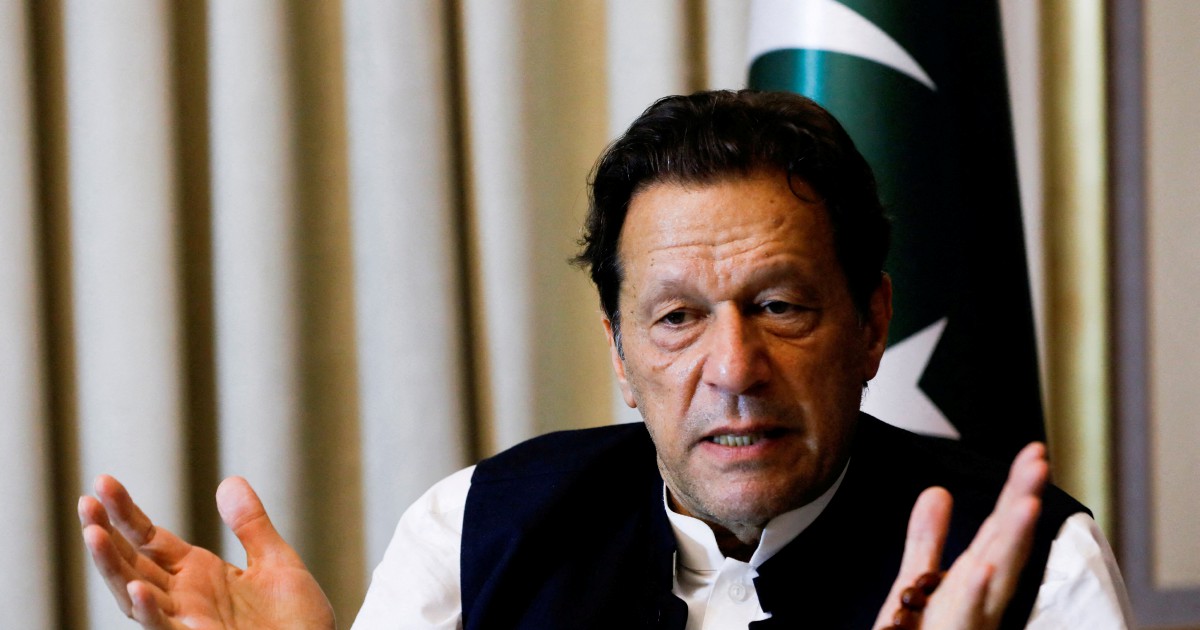
Former Pakistani Prime Minister Imran Khan has been returned to custodial detention after undergoing a medical examination at a health facility in the capital, Islamabad, pursuant to judicial orders, according to statements from government officials on Friday.
The cricketer-turned-politician's temporary release for medical purposes and subsequent return to custody reflects the intensifying legal battles that have characterised Pakistan's political landscape since his removal from office in April 2022. Khan's detention represents a critical flashpoint in the country's ongoing constitutional and political crisis, with his legal status remaining contested among rival factions within Pakistan's political establishment.
Khan's journey from sports celebrity to political leader has been marked by considerable volatility. His rise to prominence was built on anti-corruption messaging that resonated with younger voters seeking change, but his tenure as prime minister proved turbulent. Since losing office, he has faced mounting legal challenges across multiple jurisdictions, accusations he contests vehemently, and periodic detention that his supporters characterise as politically motivated persecution.
The court-mandated medical evaluation reflects standard procedural requirements within Pakistan's judicial framework, yet it also signals the contested nature of his detention. Such medical assessments are typically ordered when questions arise regarding a detainee's health status or conditions of confinement. The fact that Khan underwent examination and was subsequently returned to jail suggests judicial confirmation that no exceptional circumstances warranted his release or transfer to alternative custody arrangements.
Pakistan's political ecosystem has grown increasingly fractious, with Khan's arrest and detention serving as a focal point for broader grievances about institutional governance and democratic accountability. His Pakistan Tehreek-e-Insaf (PTI) party maintains substantial grassroots support despite organisational challenges, and his legal predicament has energised his political base, which views his prosecution as evidence of institutional capture by rival political forces.
The situation carries significant ramifications for Pakistan's democratic trajectory and regional stability. Khan's detention has triggered demonstrations and political mobilisation by his supporters, creating periodic unrest in major urban centres. His case has also drawn international attention from human rights organisations and foreign governments concerned about the independence of Pakistan's judiciary and the treatment of political detainees.
From a Southeast Asian perspective, Pakistan's internal political turbulence matters considerably. The country remains a crucial counterbalance in regional geopolitics, and instability there can have cascading effects on security arrangements, trade patterns, and broader Indo-Pacific dynamics. Malaysian observers and policymakers monitor Pakistan's political developments closely given the countries' historical ties, shared Islamic heritage, and interconnections within the Organisation of Islamic Cooperation framework.
Khan's legal battles span multiple charges, including alleged violations of anti-corruption statutes and allegations surrounding his personal conduct. His defence team has consistently argued that prosecutions lack substantive foundation and represent weaponisation of the judiciary for partisan advantage. These arguments have found receptive audiences among international observers and within segments of Pakistan's civil society community.
The medical examination ordered by the court may also address concerns about detention conditions or Khan's health status raised by his legal representatives. Such court-ordered assessments can serve multiple purposes within judicial proceedings, including establishing baseline health documentation and ensuring compliance with international standards regarding prisoner welfare.
Khan's return to custody after medical evaluation suggests that judicial authorities found no grounds for alternative arrangements. This decision will likely intensify political tensions in Pakistan, as his supporters view continued detention as evidence of systematic persecution. The incident underscores the fragility of Pakistan's institutional arrangements and the extent to which legal processes have become entwined with high-stakes political competition.
The broader context of Khan's detention includes concerns about judicial independence in Pakistan. International observers have questioned whether the court system can function impartially when prominent political figures face prosecution in an environment of deep partisan division. These questions extend beyond Khan's individual case to encompass fundamental issues about rule of law and institutional credibility.
As Pakistan navigates its political future, Khan's situation remains emblematic of deeper structural challenges facing the nation. His detention underscores tensions between competing visions of governance, institutional accountability, and democratic participation. For Malaysia and the broader Southeast Asian region, developments in Pakistan's political trajectory matter insofar as they affect regional security architectures and the stability of important geostrategic relationships.

