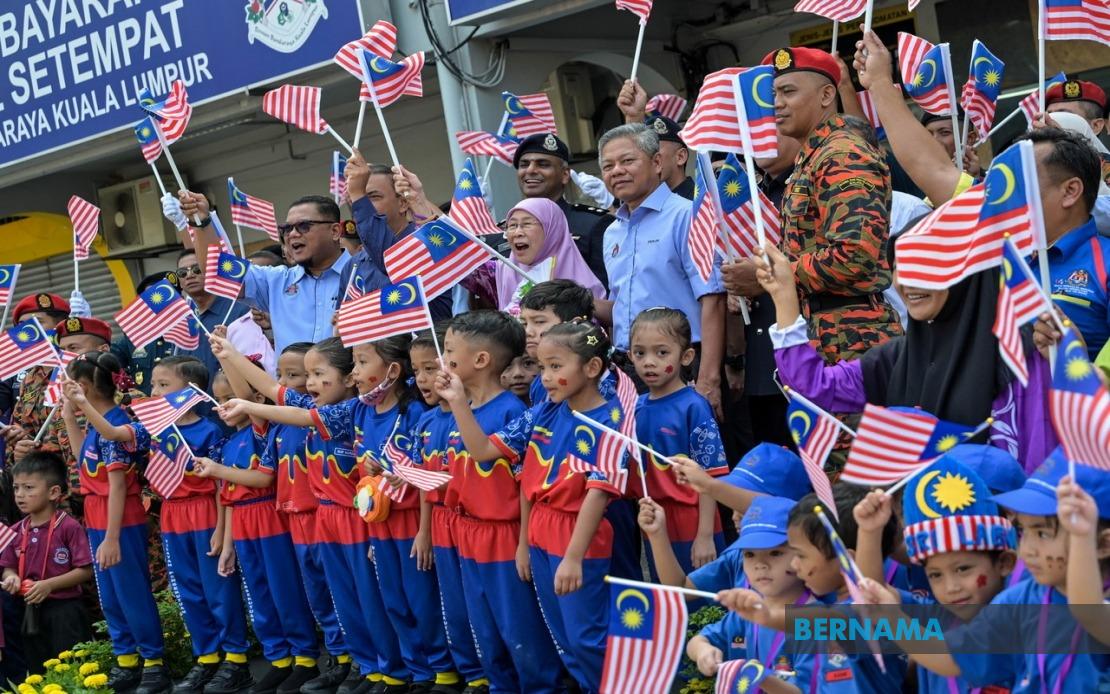
Prime Minister's wife Datuk Seri Dr Wan Azizah Wan Ismail has called on Malaysians to recognise independence as a collective obligation rather than merely a festive occasion, emphasising that sustaining the nation's peace, unity and social harmony demands continuous commitment from all citizens. Speaking at the Semarak Merdeka Programme in Kuala Lumpur on August 12, she underscored that the annual celebration carries profound significance beyond patriotic slogans and flag-waving, representing instead the profound struggles and sacrifices of those who secured the country's sovereignty.
Dr Wan Azizah, who serves as Member of Parliament for Bandar Tun Razak, articulated a vision of independence that transcends surface-level commemoration. She characterised true appreciation of freedom as an active engagement with the nation's history, acknowledging the immense efforts of previous generations in establishing Malaysia as a sovereign state. This framing transforms Merdeka from a one-day celebration into an ongoing responsibility, challenging citizens to internalise the values that independence represents and to apply those principles in their daily interactions and community participation.
The remarks align closely with this year's National Day theme, "Malaysia Madani: Jiwa Merdeka", which the government has crafted to reflect broader policy objectives around elevating living standards, ensuring equitable access to opportunities and reinforcing social cohesion across the nation's diverse population. By anchoring her comments within this thematic framework, Dr Wan Azizah positioned the celebration as an extension of government efforts to build a more inclusive and prosperous society rather than as a disconnected patriotic exercise.
During the event, Dr Wan Azizah highlighted the demographic composition of her constituency as a microcosm of Malaysia's multicultural fabric. Bandar Tun Razak, home to approximately 191,000 residents, comprises 60 per cent Malays, 24 per cent Chinese and eight per cent Indians according to data from the Malaysian Population and Housing Census. This diversity, she suggested, exemplifies the dynamic and harmonious character that Malaysians should strive to preserve and nurture, serving as a tangible reminder that unity across ethnic and religious lines remains achievable and essential.
The programme also featured Prime Minister's political secretary Datuk Azman Abidin, reflecting the government's attention to commemorative activities and their connection to broader governance initiatives. This official participation underscores how Independence Day celebrations are increasingly integrated with welfare and social support delivery, merging patriotic observance with practical assistance to vulnerable segments of the population.
Beyond the formal proceedings, Dr Wan Azizah undertook visits to three families residing in the Seri Pulau Pinang and Desa Tun Razak People's Housing Projects, where she distributed contributions from the Social Security Organisation (PERKESO) and the Federal Territories Islamic Religious Council (MAIWP). These engagements extended the Independence Day message into concrete acts of support for households facing economic hardship, demonstrating how government recognition of sacrifice transcends commemorative rhetoric when directed towards those enduring present-day struggles.
One beneficiary, K. Moganavalli, a 39-year-old widow whose husband Edwin Anthony Dass died unexpectedly on August 2, received a one-off Funeral Management Benefit of RM3,000 coupled with a monthly Survivor's Pension of RM1,118.33 from PERKESO, supplemented by Kotak Prihatin assistance. Moganavalli, previously engaged as a full-time housewife, now assumes sole responsibility for three young children following the loss of her spouse, who had worked intermittently as a lorry driver and Grab driver. Her gratitude for the assistance highlighted the tangible difference such programmes make to families confronting sudden economic disruption.
Another recipient, Khalijah Binti Nazir, illustrates the complex circumstances confronting Malaysia's lower-income households. At 64 years old, Khalijah abandoned her employment to provide full-time caregiving for two children, one of whom lives with a hearing impairment. She currently receives RM800 monthly in Baitulmal assistance, supplemented by RM300 delivered via Boost eWallet and RM150 under the Sumbangan Asas Rahmah scheme, whilst her son receives an additional RM100 monthly through the same assistance programme. Her situation underscores how independence and national development remain hollow concepts without robust safety nets protecting the most vulnerable.
The distribution of these social security benefits during Independence Day commemorations carries particular symbolic weight in the Malaysian context. It bridges the aspirational language of nation-building with acknowledgement of ongoing inequality and hardship, suggesting that true independence must extend beyond political sovereignty to encompass economic security and dignity for all citizens. This integration of welfare delivery with patriotic celebration reflects a recalibration of how national identity is constructed and reinforced in contemporary Malaysia.
Dr Wan Azizah's messaging resonates particularly among grassroots constituencies where economic vulnerability remains prevalent despite decades of national development. By framing independence as a shared responsibility for collective wellbeing rather than purely as historical commemoration, she articulated a vision of citizenship that demands active participation in nation-building. This approach positions Independence Day not as a moment of reflection on past achievements but as a launching point for renewed commitment to addressing contemporary challenges.
The emphasis on unity and harmony within this context appears particularly significant given Malaysia's ongoing navigation of religious, ethnic and socioeconomic divisions. By invoking Bandar Tun Razak's diversity as exemplary of harmonious coexistence, Dr Wan Azizah suggested that the country's strength derives not from homogeneity but from the deliberate cultivation of mutual respect and shared purpose across demographic lines. This framing offers an alternative to more exclusionary visions of national identity that periodically surface in Malaysian public discourse.
For Malaysian citizens and policymakers alike, the remarks underscore an important distinction between hollow patriotism and substantive engagement with national values. Independence, from this perspective, constitutes an ongoing project requiring vigilance, sacrifice and commitment from contemporary generations. The accompanying welfare assistance provided to Moganavalli and Khalijah demonstrates one mechanism through which government seeks to operationalise this vision, translating philosophical commitments to unity into material support for those most vulnerable to social fragmentation and economic marginalisation.

