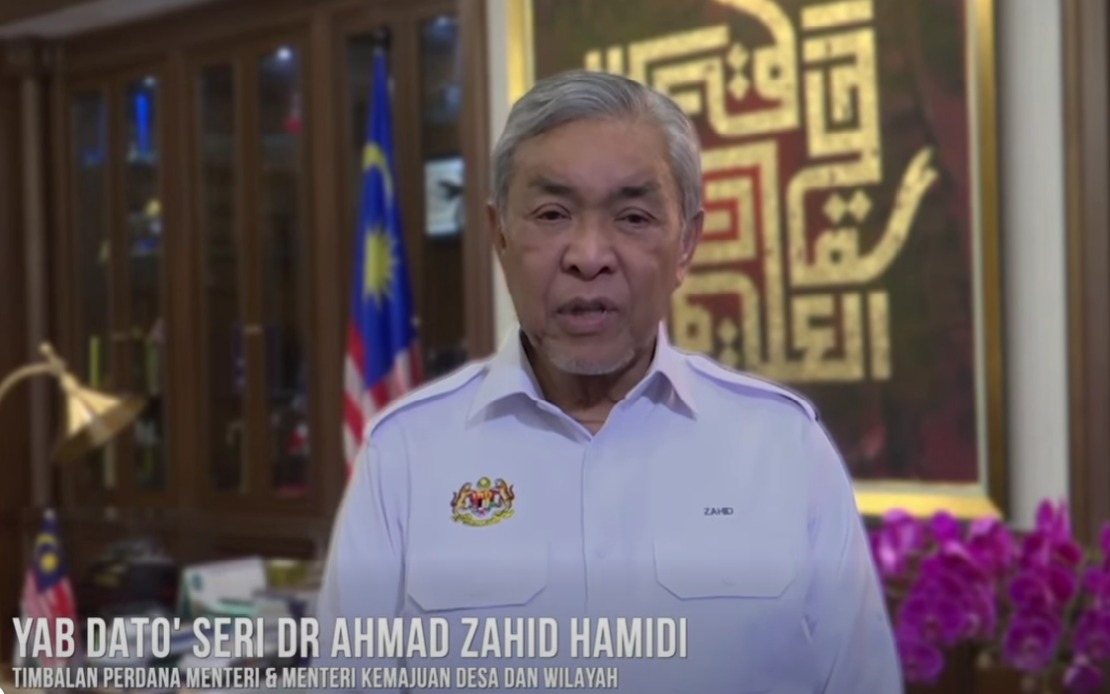
On the nation's 69th National Day, Deputy Prime Minister Datuk Seri Dr Ahmad Zahid Hamidi delivered a message that reframed what independence means for modern Malaysia, arguing that the struggle has moved beyond breaking free from colonial rule towards ensuring that freedom produces real improvements in people's daily lives. Speaking through a video message released on National Day, Ahmad Zahid contended that independence today cannot be measured solely by historical achievements but must instead manifest itself in concrete opportunities for Malaysian citizens to advance economically and socially.
The Deputy Prime Minister articulated a vision where independence becomes meaningful when young Malaysians gain access to practical skills, particularly through vocational and technical education and training (TVET) programmes that lead to well-compensated employment. This emphasis on skills development reflects broader concerns across Southeast Asia about preparing the workforce for evolving economic demands and technological change. Ahmad Zahid positioned technical education not as a secondary option but as a pathway to premium-paying positions, acknowledging the region's growing need for skilled workers in manufacturing, services, and emerging industries.
Beyond individual employment, Ahmad Zahid's framework for modern independence encompasses the creation of genuine entrepreneurial ecosystems where small business owners can expand their operations and increase household incomes. This perspective resonates with Malaysia's demographic reality, where significant segments of the population remain concentrated in lower-income brackets despite decades of development. His emphasis on enabling families to improve their living standards suggests recognition that national growth statistics often mask persistent disparities in wealth distribution and opportunity access across different regions and communities.
As Rural and Regional Development Minister, Ahmad Zahid underscored his department's mandate to extend development beyond urban centres, emphasising that national progress becomes hollow when prosperity concentrates in cities while rural and remote areas remain marginalised. This commitment to geographic inclusivity addresses a persistent challenge in Malaysian development policy, where infrastructure, investment, and services have historically concentrated along the more densely populated corridors. His contention that a nation's greatness depends not on what it builds but on whom it brings into the development process offers a humanistic counterpoint to purely GDP-focused measurement of progress.
The Deputy Prime Minister illustrated his argument with concrete examples of how infrastructure transformation can uplift communities, noting that a single road can revitalise a village, electricity can provide genuine hope to modest households, and educational facilities can nurture future aspirations. These observations anchor his vision in practical realities that rural Malaysians would recognise, moving beyond abstract principles to describe tangible improvements that address immediate needs. Such specificity strengthens the narrative that independence must deliver material change, not merely symbolic gestures.
Ahmad Zahid also connected independence to Malaysia's developing halal industry, positioning this sector as a vehicle for generating both national pride and genuine livelihood opportunities on the global stage. This reference reflects Malaysia's strategic positioning as a halal hub within a Muslim-majority region and the significant economic potential of halal-certified products and services in international markets. By framing the halal industry within independence narratives, he linked contemporary economic development to both religious and national identity, appealing to values that matter to Malaysia's Muslim majority while emphasising commercial viability.
The broader philosophical framework Ahmad Zahid presented situates independence as an ongoing journey rather than a fixed historical moment. This interpretation moves beyond commemorative rhetoric, suggesting instead that independence demands continuous commitment to nation-building, prosperity-sharing, and dignity-preservation. His assertion that independence requires Malaysians to hand over the nation to future generations in a more prosperous, fairer, and equitable condition establishes a multi-generational responsibility that extends the concept beyond the current administration.
Meanwhile, Deputy Prime Minister Datuk Seri Fadillah Yusof approached National Day messaging through a different but complementary lens, emphasising the need for Malaysians to liberate themselves from internal divisions, animosity, and prejudice that threaten national cohesion. Fadillah framed true independence not merely as political sovereignty but as an ongoing struggle to maintain harmony amid religious, cultural, and linguistic diversity. This framing acknowledges persistent social tensions that could undermine national stability if left unaddressed, particularly as economic pressures and information flows create new sources of conflict.
Fadillah's invocation of shared homeland, future, and hope despite acknowledged differences reflects Malaysia's foundational multiculturalism and constitutional bargains. His emphasis on continuing to uphold the Federal Constitution and Rukun Negara principles suggests these frameworks remain relevant anchors for managing diversity, though underlying social divisions suggest implementation remains contested. For regional observers, Malaysia's approach to maintaining unity amid pluralism offers lessons both positive and cautionary about managing inherited diversity within contemporary pressures.
The Malaysia MADANI framework that both ministers referenced aims to advance the nation beyond purely economic indicators towards comprehensive well-being. This concept, emphasising that prosperity must extend across society rather than concentrating among elites, addresses Southeast Asia's broader challenge of ensuring development benefits are widely distributed. For Malaysian citizens, MADANI represents an aspirational standard against which to evaluate government performance in coming years, particularly whether rhetoric translates into policy outcomes in education, healthcare, economic opportunity, and social protection.
Fadillah's call for Malaysians to give independence meaning through individual actions establishes citizen responsibility alongside government commitment. This distribution of accountability acknowledges that safeguarding unity, respecting differences, and preserving harmony depend on everyday choices by ordinary Malaysians, not merely on top-down directives. However, such messaging also risks placing burden on citizens to manage structural inequalities and political divisions that governmental action might better address.
Both ministers' National Day messages reflect a pivot in how Malaysia's leadership frames independence narratives for contemporary audiences. Rather than dwelling on historical liberation or celebrating institutional achievements, they emphasised that true independence must deliver tangible improvements in how ordinary Malaysians live. This reframing potentially resonates with younger generations less invested in historical independence narratives but acutely concerned with economic prospects, social fairness, and environmental sustainability. Whether such messaging translates into policy priorities that actually narrow disparities and expand opportunities will ultimately determine whether independence gains fresh meaning for coming generations.

