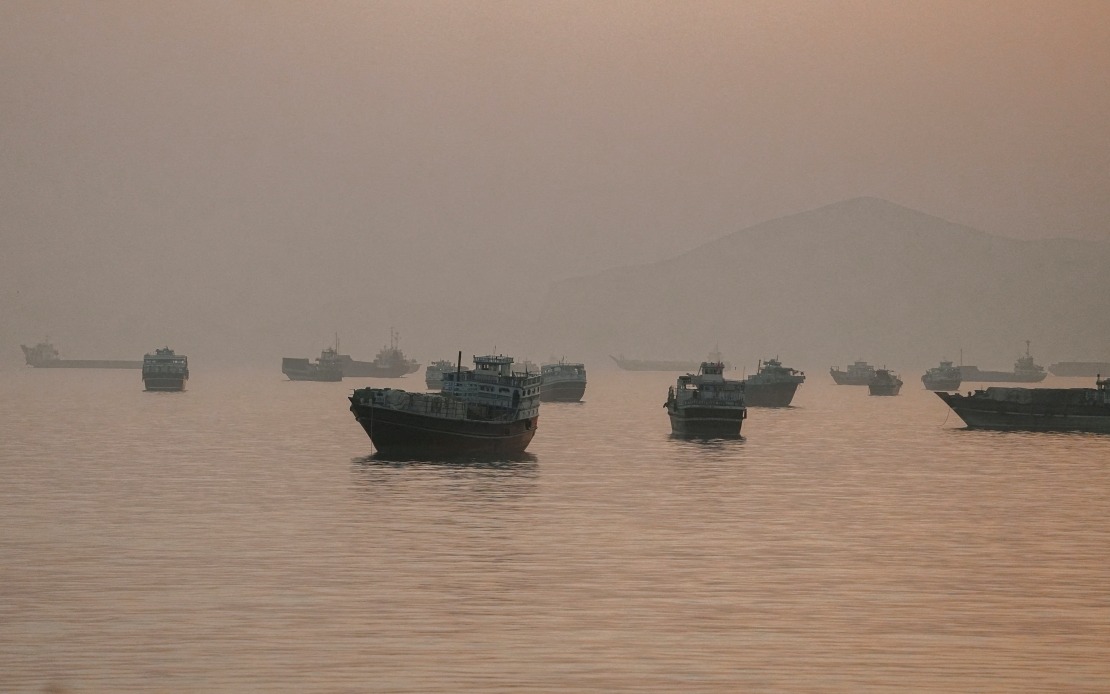
New Delhi has moved to protect its maritime workforce by imposing restrictions on Indian seafarers working aboard commercial vessels traversing one of the world's most strategically important and increasingly perilous shipping routes. The Directorate General of Shipping, India's primary maritime regulator, issued the directive late Wednesday, instructing shipowners, vessel managers and labour recruitment firms to refrain from assigning Indian crew members to ships undertaking passages through the Strait of Hormuz. The measure represents a significant intervention by India into the employment decisions of its maritime sector, underscoring the gravity of security threats now facing commercial shipping in the Persian Gulf.
The backdrop to this decision involves a sharp escalation in hostile activity targeting merchant vessels navigating the narrow waterway that separates Iran from Oman and serves as a critical chokepoint for global energy supplies. The authority cited a pattern of recent attacks on trading ships that have substantially amplified the danger profile for seafarers and commercial vessels operating within this geopolitically fractious zone. The sequence of incidents over a three-day window proved particularly alarming, with two Indian maritime workers losing their lives and several others sustaining injuries from attacks on various vessels in the area. These casualties have evidently prompted New Delhi to conclude that the risk calculus for deploying its nationals in the region has become untenable.
The underlying driver of deteriorating conditions in the Strait of Hormuz stems from renewed confrontation between the United States and Iran, which has markedly intensified instability throughout West Asia. The resumption of hostilities between Washington and Tehran has created an environment of heightened unpredictability, where merchant shipping has increasingly become caught in the crossfire of geopolitical rivalries. The waterway, through which approximately one-third of all globally traded oil transits, has transformed into a zone where commercial vessels face genuine hazard not from traditional piracy or accident, but from deliberate targeting by state or state-affiliated actors pursuing broader strategic objectives.
For Indian shipping companies and maritime labour providers, the directive creates immediate operational challenges. India possesses one of the world's largest maritime workforces, with hundreds of thousands of seafarers employed globally on international vessels. The Strait of Hormuz constitutes a significant transit route for many shipping lines, particularly those servicing Middle Eastern ports and the Indian subcontinent. Recruitment agencies that specialise in placing Indian crew members will now need to redirect placements away from vessels with scheduled Hormuz passages, potentially reducing income opportunities for workers whilst simultaneously constraining shipping operators' flexibility in crew assignments.
The prohibition reflects broader anxieties within India's maritime community regarding crew safety in conflict-adjacent waters. Unlike military vessels equipped with defensive capabilities and intelligence support, merchant ships operate with minimal protection and little advance warning of potential threats. Indian seafarers, like their counterparts from other nations, often work under contracts with limited recourse when they find themselves in deteriorating security situations. The government's intervention, therefore, addresses a fundamental asymmetry wherein private commercial interests might otherwise expose workers to uncompensated risks.
Regionally, India's action carries implications for Southeast Asian maritime interests as well. The Strait of Hormuz remains essential for shipping serving the broader Indo-Pacific, including the primary routes connecting Middle Eastern markets to Southeast Asian ports. Any sustained disruption to normal shipping patterns through the waterway generates ripple effects throughout regional trade networks. Malaysia, Singapore, Thailand and other ASEAN members with significant maritime sectors and seafaring populations may face analogous pressures to implement similar protective measures for their own crews, further constraining commercial shipping operations in an already volatile corridor.
The directive also highlights the vulnerability of global maritime commerce to geopolitical volatility. Despite the Strait's fundamental importance to international trade, its security remains hostage to the strategic calculations of regional powers. Insurance premiums for vessels transiting the waterway have already escalated substantially, reflecting the heightened risk assessments of underwriters. Additional restrictions on crew deployments could further elevate operational costs for shipping companies, ultimately rippling through to consumers via increased freight charges and commodity prices.
India's move represents a measured but firm assertion of responsibility toward its maritime workers, balancing commercial interests against human safety imperatives. The Directorate General of Shipping has essentially determined that the extraordinary security conditions now prevailing justify extraordinary protective action. This stance may encourage other maritime nations with substantial seafaring populations to undertake similar assessments of their own crew deployment practices in the region.
The timing of this announcement also signals India's broader positioning within West Asian developments. As a major regional power with significant economic interests throughout the Persian Gulf, India maintains relationships with both the United States and Iran. However, the protection of its seafarers takes precedence over diplomatic considerations, suggesting that New Delhi perceives the security situation as sufficiently acute to warrant unambiguous protective measures regardless of potential diplomatic ramifications.
Looking forward, the sustainability of this restriction will depend on whether maritime security conditions in the Strait of Hormuz stabilise or continue deteriorating. Should the attacks persist or intensify, additional maritime nations may implement comparable policies, potentially disrupting normal commercial shipping patterns. Conversely, if tensions ease and targeted incidents cease, India may eventually permit resumed crew deployments. For now, however, the government has clearly signalled that the safety of its maritime workforce supersedes the operational convenience of shipping companies and recruitment agencies.

