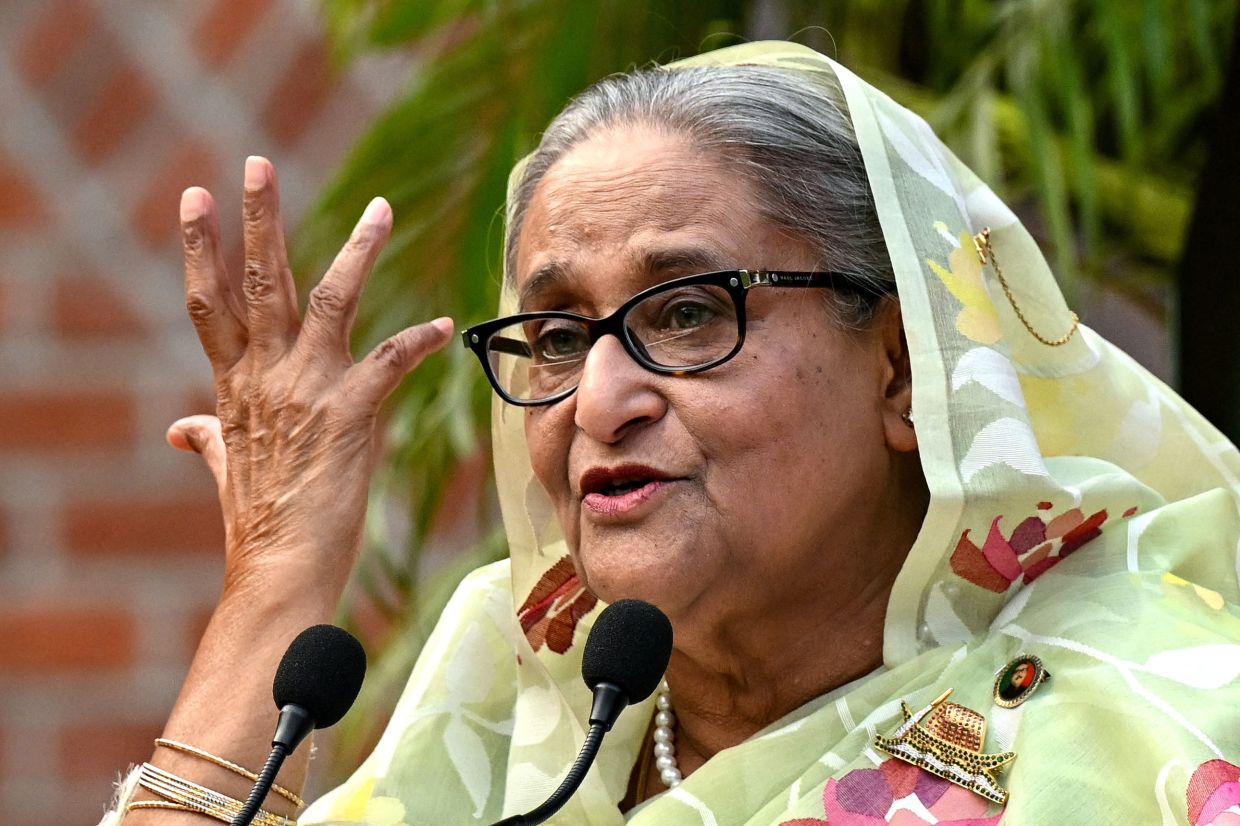
India's foreign ministry has moved to distance the government from a forthcoming virtual appearance by exiled Bangladesh Prime Minister Sheikh Hasina, stating that the event in New Delhi is entirely a private undertaking with no official involvement. Spokesperson Randhir Jaiswal told reporters on Wednesday that the Foreign Correspondents' Club of South Asia, a private media entity, is solely responsible for organising the speech marking the second anniversary of the student-led uprising that unseated Hasina's administration in 2024. The clarification came after Bangladesh formally requested that New Delhi explain its position on the address, signalling deep concern about allowing political activity by a fugitive leader on Indian soil.
Dhaka's immediate response has been to impose stringent restrictions on its own media landscape. Information Adviser Zahed Ur Rahman warned all Bangladeshi news outlets and social media platforms that broadcasting or publishing Hasina's speech would breach a December 2024 order issued by the International Crimes Tribunal. That directive explicitly prohibits dissemination of her statements, interviews, or any audio or video content featuring the former premier. The tribunal action represents an aggressive effort to prevent her message from reaching domestic audiences, reflecting the tension between Bangladesh's current government and its most prominent political opposition figure.
The 78-year-old former leader has been based in India since her government collapsed under mounting pressure from massive student demonstrations. She fled to New Delhi in August 2024 and has remained there ever since, despite Bangladesh's ongoing efforts to secure her extradition. Earlier this year, she received a death sentence in absentia from Bangladesh's International Crimes Tribunal on charges of crimes against humanity stemming from her administration's response to the 2024 protests. Hasina has rejected the verdict as legally invalid, maintaining that the proceedings lacked legitimacy and proper due process.
Wednesday's virtual event will mark Hasina's first public communication since departing Bangladesh, albeit delivered through a video link rather than in person. She is scheduled to appear alongside her son, Sajeeb Wazed Joy, and other speakers at the New Delhi gathering. Neither Hasina nor her team have disclosed specifics about what she plans to say, though the forum provides an opportunity for her to address international audiences and potentially reshape the narrative surrounding her government's fall. Her participation carries symbolic weight, suggesting she remains engaged in political matters despite her exile status.
Recent statements from Hasina's circle indicate she may be contemplating a return to Bangladesh. Speaking with Reuters last month, she suggested that she and members of her Awami League party intend to come back from exile sometime around December to face the judicial system directly. This prospective homecoming would represent a dramatic confrontation with Bangladesh's new administration and test how the government of Prime Minister Tarique Rahman handles the return of its most powerful political rival. Such a move would likely intensify domestic political tensions and complicate Bangladesh's already fragile post-uprising transition.
Abu Obaidha Arin, one of Hasina's aides, issued a defiant statement indicating that the event would proceed regardless of Bangladesh's objections. He argued that Dhaka's attempt to silence dissent cannot suppress voices that exist beyond its borders, framing the speech as an exercise in free expression. This position highlights the fundamental disagreement between the two sides over how international media platforms should handle statements by controversial political figures in exile. The aide's remarks underscore the determination of Hasina's supporters to maintain her political visibility and counter what they view as an unjust suppression of her perspective.
Bangladesh's Foreign Ministry has been pursuing a more diplomatic approach with India, even as it seeks to suppress domestic coverage of Hasina's activities. State Minister for Foreign Affairs Shama Obaed Islam stated that Bangladesh has repeatedly raised concerns with New Delhi regarding Hasina and other Awami League leaders making political statements from Indian territory. The government views such activities as potentially destabilising and worrying that permitting them could damage the bilateral relationship. Bangladesh has also formally requested India's cooperation in extraditing Hasina, though New Delhi has not yet acceded to these demands.
The diplomatic friction reflects broader tensions that have characterised relations between the two neighbouring nations since Hasina's ouster. The upheaval that toppled her government created significant domestic instability in Bangladesh and prompted concerns in India about the potential for radicalisation or anti-India sentiment within the interim administration that followed. However, both governments have recently signalled intentions to reset their relationship, with Bangladesh's new administration under Prime Minister Rahman suggesting a willingness to move beyond the immediate past and rebuild productive ties.
India's official stance of non-involvement in Wednesday's event appears designed to balance competing pressures. By categorising the speech as a purely private matter, New Delhi avoids direct endorsement of Hasina's political activities while simultaneously respecting principles of free expression and media freedom. This approach allows India to maintain its position as a destination for political exiles while avoiding the appearance of harbouring or supporting anti-Bangladesh political operations. The foreign ministry's statement notably included language disclaiming any endorsement of views that may be expressed at the forum, reinforcing the government's detachment.
Bangladesh's media ban raises serious questions about press freedom and the space for political discourse in the post-uprising period. By threatening sanctions against outlets that cover Hasina's speech, the government is using legal instruments to control information flows and shape the political narrative domestically. For Malaysian observers and media professionals, the situation illustrates how transitional governments navigating contentious political landscapes often resort to restrictive measures that can have longer-term consequences for democratic institutions and journalistic independence. The episode underscores the delicate balance between preventing destabilisation and preserving the institutional foundations necessary for authentic democratic development.
The scheduled Wednesday event takes on added significance given the broader regional context. Southeast Asia has witnessed multiple instances of former leaders seeking refuge abroad and remaining politically active, from Myanmar to Thailand. Bangladesh's determination to prevent Hasina's voice from reaching domestic audiences reflects anxiety about the staying power of political movements even after their leaders have been removed from power. The international dimension of this struggle—with virtual platforms and cross-border media flows making geographical boundaries increasingly porous—suggests that traditional tools of political control may prove less effective in the contemporary information environment.

