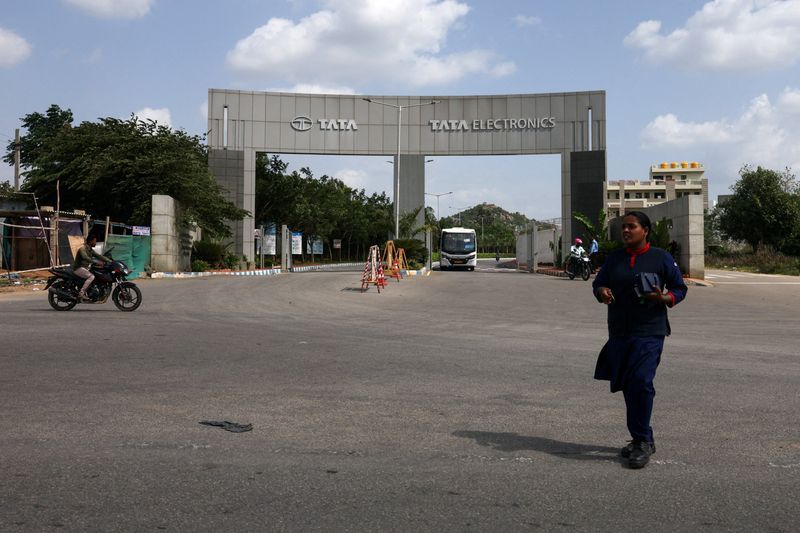
India's Ministry of Electronics and Information Technology has launched a formal investigation into a significant data breach affecting Tata Electronics, one of Apple's key manufacturing partners in the country. The incident, which came to light in early July, involved the theft and subsequent publication of sensitive documents related to Apple's forthcoming iPhone 18 Pro on the dark web. S. Krishnan, the ministry's IT secretary, confirmed the probe during a media briefing, marking the government's first official acknowledgment of what security researchers have identified as a coordinated ransomware attack targeting the multinational technology supply chain.
The compromised files represent a serious breach of Apple's notoriously secretive product development protocols. Among the materials posted by the ransomware group were detailed component lists, comprehensive supplier directories, and photographic documentation of the iPhone 18 Pro models. These documents reveal precisely which companies are manufacturing specific hardware components for the upcoming flagship device—information that Apple has consistently withheld from public disclosure and competitor oversight. The granular nature of this intelligence creates significant strategic exposure for the Silicon Valley giant, as competitors and counterfeiters alike could exploit the leaked supplier relationships and component specifications.
Tata Electronics holds considerable significance within Apple's global manufacturing ecosystem. As an Indian-based assembly and manufacturing partner, the company plays a critical role in the tech giant's strategy to diversify production away from China and strengthen supply chain resilience. The vulnerability of Tata's security infrastructure therefore carries implications that extend beyond a single company's data protection failure. It raises questions about whether India's manufacturing sector, increasingly central to Apple's long-term diversification plans, possesses adequate cybersecurity defences to protect proprietary technology and maintain the trust of multinational corporations. For Malaysia and other Southeast Asian nations attempting to attract similar investment, the incident serves as a cautionary reminder of the infrastructure and security requirements expected by global technology leaders.
The timing of the breach compounds its sensitivity. Apple is preparing to launch the iPhone 18 Pro and iPhone 18 Pro Max in September, making the exposed information highly valuable to market observers, competitors, and bad actors seeking to profit from advance knowledge of product specifications. The leaked documentation provides competitors with technical details that would normally be protected until official product announcements, potentially allowing them to accelerate their own development timelines or adjust market strategies. For supply chain partners and investors monitoring Apple's product roadmap, the leak undermines the company's carefully managed information asymmetry that typically provides significant first-mover advantages in the consumer technology market.
India's Computer Emergency Response Team, the country's nodal agency for cybersecurity and digital emergency response, has been formally notified and is coordinating the investigation alongside the Ministry of Electronics and Information Technology. This multi-agency approach reflects the severity with which India's government is treating the incident. The involvement of national cybersecurity authorities signals that Indian officials recognize this breach as having implications beyond private corporate interests—it affects India's reputation as a reliable technology manufacturing hub and raises broader questions about the country's capacity to protect sensitive intellectual property entrusted to domestic suppliers.
The ransomware group's operations appear to extend well beyond the Tata Electronics breach. Additional compromised materials from major technology companies, including Tesla, Qualcomm, and Taiwan Semiconductor Manufacturing Company (TSMC), have also been posted on the dark web by the same threat actor. This pattern suggests a sophisticated, well-resourced criminal organization conducting a coordinated campaign against the global technology supply chain. The breadth and depth of the targeting indicate these actors possess advanced capabilities for identifying and penetrating security systems across multiple large corporations, suggesting this may represent only the tip of a larger reconnaissance and exploitation effort.
In response to the security failure, Tata Electronics has engaged international forensic consultancy specialists to conduct a comprehensive audit of its security systems and investigate how the breach occurred. This decision to bring in external expertise reflects both the seriousness with which Tata is treating the incident and the likelihood that internal resources may be insufficient to fully understand the scope of the compromise. The forensic investigation will need to establish timelines for the breach, identify how many systems were affected, and determine what safeguards failed. For other companies in India's technology manufacturing sector, the incident will likely prompt urgent reviews of their own cybersecurity postures and supply chain protection measures.
The broader implications for Apple's manufacturing strategy merit consideration. The company has been investing heavily in expanding production capacity in India as part of its long-term effort to reduce dependence on China and create geographically distributed manufacturing networks. However, breaches of this magnitude could prompt Apple to reassess the pace of expansion and the security requirements it mandates for Indian suppliers. Other multinational technology firms considering India as a manufacturing destination may also reconsider their risk exposure. The incident thus has potential to influence foreign direct investment flows and manufacturing location decisions across the technology sector in South Asia and Southeast Asia.
For Malaysian stakeholders observing these developments, the Tata Electronics breach offers important lessons regarding cybersecurity infrastructure and institutional capability. As Malaysia seeks to position itself as a premium technology manufacturing and assembly hub, competing with India and other Southeast Asian nations, incidents like this underscore the competitive advantages that robust cybersecurity frameworks and proven data protection protocols can confer. Companies and governments in the region should view this incident as a demonstration that technology leadership requires not just manufacturing capacity, but demonstrable commitment to protecting intellectual property and maintaining the trust that multinational corporations depend upon when making location decisions for sensitive operations.
The investigation into the Tata Electronics breach will likely influence India's approach to regulating corporate cybersecurity standards and imposing mandatory security requirements on suppliers to multinational corporations. Policymakers in New Delhi may use the incident to justify stronger cybersecurity legislation, mandatory reporting requirements, and security certification frameworks for companies handling proprietary technology belonging to international firms. These regulatory developments could reshape the operational requirements and cost structures for technology manufacturing in India, with spillover effects on the competitiveness of the Indian supply chain compared to alternatives in Southeast Asia.

