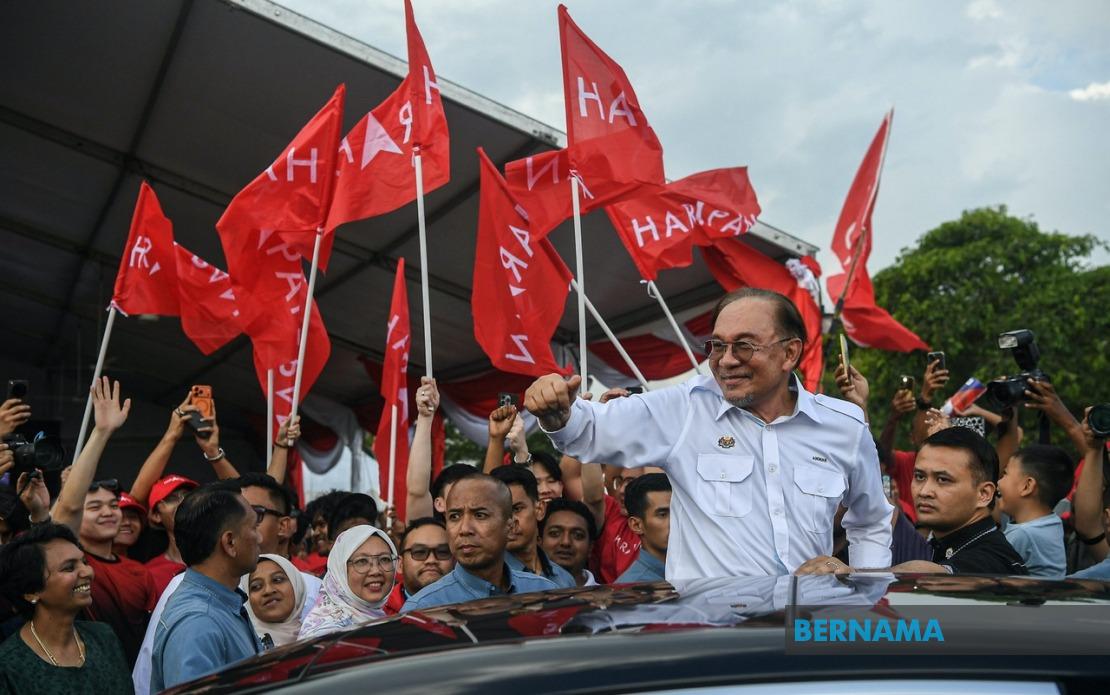
Dr Gunaraj George, a PKR Central Leadership Council member, has called on Johor's Indian community to base their electoral decisions on the demonstrable performance and policy achievements of Pakatan Harapan rather than succumbing to conventional political rhetoric. Speaking ahead of the 16th Johor state election, he argued that the Unity Government has successfully restored "Nambikei"—a Tamil word meaning confidence—among Malaysians from diverse backgrounds through its Malaysia MADANI agenda, which prioritises unity, justice and equitable opportunity for all citizens.
The appeal represents a strategic push to consolidate Indian support for the ruling coalition at a critical electoral juncture. Dr Gunaraj cautioned the community against allowing traditional political tactics centred on vague commitments to sway their judgment, instead urging voters to scrutinise concrete policy outcomes and implementation records. This framing positions the 2023 Unity Government administration as fundamentally different from its predecessors, emphasising substance over symbolism in its appeal to minority communities.
Prime Minister Datuk Seri Anwar Ibrahim's political philosophy, according to Dr Gunaraj, has consistently centred on dismantling the racial fault lines embedded in Malaysia's political structure. Throughout his career, Anwar has articulated a vision that national strength emerges through unity, justice and equal treatment regardless of ethnicity, religion or social standing. This ideological consistency, the PKR leader suggested, distinguishes the current administration's approach from race-based political paradigms that have historically dominated Malaysian governance.
Crucially, Dr Gunaraj contended that Malaysia's evolving economic and social complexities demand a political model transcending communal identity markers. Rather than perpetuating identity-based policy frameworks, the government operates on a principle-driven platform addressing concrete problems affecting all Malaysians. The MADANI agenda serves as the operational manifestation of this philosophy, providing the structural foundation for constructing a more inclusive, forward-thinking and cohesive nation. This argument attempts to reframe political competition away from traditional communal negotiations toward policy-centred governance.
Over the preceding three years, the administration has implemented multiple interventions targeting living standards across the population. These encompass cost-of-living relief measures, educational infrastructure enhancements, employment creation initiatives, entrepreneurial support frameworks and expanded social protection systems. For regional observers, this programme portfolio signals an attempt to address material grievances that transcend traditional communal divisions, potentially reshaping electoral mobilisation patterns in ethnically heterogeneous constituencies.
The government has directed specific resources toward Indian community advancement through several flagship initiatives. The Malaysian Indian Community Transformation Unit (MITRA) received a supplementary RM50 million allocation beyond its baseline RM100 million budget, representing concrete institutional investment in community development infrastructure. Simultaneously, the Tekun Nasional entrepreneur fund targeting Indian business owners expanded to RM100 million, while Amanah Ikhtiar Malaysia (AIM) secured RM100 million for women entrepreneur empowerment. In January, the Prime Minister announced RM50 million for Tamil educational institution development, collectively constituting what Dr Gunaraj characterised as historically unprecedented policy commitments.
Beyond headline fiscal allocations, Dr Gunaraj emphasised the tangible benefits flowing to Indian entrepreneurs and community members through various socio-economic development schemes, educational grants, vocational training opportunities and business incubation programmes. These initiatives purportedly demonstrate measurable welfare improvements translating government commitments into lived economic gains for individual beneficiaries and families. For Malaysian readers, the specificity of these claims invites verification against administrative implementation data and beneficiary testimonies.
The electoral context sharpens the political stakes underlying these assertions. Johor's 16th state election presents what Dr Gunaraj framed as a pivotal opportunity for communities to determine the state's developmental trajectory through informed electoral choice. The election requires voters to select a government demonstrating verifiable governance credentials, developmental commitment and tangible welfare improvements. This framing transforms electoral participation from a traditional communal loyalty exercise into a performance-based accountability mechanism.
Dr Gunaraj argued that Indian Malaysian voters have evolved into a more politically sophisticated electorate, evaluating parties through track record examination and policy assessment rather than historical allegiance patterns. This maturation allegedly reflects a fundamental shift in how minority communities approach political decision-making, prioritising empirical results over rhetorical promises. For Southeast Asian political analysts, such claims warrant scrutiny given persistent patterns of communal voting cohesion across the region, though Malaysian electoral dynamics do exhibit evidence of increasing swing voting among educated urban constituencies.
Pakatan Harapan contests all 56 Johor state seats through a coalition arrangement: PKR fields 20 candidates, Amanah contributes 19 and DAP provides 17 representatives. This distribution reflects coalition equilibrium negotiations and seat-sharing mathematics designed to maximise competitive advantage while maintaining intra-coalition balance. The breadth of PH's state-wide contestation reflects organisational confidence and demonstrates the coalition's capacity for comprehensive electoral mobilisation across diverse constituencies.
Dr Gunaraj's overarching message presents Indian community political participation as transitioning from identity-based bloc voting toward policy-driven electoral calculation. This rhetorical positioning attempts to reframe Pakatan Harapan as the natural vehicle for this transformation, offering material benefits, institutional investment and inclusive governance philosophy. Whether this narrative resonates with actual voter preferences depends substantially on whether allocated resources have demonstrably reached target beneficiaries and whether tangible living standard improvements are perceptible at household level.
For Malaysian readers evaluating these claims during state electoral campaigns, the critical questions centre on implementation fidelity and measurable outcomes. Have MITRA, Tekun Nasional and AIM initiatives genuinely expanded economic opportunities within the Indian community, or do bureaucratic bottlenecks and procedural complexities limit access to these funds? Have Tamil school enhancements translated into tangible educational quality improvements? Such verification requires examining independent programme evaluations and beneficiary satisfaction surveys rather than relying exclusively on political advocacy statements.

