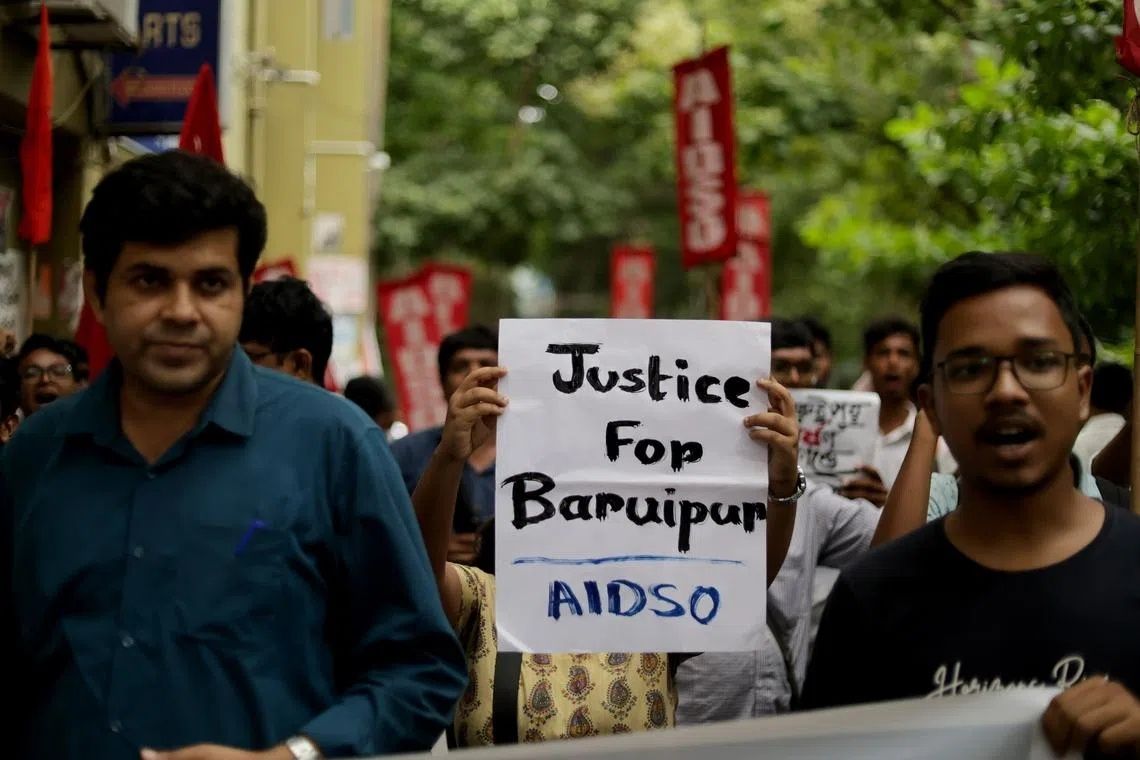
Indian police arrested 35 people on Friday for rioting and property damage during violent demonstrations this week in West Bengal, following the discovery of an 11-year-old girl's body in a pond. The discovery on July 5 sparked immediate unrest in Baruipur city, located roughly 30 kilometres south of Kolkata, after the child went missing the previous day. Over the subsequent days, angry crowds blocked thoroughfares and set vehicles ablaze as public fury mounted over the horrific crime.
State authorities reported that in the chaos of the initial protests, one person was killed by the crowd—someone investigators said had no connection to the case. Senior police officer Arvind Kumar Anand indicated that law enforcement continued to identify additional suspects through examination of viral social media footage. The scale of civilian anger reflected broader social tensions around child safety and the perceived inadequacy of police responses to such crimes across India.
In a separate development that has drawn international criticism, one of four men detained in connection with the girl's rape and murder was shot and killed by police. Prabhas Mondal died in the early morning hours of July 8 after attempting to flee while being escorted to the crime scene as part of the investigation process. Police characterised the shooting as occurring during an escape attempt, but such police killings in custody remain controversial in India and have drawn scrutiny from human rights organisations.
Mondal's mother publicly rejected her son's body after his death, stating in a television interview that she did not wish to bring it home given his actions. "The sin committed by my son, he has received punishment for it," she said, reflecting the profound shame and anguish the case brought upon the family. Her public statement underscored the social ostracism that families of accused perpetrators face in such high-profile crimes.
The other three detained suspects have received less media attention, though Indian news outlets reported that relatives of one man claimed he was arrested in a case of mistaken identity. No statements emerged from families of the remaining two accused individuals, suggesting possible attempts to distance themselves from the case. The lack of public engagement from these families contrasts sharply with the mother's unusual willingness to speak to media, signalling how differently families respond to such accusations.
The newly elected West Bengal government, led by Chief Minister Suvendu Adhikari following his Bharatiya Janata Party's victory in state elections just two months earlier, seized on the case to demonstrate its tough-on-crime credentials. Adhikari posted on X that his administration would show "no leniency" toward offenders committing sexual violence or murder, and pledged to prosecute perpetrators "to the fullest extent of the law." His statement represented an effort to project governmental resolve and restore public confidence in law enforcement after the shocking crime.
This incident has reignited long-standing concerns about the safety of women and girls throughout India, a concern that has periodically dominated national discourse. The case emerged just months after West Bengal itself faced intense global scrutiny following the rape and murder of a trainee doctor at Kolkata's prestigious RG Kar Medical College and Hospital last year, which catalysed nationwide demonstrations and renewed calls for systemic reform. That incident drew attention to workplace safety for women in healthcare and institutional accountability.
India's struggle with sexual violence against minors persists despite legislative reforms implemented in the aftermath of the 2012 Delhi gang rape and murder case. That landmark crime, in which a 22-year-old woman was brutally assaulted and killed, triggered massive demonstrations across the country and led to enhanced criminal penalties. Four men were eventually convicted and executed, yet subsequent years have witnessed no substantive decline in the frequency of reported sexual assault cases nationwide.
The Baruipur case underscores how public anger at judicial processes and police effectiveness remains volatile in India. The vigilante violence during protests—including the lynching of an innocent person—demonstrates how communal sentiment can spiral beyond demands for justice into extrajudicial violence. This pattern, repeated across various high-profile cases in recent years, complicates law enforcement responses and highlights deep-seated frustrations with the pace and outcomes of the formal criminal justice system.
For Malaysia and other Southeast Asian nations observing India's ongoing struggles with violent crime and judicial reform, the case offers sobering perspective on child protection challenges that transcend borders. While Malaysia has its own mechanisms for addressing child safety and sexual offences, the Indian case demonstrates how even enhanced legal frameworks and public awareness campaigns require sustained institutional commitment and fundamental shifts in policing culture. The intersection of rapid urbanisation, social media-amplified outrage, and weak institutional accountability remains a challenge across the region.
The political dimensions of the case also merit attention. Adhikari's swift public positioning suggests the new West Bengal government recognises that public confidence in law enforcement remains a critical election-winning issue in India. How thoroughly and impartially the three remaining suspects are prosecuted will largely determine whether the state government's promises of justice translate into concrete outcomes. The case ultimately reflects India's broader challenge: transforming initial expressions of political commitment into durable systemic improvements in women's and children's safety.

