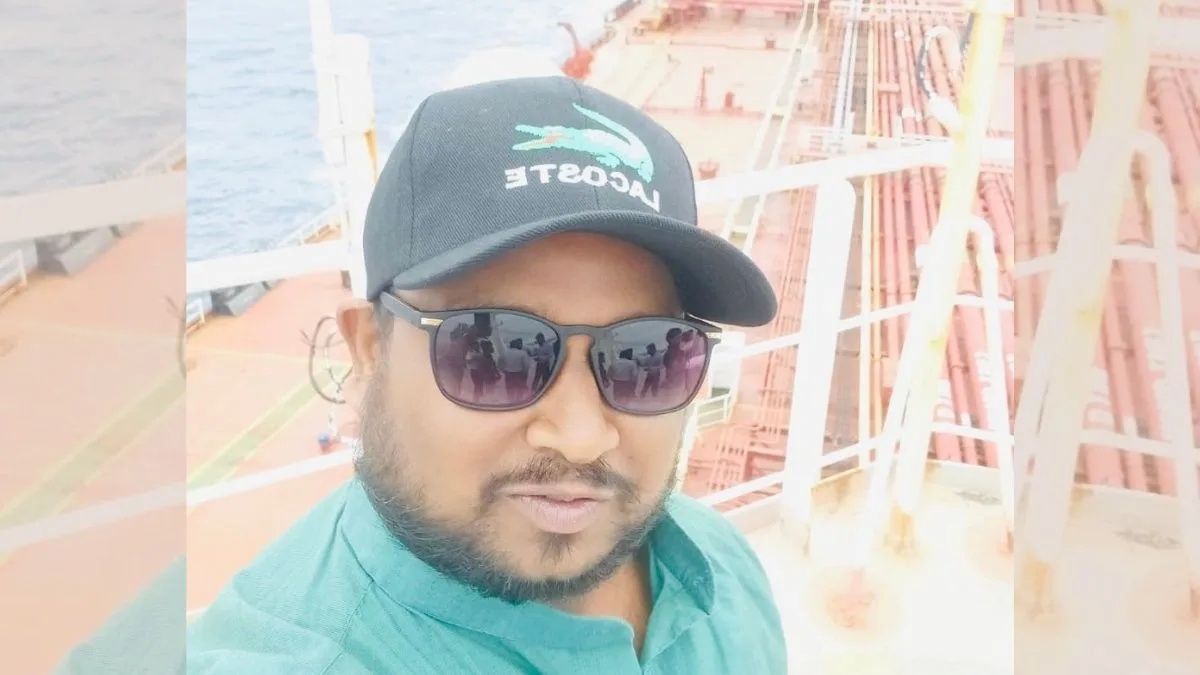
The unexplained death of Rakesh Chauhan, a 33-year-old merchant seafarer from Uttar Pradesh who died aboard a commercial vessel off Venezuela, has ignited a firestorm of allegations involving organ removal, documentation irregularities, and possible foul play. A re-autopsy conducted in his home district of Deoria after his body's repatriation in June revealed an absence of virtually every vital organ—brain, heart, lungs, liver, kidneys, and spleen among them—rendering any determination of cause of death forensically impossible. The discovery has galvanised India's maritime labour unions and Chauhan's family to demand immediate government intervention and a comprehensive investigation into circumstances that have all the hallmarks of a serious jurisdictional and humanitarian failure.
Chauhan departed for Venezuela in November 2025 to take up employment as a crew member on a merchant vessel, a decision that would ultimately cost him his life under circumstances that remain shrouded in mystery and conflicting accounts. According to family accounts, shipping company representatives initially reported that Chauhan had sustained serious injuries after falling aboard the vessel and was receiving medical care. Within hours, the situation deteriorated dramatically. The family was told his survival prospects had collapsed to merely five per cent, followed shortly thereafter by notification of his death, with company officials attributing it to injuries from the fall. What should have triggered immediate transparency instead triggered bureaucratic silence. The family was assured the body would arrive within a week; instead, they waited a month. Chauhan's mortal remains did not touch Indian soil until June 4—nearly 30 days after his death on May 7, during which time his body remained in deep freeze storage.
When the body finally arrived in Deoria district, medical professionals immediately recognised evidence of previous autopsy work. The corpse bore distinctive surgical incisions: a long Y-shaped cut running from the neck down to the pubic symphysis, combined with a separate incision extending ear to ear across the back of the skull. Yet remarkably, no Venezuelan autopsy report accompanied the repatriated remains, and Venezuelan authorities provided no official explanation of their findings or procedures. District Magistrate officials recognised the troubling absence of documentation and ordered a fresh post-mortem examination to establish what had actually occurred during the initial procedure in Venezuela. The subsequent Indian autopsy revealed something far more disturbing than simple organ examination: the body contained virtually no organs at all.
The forensic findings documented by Indian doctors catalogue an inventory of absence rather than presence. Missing were the brain, thyroid gland, hyoid bone, larynx, trachea, heart, both lungs, stomach, intestines, liver, kidneys, spleen, pancreas, gallbladder, and major blood vessels. The report explicitly stated that determination of cause of death could not be established because the organs necessary for such pathological examination no longer existed. The stitching pattern—22 sutures from neck to pubic bone and 21 sutures crossing the skull—suggested removal of organs on a scale inconsistent with routine autopsy procedures. The body had been maintained in deep freeze from May 7 through June 5, raising questions about preservation protocols and the condition of any remaining tissue evidence.
The Federation of Seafarers' Unions of India has articulated the alarm felt throughout India's maritime labour sector. In statements released through social media, the union emphasised that the case represents not merely a single tragedy but a systemic vulnerability affecting seafarers from the Global South employed aboard international vessels. The federation has characterised the handling as "unacceptable" and declared that seafarers are increasingly becoming "scapegoats" in circumstances where powerful shipping interests and foreign authorities operate without meaningful accountability to worker families. The union's formal demands now include full investigation by Venezuelan authorities, immediate diplomatic intervention by India's embassy in Venezuela, release of the complete autopsy documentation, disclosure of circumstances surrounding Chauhan's death, and financial compensation for his family.
Beyond the central horror of missing organs, the federation has identified a pattern of documentary irregularities that collectively suggest deliberate obfuscation. The receipt accompanying Chauhan's body bore a signature purporting to be from "Anjana Chauraisya," whereas the person authorised to receive the remains was identified as "Ranjana Chaurasiya"—potentially the same person or potentially evidence of falsified documentation. More significantly, the employment agreement under which Chauhan was hired specified deployment aboard a particular merchant vessel, yet the federation claims that the vessel on which he actually worked differed from the documented assignment. These discrepancies acquire troubling significance when considered alongside the absence of Venezuelan autopsy documentation and the extraction of essentially all recoverable organs. The federation has explicitly raised concerns that the circumstances suggest possible organ trafficking, a grave international crime involving exploitation of workers from economically vulnerable nations.
The family's ordeal encompasses both the shock of sudden death and the compounding injury of official opacity. They received no Venezuelan autopsy report, no medical explanation for the death determination, and no transparent accounting of what occurred to the body between death and repatriation. The initial narrative provided by the shipping company—that Chauhan died from fall-related injuries—appears increasingly suspect given that no injuries could be documented through examination of a body stripped of the organs necessary to confirm such claims. The family has stated clearly that this combination of factors has deepened their conviction that something far more sinister than a workplace accident occurred aboard that vessel. They are now engaged in seeking justice through diplomatic and legal channels, though such recourse remains difficult when the primary evidence—the body itself—has been rendered forensically uninformative through organ removal.
The case resonates with broader concerns about the vulnerability of seafarers, particularly those from India and other South Asian nations employed under complex international maritime labour agreements. Merchant vessels operate in international waters and foreign jurisdictions where protections afforded to workers may be minimal and accountability mechanisms weak. Indian maritime workers face particular challenges because they are often employed by foreign shipping companies, work under flags of convenience, and encounter minimal oversight from Indian authorities until repatriation occurs. The case of Rakesh Chauhan has illuminated these systemic gaps in dramatic and horrifying fashion. His death and the subsequent removal of all major organs before return to India represents a failure across multiple institutional levels: by the shipping company in providing transparent accident reporting, by Venezuelan authorities in conducting and documenting proper autopsy procedures, and by relevant Indian agencies in ensuring protective measures for citizens working abroad.
The Indian government has not yet issued comprehensive public statements regarding Chauhan's case, though the circumstances almost certainly require intervention through diplomatic channels with Venezuelan authorities and through the International Maritime Organization. The case sits at the intersection of multiple serious concerns: potential criminal negligence in the original death, possible falsification of documentation, potential organ trafficking, and failures of labour protection mechanisms designed to safeguard seafarers. How India's government responds will set precedents for protection of approximately 1.4 million Indian seafarers currently employed on merchant vessels globally, many of whom face similar vulnerabilities to inadequate oversight and weak accountability. The immediate priority must be securing the complete Venezuelan autopsy documentation and initiating credible investigation into the circumstances of Chauhan's death and the systematic removal of his organs.

