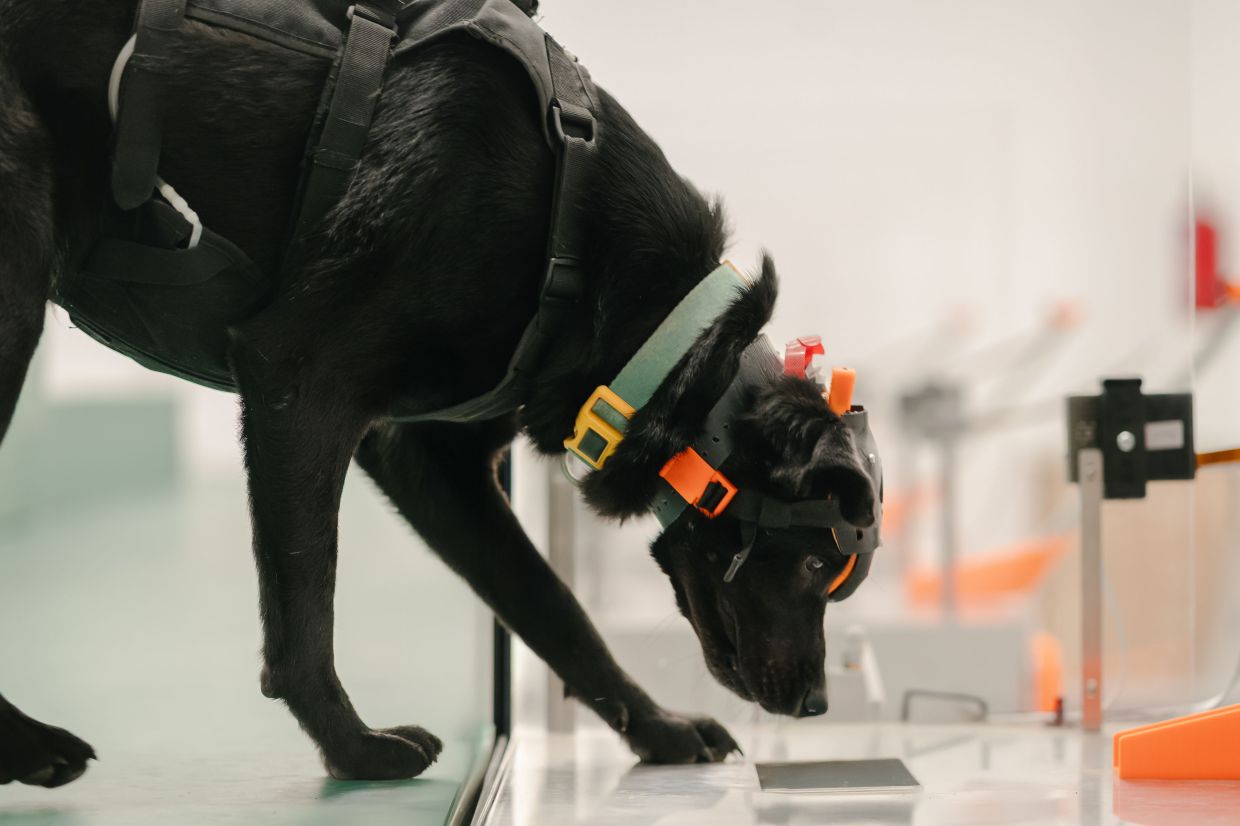
Outside Bengaluru, a small team of dogs clocks in each morning for an unconventional job that could transform how millions of Indians access early cancer detection. Billy, Jessie, Banu and their canine colleagues at startup Dognosis have undergone specialised training to identify traces of cancer in human breath samples—a capability that leverages an ancient biological advantage that dogs possess in ways modern medicine has only recently begun to harness at scale. The animals, ranging from beagles to labradors and Dutch shepherds, represent the frontier of a diagnostic approach that sidesteps the expensive imaging scans, invasive biopsies and specialised laboratory equipment that keep cancer screening out of reach for the vast majority of India's 1.4 billion people.
The fundamental premise behind Dognosis hinges on redirecting the canine olfactory system from its traditional applications in security and narcotics detection towards a pressing public health challenge. While dogs have long been recognised in research settings as capable of identifying everything from Covid-19 infections to various malignancies, translating that ability into a scalable, commercialised screening tool represents an entirely different proposition. The startup's approach involves patients exhaling into specially designed masks that capture breath samples, which are then transported to Dognosis's facility where trained animals are exposed to the samples in controlled conditions. Rather than relying on the subjective interpretations that might accompany traditional canine alert systems, the company has developed an automated layer: sophisticated sensors and artificial intelligence algorithms monitor the dogs' movements, breathing patterns, neural activity and body language to identify cancer indicators without requiring the human handlers to interpret canine behaviour.
The innovation carries particular significance for India, where the epidemiological landscape presents both the starkest need and the greatest systemic barriers. According to the International Agency for Research on Cancer, India experiences the third-highest burden of new cancer cases globally, with approximately 1.5 million newly diagnosed cases and over 900,000 deaths recorded in 2024 alone. The disease prevalence is substantial enough that roughly one in ten Indians face a statistical likelihood of developing some form of cancer before reaching age 75. Despite this sobering reality, the infrastructure for routine screening remains remarkably sparse. Recent surveys indicate that fewer than two percent of Indian women have undergone cervical cancer screening, while less than one percent have received breast or oral cancer examinations. Among men, oral cancer screening rates stand at just 1.2 percent. These gaps emerge not from ignorance but from the practical economics of screening: conventional diagnostic pathways demand resources that remain inaccessible to the majority of India's population.
Dognosis's clinical validation represents a significant milestone in demonstrating the feasibility of this approach at meaningful scale. The company published results from a Phase 2 study in the Journal of Clinical Oncology showing approximately 90 percent sensitivity for early-stage cancers across seven broad cancer categories encompassing more than twenty distinct types, with breast cancer among those successfully identified. Perhaps more intriguingly, dogs trained specifically on ten cancer types demonstrated the ability to identify an eleventh cancer variant they had never previously encountered, suggesting that the olfactory signatures of malignancy may share detectable commonalities that canine detection systems can recognise even without explicit prior training. Such findings have attracted significant venture capital interest; the company raised 1.5 million US dollars through a pre-seed funding round in 2024, supplemented by additional undisclosed financing secured more recently. These investors, including Accel India and San Francisco-based Caffeinated Capital, have structured funding to sustain operations for approximately two years along the company's planned expansion trajectory.
The day-to-day operational model at Dognosis reflects a conscious effort to maintain animal welfare while maximising diagnostic consistency. The dogs reside together on a two-acre farm adjoining the laboratory facility, receiving regular exercise and recreational time between work shifts. The detection work itself occupies thirty minutes to one hour daily and is deliberately structured as a game rather than a regimented task, with successful identifications rewarded through treats. During observed sessions, the pattern becomes evident: a two-year-old beagle named Whiskey systematically worked through ten samples during a recent demonstration, passing rapidly through the first five before pausing noticeably at the sixth, investigating through multiple sniffs and circling motions that continued for several seconds before the system confirmed a positive cancer detection. This observed behaviour translates into quantifiable data that the AI component interprets, creating a bridge between ancient biological capability and contemporary technological infrastructure.
The company's commercial vision extends far beyond validation in laboratory settings, though reaching that milestone remains essential. Dognosis has announced plans to launch an at-home multi-cancer prescreening test across India beginning next year, priced in the thousands of rupees to remain accessible relative to conventional diagnostic alternatives. The ambition encompasses processing one million tests annually within the medium term, expanding its canine workforce to thirty dogs and reducing sample turnaround times from current timelines to a single week. International expansion likewise features prominently in strategic planning, with leadership indicating that a facility in the United States could commence operations by late 2027 or early 2028. These expansion targets reflect confidence in the business model but also recognition that clinical validation must precede commercialisation. To that end, the company initiated a Phase 3 trial in April involving ten hospitals distributed across India, with recruitment targets of approximately ten thousand participants over twelve months. This study deliberately targets both asymptomatic individuals at elevated cancer risk and survivors facing recurrence risks, with positive findings triggering conventional diagnostic follow-up including imaging and biopsy.
The regulatory pathway Dognosis has chosen deliberately sidesteps formal government approval processes by positioning the offering as a prescreening tool rather than a diagnostic device. Under India's current regulatory framework, only the latter category triggers mandatory approval requirements, a distinction that accelerates market entry but also raises important questions about quality assurance and standardisation. Co-founder Akash Kulgod has emphasised that the test represents a population-level screening mechanism designed to identify individuals warranting conventional medical evaluation rather than replacing established diagnostic protocols. The positioning acknowledges a fundamental limitation: regardless of sensitivity rates achieved in controlled environments, the true utility of any screening system depends on what happens downstream when results emerge. Healthcare systems and individual patients must possess the knowledge and resources to pursue appropriate follow-up, a requirement that remains inconsistent across India's highly variable healthcare landscape.
Concerns among medical professionals centre on ensuring that novel technologies enhance rather than displace existing screening infrastructure. Pankaj Chaturvedi, deputy director of the Centre for Cancer Epidemiology at Tata Memorial Centre in Mumbai, has cautioned that emerging diagnostic approaches must strengthen rather than undermine established cancer screening programmes. This perspective reflects legitimate anxiety within the oncology community that technological enthusiasm might outpace clinical evidence or that resource constraints might push healthcare systems toward unproven alternatives at the expense of evidence-based screening modalities. Such tensions remain particularly acute in contexts like India where competing demands continually strain limited healthcare resources.
The broader context encompasses growing recognition that dogs represent an underutilised diagnostic resource, a reality reflected in parallel initiatives by organisations including New Jersey-based SpotitEarly, which has reported comparable results from canine cancer-detection trials. What distinguishes Dognosis involves its deliberate integration of artificial intelligence and sensor technology to standardise and scale what has historically remained an artisanal application of canine olfaction. Kulgod has articulated this central challenge with clarity: society already depends on dogs in life-or-death situations ranging from search-and-rescue operations to security applications, yet translating that trust into standardised, scalable medical applications requires solving the fundamental problem of how to systematise and industrialise what remains inherently biological and variable. The answer emerging from Bengaluru suggests that automation, sensor integration and machine learning may provide crucial bridges between canine capability and clinical utility.
For Malaysian healthcare stakeholders and policymakers monitoring developments in the region, the Dognosis model presents instructive lessons applicable to local contexts characterised by screening gaps and resource constraints. Malaysia maintains considerably more developed diagnostic infrastructure than India but continues facing challenges in ensuring equitable access to cancer screening across its diverse population. The affordability proposition embedded in canine-based screening—potentially a fraction of the cost associated with conventional imaging and laboratory testing—merits serious consideration as healthcare systems throughout Southeast Asia grapple with the dual imperatives of expanding screening capacity while maintaining fiscal sustainability. Should Dognosis successfully transition from clinical validation to commercial operation, the model could establish a template that other emerging-market healthcare systems might adapt to local circumstances. The next eighteen months will prove decisive in determining whether this unconventional approach to cancer detection moves from scientific curiosity toward genuine public health intervention.

