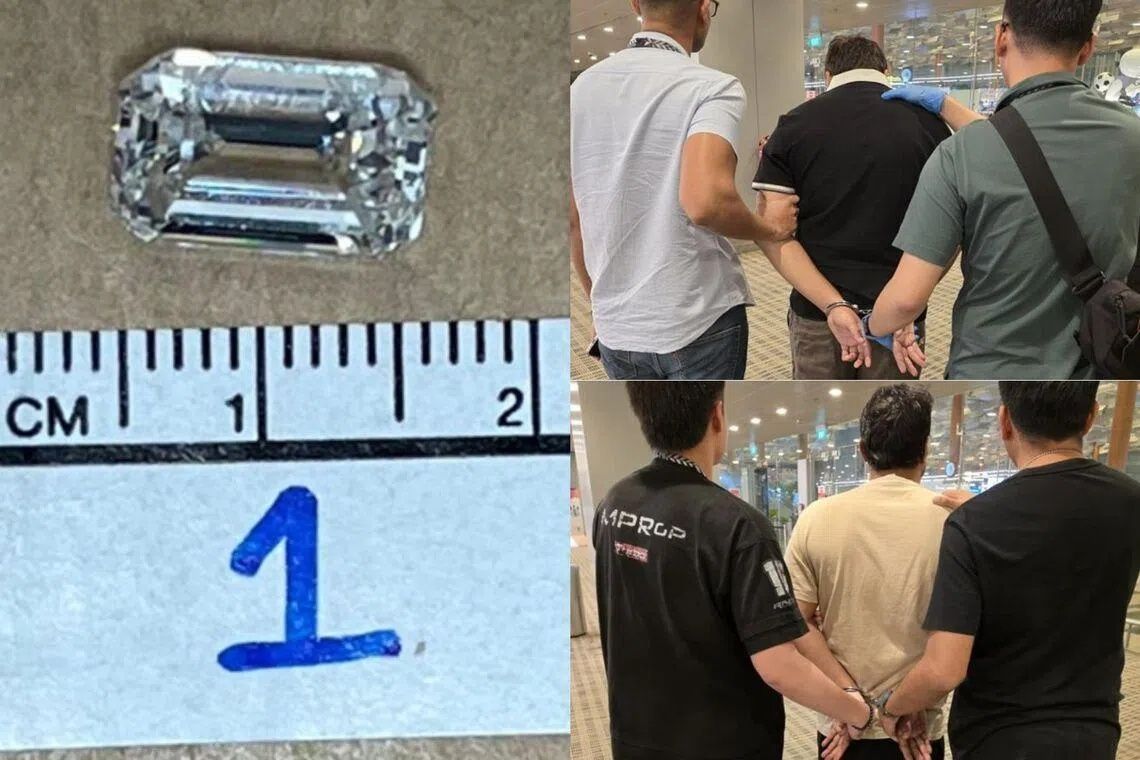
An Indian tourist has been sentenced to more than two years in prison following his role in a carefully orchestrated theft of a diamond worth nearly S$200,000 from a Chinatown jewellery store in Singapore. Mangroliya Manojkumar Kurjibhai, 41, pleaded guilty to theft charges and received a sentence of two years, two months and two weeks' imprisonment on July 17. His accomplice, 30-year-old Serasiya Milan Ramnikbhai, remains awaiting trial after authorities caught both men attempting to leave the country on the same evening as the heist.
The theft unfolded with calculated precision on June 19 at Dianoche jewellery store located on Kreta Ayer Road in Singapore's historic Chinatown district. The pair had arrived in Singapore that very morning, suggesting the operation was meticulously timed from the outset. At approximately 3pm, they entered the store with Serasiya concealing a counterfeit diamond inside his mouth, a detail that underscores the premeditation involved in the scheme. Mangroliya requested to examine the 4.95-carat diamond, which carried a valuation of US$154,000, equivalent to over S$199,000 in local currency.
Court documents reveal that the criminals had prepared extensively for their theft, commissioning a fake diamond in India before their departure that precisely matched the specifications and serial number of the genuine stone they intended to steal. This level of preparation demonstrates how organised international jewellery theft rings operate, particularly those exploiting Asia's porous tourist movements and the temporary nature of visitor status. The prosecution could not disclose precisely how the two men discovered the existence and location of this particular diamond, though it remains clear they possessed detailed advance knowledge of the target item.
During their time in the store, Mangroliya employed a straightforward but effective distraction technique. He repeatedly requested to view additional items from the jewellery collection, compelling the sales manager to abandon his position multiple times. This created the crucial window of opportunity for the swap. Acting on Mangroliya's signal, Serasiya expectorated the counterfeit diamond and quickly substituted it with the genuine article, which he then concealed in his own mouth. The entire operation relied on speed and the momentary inattention of the store staff.
The pair's exit from the store appeared unremarkable, with both men casually informing the manager they would consider purchasing the items and departing without arousing suspicion. However, the store's closed-circuit television system captured the entire exchange in detail. When the sales manager subsequently examined the diamond they had left behind using an optical gemstone identification machine, he immediately detected the fraud and alerted authorities. This swift discovery set in motion the chain of events that would intercept the criminals before they could flee the country.
Following the theft, Mangroliya and Serasiya executed their exit strategy with haste. They checked out of their hotel and proceeded directly to Changi Airport, where they had already secured flights returning to India. However, immigration officers at Terminal 3 apprehended both men at approximately 9pm that evening, mere hours after the theft occurred. Police subsequently recovered the genuine diamond from Serasiya's haversack, securing the crucial physical evidence needed for prosecution.
The case highlights vulnerabilities in Southeast Asia's jewellery retail sector, where international tourists may exploit temporary visitor status and the relative ease of international travel to execute high-value thefts. Singapore's position as a regional hub for diamond trading and luxury goods makes it an attractive target for organised crime networks operating across borders. The swift police response and recovery of the stolen diamond demonstrate the effectiveness of Singapore's security infrastructure at key departure points like Changi Airport, yet it also illustrates how close such criminals come to successfully exiting the jurisdiction with stolen goods.
According to State Prosecuting Officer Yip Cheng Yee, who presented the case to the court, the evidence against Mangroliya proved conclusive enough to warrant his guilty plea. The combination of CCTV footage, the recovered counterfeit diamond, and the genuine stone found in Serasiya's possession created an overwhelming case. Under Singapore's theft laws, offenders face potential sentences of up to seven years imprisonment and fines, making Mangroliya's two-year-plus sentence relatively moderate given the severity of the crime and the value involved.
Serasiya's case remains pending, suggesting prosecutors may pursue additional or separate charges against him. His role as the active participant in the swap and the person physically carrying the stolen diamond during airport departure could result in comparable or potentially harsher sentencing. The division between Mangroliya's completed guilty plea and Serasiya's ongoing prosecution may reflect different legal strategies or negotiations between the two men regarding culpability and cooperation with authorities.
This incident carries implications for Malaysian businesses and tourists, particularly those involved in jewellery retail or travel. The case underscores how international criminal networks coordinate across borders to exploit high-value goods, and it demonstrates the importance of robust security protocols in luxury retail environments throughout Southeast Asia. For Malaysian jewellers and retail operators, the theft serves as a cautionary reminder of the need for comprehensive CCTV systems, staff training in counterfeit detection, and verification procedures before customers depart with items. Additionally, the successful apprehension at the airport emphasizes how border security remains an effective final checkpoint for intercepting stolen goods and fleeing suspects.

