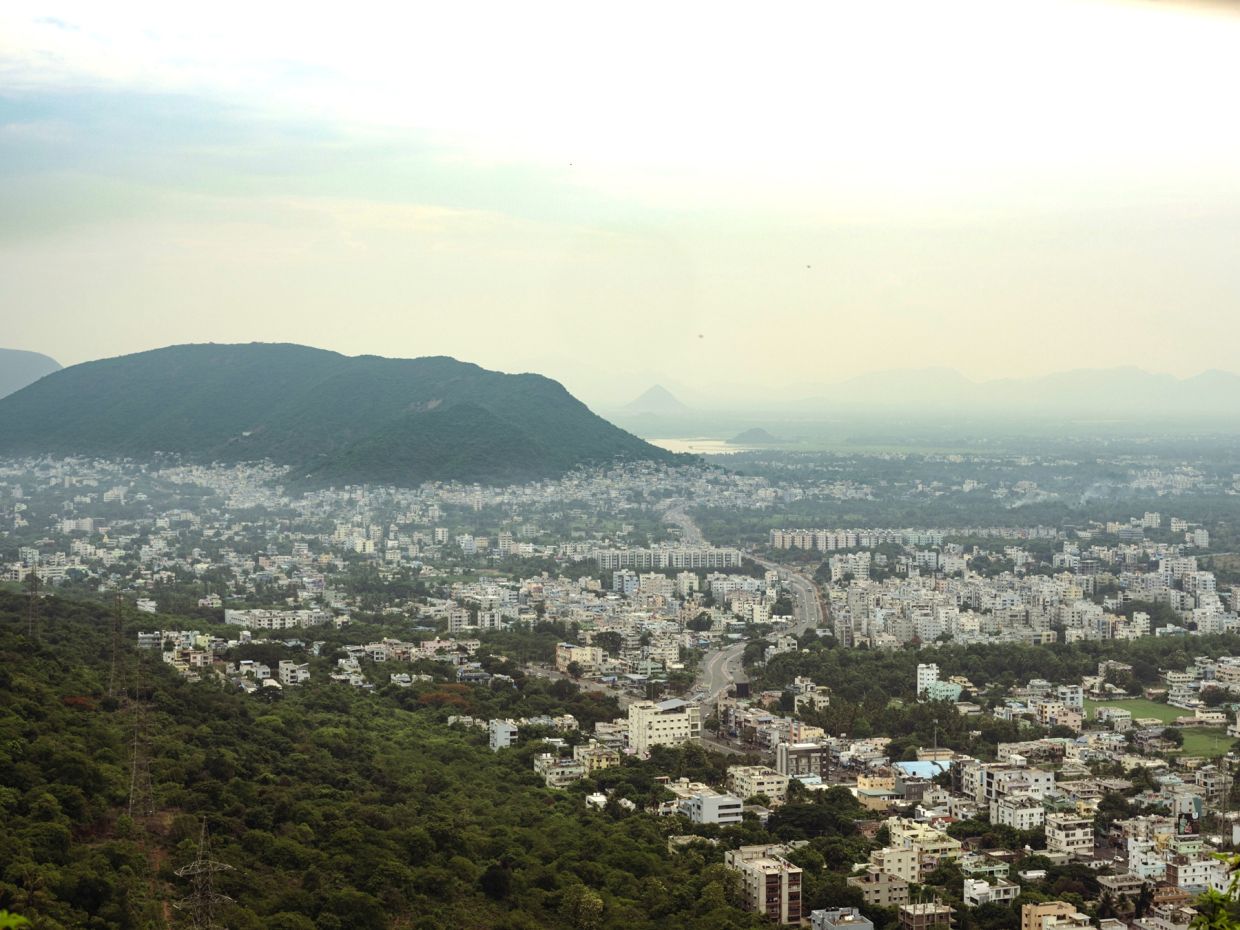
As India races to secure its position in the artificial intelligence era, the coastal city of Visakhapatnam has become ground zero for the nation's technological ambitions—and a flashpoint for the tensions those ambitions are creating. Welcome billboards featuring national and regional political leaders greet visitors to Tarluvada village, near the city's edges, announcing India's embrace of Google's monumental investment. Yet beneath the celebratory messaging lies growing anxiety among residents, environmental campaigners and former government officials who question whether the push for rapid development is outpacing prudent planning.
Google's US$15bil project, which includes the construction of a one-gigawatt data centre and new subsea cable infrastructure, represents part of a broader strategy by Prime Minister Narendra Modi's government to position India as a critical node in global artificial intelligence infrastructure. The venture pairs the American technology company with Indian billionaire Gautam Adani, whose business empire has expanded significantly during Modi's 12 years in office and whose influence in securing government approvals has become legendary in Indian business circles. Alongside this project, a similarly scaled data centre developed by a joint venture including Brookfield Asset Management and India's Reliance is under construction. Together, these two facilities will more than double India's data centre capacity relative to the end of last year, according to official projections.
State officials frame the investment as transformative. Nara Lokesh, Andhra Pradesh's information technology minister, has articulated a vision extending far beyond the data centres themselves, describing how the projects could catalyse development across multiple industrial sectors. His perspective encompasses the supply chains that data centre operations require—from power electronics manufacturers to air conditioning specialists to building materials producers—all potentially relocating to the state as part of a comprehensive industrial ecosystem. This broader development narrative has become the official justification for the pace and scale of subsidy packages offered to the technology companies involved, including discounted land and water, subsidised energy rates, and extensive tax concessions.
Yet this enthusiasm at the government level contrasts sharply with scepticism emerging from within Visakhapatnam's communities. Data centres are voracious consumers of both energy and water, yet historically generate surprisingly modest employment. The United States has already seen this pattern trigger significant opposition, with communities blocking or delaying data centre projects worth tens of billions of dollars over environmental and infrastructure concerns. India's version of this dynamic is playing out against a backdrop of existing water scarcity, with the Visakhapatnam region classified as water-stressed and experiencing supply disruptions during summer months when cooling demands peak. Critics contend that the hastiness of project approval reflects an Indian government desperate to showcase progress in the artificial intelligence sector, potentially at the expense of local communities who bear the environmental and infrastructural costs.
The opacity surrounding project planning has intensified resident concerns. Information about the sources of water and electricity for the massive facilities remains unclear, as does the distribution of subsidy costs across state budgets and ratepayer bases. VS Krishna, a campaigner with the Human Rights Forum operating in the region, has articulated this frustration pointedly, questioning why a developmental project of this scale should proceed without transparent public debate. Environmental clearance procedures appear to have been adapted to permit construction in ecologically sensitive zones, raising questions about whether regulatory frameworks designed to protect local ecosystems have been compromised. The combination of limited transparency, India's historical patterns of suppressing dissent, and the centralised power wielded by figures like Adani have left many residents convinced that their concerns will be marginalised regardless of how they express them.
India's urgent positioning in the global artificial intelligence competition drives much of this official willingness to move fast and accommodate technology companies generously. A Morgan Stanley report characterised India as a "laggard" in developing indigenous artificial intelligence capabilities, despite possessing a vast market and world-class technical talent. The nation produces approximately one-fifth of the world's data yet controls only a fraction of global data centre capacity—a gap Indian policymakers view as strategically critical. Billions of dollars in technology investment have flowed to competitors like Taiwan and South Korea that manufacture cutting-edge artificial intelligence chips and hardware, while India remains positioned as a technology deployer rather than an innovation hub. For Modi's government, correcting this imbalance has become a priority second only to economic growth itself.
Job creation projections from state officials add another layer of contention to the debate. Government representatives have claimed the construction phase will generate approximately 120,000 jobs, with roughly 60,000 permanent positions once operations begin. However, critics including retired senior government officials have questioned whether these figures align with employment patterns observed at comparable data centre facilities globally. Project documentation submitted for environmental clearance—detailing parking space requirements and daily water volumes needed for toilet flushing—suggests permanent employment would constitute only a fraction of official claims. This discrepancy highlights a fundamental tension: the technology sector increasingly delivers economic growth through productivity rather than job creation, potentially exacerbating employment challenges in a nation of 1.4 billion people where generating sufficient work remains an enduring policy challenge.
The employment question gains additional weight when considering artificial intelligence's broader impact on India's labour market. The International Monetary Fund has warned that artificial intelligence represents a potential "tsunami hitting the labour market," with particular implications for technology support services—an industry that has long provided stable, middle-class employment for millions of Indians. As hyperscale automation expands across industries, India faces simultaneous pressures: the need to attract artificial intelligence infrastructure investment to remain globally competitive, and the imperative to generate employment for a population expanding faster than job creation can accommodate. Data centres, despite their massive capital requirements and infrastructure footprint, offer minimal relief on the employment front, creating a structural mismatch between the investment intensity of artificial intelligence infrastructure and the employment outcomes India desperately requires.
Google and Adani representatives have presented technical responses to environmental concerns, asserting that cooling systems designed to minimise water consumption will operate independently of local potable water supplies. The company has committed to investing in renewable energy generation and pledged that no costs associated with the project would be passed to local households, businesses, or the state government. These assurances, however, face scepticism rooted in both historical experience and the political dynamics surrounding Adani's relationship with the Modi administration. EAS Sarma, a former senior official in India's finance and energy ministries with specialist knowledge of energy planning, has articulated particular concern about transmission infrastructure costs. Building new transmission lines to supply the data centres would ultimately drive up local electricity rates, he argues, imposing costs on the broader population even as the government portrays the project as cost-neutral to residents.
The framing of subsidies themselves has become contested terrain. State officials describe the discounted land, water, and energy rates as competitive necessities required to attract multinational technology investment in an intensely competitive global market. Critics counter that characterising these concessions as necessary investments misrepresents their true nature: subsidies represent wealth transfers from the public to private corporations, ultimately borne by taxpayers and ratepayers. For Lokesh and his colleagues, the project represents progress and necessary ambition in a cutthroat competition among India's southern states, which enjoy reputations as more economically advanced and business-friendly than northern regions. For sceptics including former officials and environmental advocates, the same project exemplifies a pattern where powerful commercial interests align with government desperation for visible success, resulting in outsized costs imposed on communities with limited capacity to resist.
The tension playing out in Visakhapatnam encapsulates a broader challenge facing India as it attempts to navigate the artificial intelligence transition. Remaining globally competitive in technology infrastructure requires substantial capital investment and streamlined regulatory processes. Yet communities hosting these massive facilities bear environmental and infrastructural burdens while experiencing uncertain economic benefits. The question of whether India can attract the technology investment it requires while maintaining accountability to affected communities and ensuring that development serves broader national interests beyond elite political and commercial circles remains unresolved. What appears certain is that Visakhapatnam's experience—with its conflicting narratives of progress and concern, opportunity and risk—will shape how subsequent data centre and technology infrastructure projects are received across India's regions.

