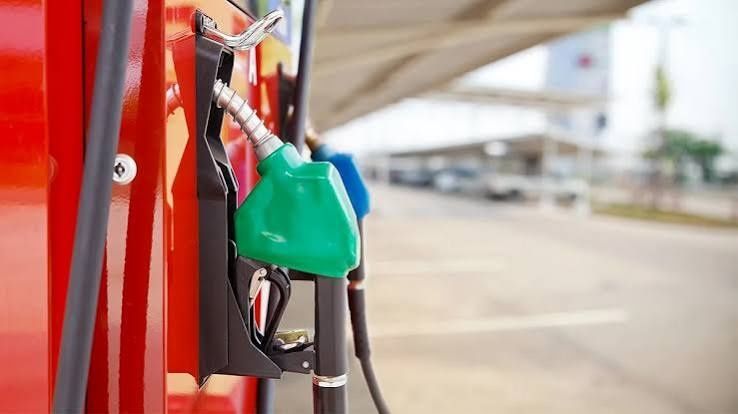
India's government moved to contain a widening political crisis on Friday over its compulsory shift to ethanol-blended petrol, as frustrated motorists prepare mass protests against the policy and social media amplifies complaints about deteriorating vehicle performance. The controversy represents one of the administration's most significant stumbling blocks in the world's third-largest automotive market, where Prime Minister Narendra Modi's government mandated the use of E20—a fuel containing 20 per cent ethanol—beginning last year.
The crisis intensified dramatically this week when a viral video captured India's Attorney General R. Venkataramani describing the E20 initiative as an "experiment" during court proceedings, a characterisation that struck at the heart of public concerns about the policy's readiness. Although government officials immediately denied the remark had been made, the video footage circulating on social media provided irrefutable evidence of the attorney general's words, undermining the administration's credibility. Venkataramani subsequently clarified to Reuters that his use of "experiment" referred specifically to the volume of ethanol supply logistics rather than the fuel policy itself, but this explanation has largely failed to deflate mounting public frustration.
Motorists across the country have effectively lost choice at petrol pumps, and many have weaponised the attorney general's "experiment" comment to express broader grievances about the rollout process. The government's press office attempted damage control by dismissing criticism as "wild claims" and cautioned citizens against "falling for the rage bait," but the condescending tone only amplified public resentment. Petroleum Minister Hardeep Singh Puri sought to reassure drivers by comparing E20 to fuel used in motor racing, where "acceleration increases," though he acknowledged that "mileage, yes, it may drop a little"—a concession that validates motorists' central complaint.
Planned demonstrations underscore the depth of public discontent. Tehseen Poonawalla, a New Delhi-based activist and Congress party supporter, announced a Sunday protest against the E20 policy and reported receiving interest from thousands of potential participants. The mobilisation reflects how the issue has transcended technical debate to become a broader political statement about government accountability and consultation with citizens.
On social media platforms, particularly X (formerly Twitter), hundreds of motorists have documented their grievances, with complaints centring on diminished fuel efficiency and accelerated component deterioration. One widely circulated video featuring a motorist identified as Manish Kashyap drew over 500,000 views, showing his vehicle in a workshop where repairs were needed after just two months of using E20 fuel. "I have spent a lot of money on this car and paid taxes only to find that after two months my car is not working," Kashyap stated, articulating the frustration of vehicle owners who believe government policy has damaged their personal investments.
Opposition politicians have seized the opportunity to criticise the government's governance approach. Priyank Kharge, a state minister in the Congress party, posted on X that the E20 rollout lacked meaningful stakeholder consultation and challenged the government's authority to demand citizens prove harm while "your own data is still pending." This framing transforms the dispute from a technical matter into a question of administrative legitimacy and evidence-based policymaking.
The core tension underlying the controversy involves fundamentally competing claims about the policy's merit. The government maintains that E20 delivers substantial environmental benefits through reduced carbon emissions, simultaneously bolstering India's balance of payments position by diminishing crude oil imports and foreign exchange expenditure. Additionally, officials argue the policy supports agricultural communities by expanding demand for farm-based feedstocks used in ethanol production, creating economic benefits across rural sectors.
However, these systemic arguments carry limited weight with individual motorists confronting out-of-pocket expenses and reduced vehicle functionality. The disconnect between aggregate policy objectives and individual consumer experiences represents a fundamental challenge for the administration. While economists might emphasise macroeconomic gains, ordinary citizens prioritise immediate, tangible impacts on their transportation costs and vehicle reliability.
For Malaysian readers, this episode offers instructive parallels regarding fuel policy transitions and public acceptance. Southeast Asian governments pursuing environmental or economic objectives through energy market reforms must grapple with similar tensions between national-level benefits and household-level disruption. India's experience demonstrates that administrative competence in implementation—including transparent consultation, staged rollouts, and credible impact assessments—proves as consequential as the underlying policy logic when securing public legitimacy.
The viral video moment encapsulates a deeper erosion of institutional trust. When a senior government official's candid language appears to contradict the administration's confident public messaging, citizens reasonably question whether policymakers fully understand or have adequately tested their own initiatives. In the age of instantaneous information sharing, such credibility gaps metastasise rapidly.
Looking ahead, the government faces an uncomfortable choice between acknowledging legitimate concerns and maintaining its policy trajectory. Backing away from E20 would represent a significant political retreat, yet doubling down risks further alienating motorists whose grievances appear substantive rather than merely reactionary. The administration's dismissal of criticism as "rage bait" suggests an unwillingness to engage seriously with public concerns, a posture that typically intensifies rather than diminishes opposition.
The E20 controversy ultimately reflects a recurring challenge for governments pursuing progressive environmental or economic policies: implementation requires not merely sound policy design but also strategic communication, genuine stakeholder engagement, and demonstrated respect for citizens' concerns. India's experience serves as a cautionary tale about the political costs of treating major fuel transitions as technical exercises rather than requiring careful management of the human dimension.

