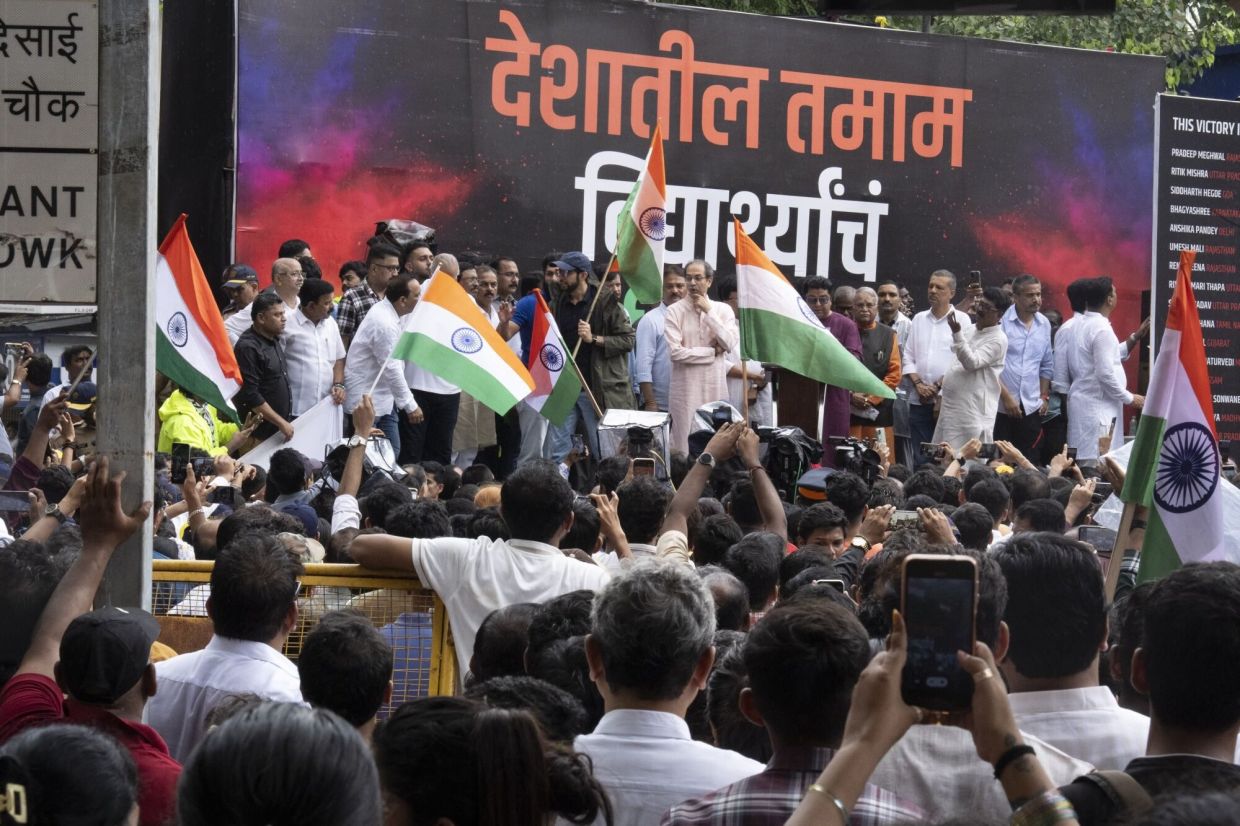
India's government is moving quickly to address widespread public anger over its examination system, with Prime Minister Narendra Modi announcing the formation of a high-powered task force just hours after his education minister quit over the controversy. The sudden resignation on Saturday and the swift policy response underscore the intensity of pressure that student-led activism has placed on New Delhi's administration, marking a significant moment in India's recent political history when youth-driven demands have forced immediate governmental action at the highest levels.
The Cockroach Janta Party (CJP), a social media-driven movement, succeeded in mobilizing tens of thousands of demonstrators—predominantly students and young people—who converged on New Delhi's Jantar Mantar location in one of the country's most substantial anti-government mobilizations seen in recent times. The protest encampments had persisted for weeks, transforming the historic site into a focal point for grievances about educational policy and the integrity of national examinations. The sheer scale and sustained nature of the demonstrations proved instrumental in pushing the government to acknowledge the depth of discontent among India's youth, forcing New Delhi to confront problems it had long sidelined.
Modi revealed his administration's intention to establish the examination reform task force in a video message posted to X on Sunday, tapping Nandan Nilekani—the co-founder of Infosys, one of India's most prominent information technology corporations—to lead the initiative. The choice of Nilekani carries symbolic weight, positioning the overhaul as a technology-driven modernization effort rather than a conventional bureaucratic review. This signals Modi's confidence that private sector expertise can improve government systems, a favored approach in his administration's philosophy about governance reform.
The examination system has emerged as a critical concern for Indian students and families, with irregularities raising questions about fairness, merit-based selection, and the credibility of competitive examinations that determine access to higher education and prestigious employment opportunities. For young Indians navigating an increasingly competitive job market and educational landscape, examination integrity directly affects their futures, making this not merely a technical policy matter but one touching fundamental anxieties about social mobility and opportunity. The protests reflected frustration that had accumulated over months as concerns about test administration standards went unaddressed.
In his statement, Modi emphasized that India's examination system must operate with complete reliability and transparency, stressing that modern technology should be fully leveraged to strengthen the testing process. These remarks appear designed to reassure anxious students and parents that the government understands the core grievances and is committed to substantive rather than cosmetic changes. The emphasis on technological solutions reflects contemporary assumptions that digitization can combat corruption and irregularities—an approach that resonates in India's tech-savvy urban centers where much of the protest movement originated.
The government has accepted several key demands from the protest movement beyond the examination reform initiative, indicating a broader willingness to respond to youth concerns about educational policy. This multi-faceted concession suggests that the administration recognizes the political liability of ignoring organized youth activism, particularly when that activism mobilizes across social media platforms where messages spread rapidly and shape public perception. The education minister's resignation served as the clearest acknowledgment that senior officials bore responsibility for the system's failures.
Cleanup operations were visible at Jantar Mantar on Sunday, with municipal workers washing pavements along the roads where activists had maintained their camps during the weeks-long demonstration. The physical removal of protest infrastructure symbolizes the transition from mobilization to institutionalized reform, though it also marks the movement's shift from direct action to monitoring how seriously the government pursues its announced changes. The cleanup itself became a visual reminder of the protest's impact, as the site returned to normalcy after hosting one of India's more significant recent youth-driven political moments.
For Malaysia and other Southeast Asian nations observing India's political dynamics, this episode illustrates how social media-coordinated movements among youth can exert genuine pressure on even powerful incumbents. India's experience demonstrates that despite the Modi government's electoral strength and control of traditional media narratives, organized youth activism focusing on tangible quality-of-life issues—particularly education—retains capacity to force policy shifts. The precedent may influence how young activists in the region assess the feasibility of their own demands on governments.
The task force faces substantial expectations, as the government has committed to working rapidly to ensure the credibility of upcoming examinations. Success will require not just cosmetic reforms but genuine institutional changes addressing the root causes of exam irregularities. The stakes extend beyond educational administration; how effectively Modi's government implements examination reform will signal whether youth-driven activism can achieve concrete policy victories or whether public commitments fade without substantial follow-through. For millions of Indian students awaiting results and preparing for competitive examinations, the coming months will determine whether this political moment translates into the systemic improvements they mobilized to demand.

