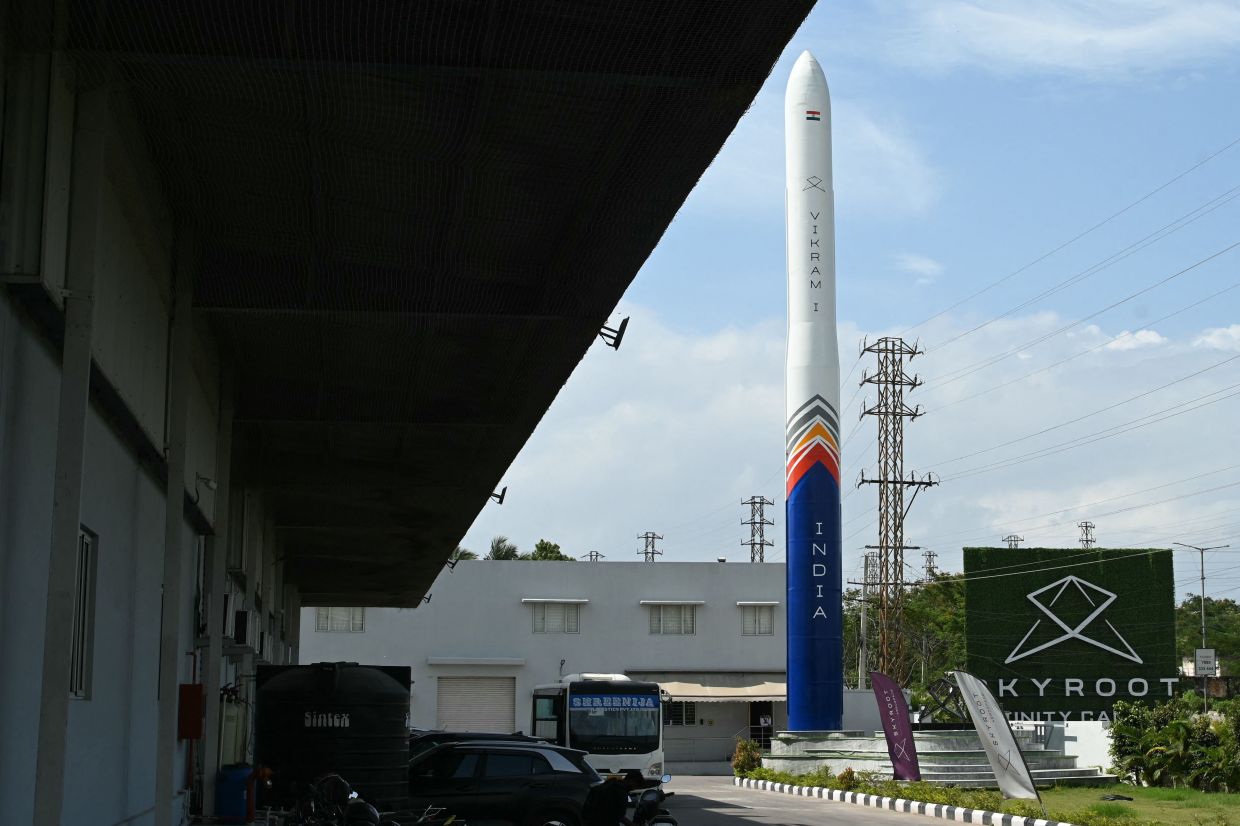
India stands on the cusp of a significant commercial space milestone. Skyroot Aerospace is preparing for the maiden test flight of Vikram-1, the nation's first privately developed orbital-class rocket, scheduled to lift off from the Sriharikota launch facility in Andhra Pradesh between July 12 and August 4. This achievement represents more than just a technical accomplishment—it symbolises a fundamental transformation in how India approaches spaceflight, moving beyond the traditional government monopoly under the Indian Space Research Organisation to embrace private sector innovation and competition.
The backdrop to this moment is a thriving space economy that has mushroomed since 2020, when New Delhi liberalised the sector to private investment. Today, India's space industry is valued at US$8.4 billion and has become a magnet for entrepreneurship, with more than 400 space startups establishing operations across the country. This explosion of commercial activity reflects both global confidence in Indian technical capabilities and domestic appetite for breakthrough innovation. The government's Department of Space has emphasised that these developments underscore "growing confidence, technological maturity, and a long-term vision for India's role in the global space ecosystem."
India's credentials in space exploration are formidable. The nation became the first Asian country to achieve Mars orbit in 2014, demonstrating capabilities that rivalled those of established spacefaring nations. More recently, India's Chandrayaan lunar programme has delivered tangible wins, culminating in the successful 2023 landing of an unmanned rover that made India the fourth nation—after Russia, the United States, and China—to place a craft on the lunar surface. Future ambitions are equally ambitious: a fourth Chandrayaan mission in 2027 will attempt to retrieve lunar samples, while a Venus orbit mission is scheduled for 2028. Simultaneously, the Aditya solar mission is studying the sun's outer layers, contributing to our understanding of space weather and its effects on Earth.
Beyond these headline-grabbing deep-space missions, Indian space technology is increasingly directed toward practical terrestrial applications. ISRO has built a reputation for cost-efficient operations, a competitive advantage that has attracted commercial customers worldwide. The organisation has launched more than 430 foreign satellites, generating over US$600 million in revenue, while simultaneously deploying more than 144 Indian satellites. This dual approach—servicing international clients while advancing national capabilities—has positioned India as a reliable partner in the competitive global satellite market.
The government's ambitions for the sector are staggering. New Delhi projects that India's space industry will grow to US$44 billion by 2033 and US$100 billion by 2040. To support this trajectory, infrastructure is being substantially upgraded. The existing launchpad at Sriharikota is being expanded, and a second spaceport is under construction at Kulasekarapattinam in Tamil Nadu, providing geographic diversity and increased launch capacity. These investments signal serious commitment to establishing India as a major space power capable of supporting both government missions and a flourishing private sector.
The private space ecosystem emerging within India is diverse and specialised. Skyroot Aerospace naturally dominates headlines with its orbital rocket programme, but the sector includes other innovative players. Pixxel is developing Earth observation satellites for agriculture and environmental monitoring applications—sectors particularly relevant to a country like India with vast agricultural interests. Bellatrix Aerospace is advancing satellite propulsion systems, addressing a critical technology gap in the market. Agnikul Cosmos is pioneering the use of 3D-printed rocket engines in small satellite launch vehicles, demonstrating how additive manufacturing can reduce costs and accelerate development cycles. Collectively, these companies are building a supply chain that reduces Indian dependence on foreign providers.
International partnerships have been crucial to India's space achievements. The country collaborates with NASA, the European Space Agency, France, Germany, Italy, Japan, and Saudi Arabia on various missions and research initiatives. Russia provides support for India's preparations toward human spaceflight, reflecting the enduring strategic partnership between the two nations. These collaborations provide Indian scientists and engineers with access to cutting-edge knowledge and technology while positioning India as a trusted partner in the international space community.
However, the rapid expansion of India's space sector cannot be separated from its defence implications. The overlap between civil and military space applications is substantial and deliberate. Many government agencies and private companies that work with ISRO also supply India's defence establishment, providing technology for rockets, propulsion systems, satellites, electronic components, and guidance systems. This cross-pollination extends to India's growing arsenal of missiles and military drone programmes. ISRO has publicly acknowledged its "active coordination" with the Defence Research and Development Organisation, and the organisation maintains close ties with the BrahMos missile programme, a joint India-Russia venture. Companies specialising in avionics and guidance systems have benefited from surging military demand, creating a virtuous cycle of investment and capability development.
This civil-military nexus reflects strategic thinking that is increasingly common among space-capable nations. For India, control over orbital infrastructure and launch capability carries profound security implications in an era of growing geopolitical competition. By developing indigenous space capabilities—both civilian and military—New Delhi seeks to reduce vulnerability to external pressure and ensure strategic autonomy. The expansion of private sector participation accelerates this process, as it creates a distributed industrial base that is harder to disrupt and more efficient than a government monopoly alone.
For Southeast Asian nations, India's space trajectory carries several implications. The region depends heavily on satellite services for communications, Earth observation, and navigation, and Indian providers are becoming credible alternatives to established suppliers. As Indian launch costs decline and indigenous satellite production scales up, opportunities for regional collaboration and commercial partnerships may expand. Additionally, India's growing space capabilities underpin its broader strategic positioning in Asia, affecting regional balances in surveillance, communication, and military deterrence. The success of private players like Skyroot Aerospace will accelerate these trends, creating a more competitive and dynamic space market that extends beyond traditional government-to-government relationships.
The launch window for Vikram-1 represents more than a test flight; it marks the emergence of India as a space power with genuine commercial ambitions. Success will validate the 2020 decision to open the sector to private investment and could trigger a wave of capital deployment into Indian space ventures. Failure, while unlikely given Skyroot Aerospace's technical pedigree, would not derail the underlying momentum—the ecosystem supporting private spaceflight in India is now sufficiently robust to weather individual setbacks. Either way, India's space sector is entering a new chapter where innovation, competition, and profitability drive progress alongside the traditional government missions that have defined the programme for five decades.

