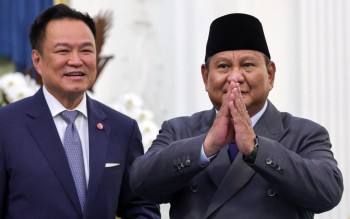
Indonesia and Thailand have set an ambitious target of achieving US$20 billion in bilateral trade by 2030, following the formal adoption of their Indonesia-Thailand Strategic Partnership Roadmap 2026-2030. The two nations sealed the commitment during the second Leaders' Consultation held at Merdeka Palace in Jakarta, bringing together President Prabowo Subianto and Thai Prime Minister Anutin Charnvirakul. This represents a significant escalation in economic ambitions between Southeast Asia's two largest Muslim-majority nations, reflecting their determination to deepen ties across multiple sectors beyond traditional trade relationships.
The strategic roadmap serves as a comprehensive blueprint for bilateral cooperation, establishing clear mechanisms and timelines for achieving shared economic objectives. President Prabowo emphasised that the framework would guide intensified collaboration between the two governments and their respective private sectors. A centerpiece of this arrangement is the establishment of the first-ever Joint Trade Commission in the bilateral relationship, designed to function as a dedicated platform for identifying commercial opportunities and systematically addressing trade barriers that have historically constrained the partnership. This institutional innovation signals a more structured approach to managing trade relationships compared to previous ad-hoc arrangements.
Antin's visit marked a significant diplomatic milestone, representing the first official visit by a Thai prime minister to Indonesia in 15 years. The Thai leader, who assumed office as Thailand's 32nd prime minister in September 2025, used the occasion to underscore Thailand's commitment to deepening economic ties with its larger neighbour. In remarks delivered during the joint press conference, Anutin highlighted that Indonesia ranks as Thailand's fourth-largest trading partner within ASEAN, suggesting considerable untapped potential given the combined economic scale of both nations. This positioning reflects the view that existing trade volumes do not adequately reflect the complementary strengths and market sizes of the two countries.
Food security emerged as a primary pillar of the renewed partnership, with both countries recognising mutual benefits from coordinated agricultural strategies. Thailand has positioned itself as a reliable supplier of high-quality rice to Indonesia, a staple commodity essential for food security across the archipelago. However, the scope of agricultural cooperation extends well beyond rice, encompassing technological transfer in farming methods, enhanced logistics infrastructure, improved food processing capabilities, and reinforced supply chain resilience. Anutin specifically outlined Thai interest in securing greater market access for agricultural products, including meat and dairy goods, as well as for agricultural machinery. The target of expanding Indonesian urea fertiliser imports from the current 60,000 tonnes annually to several hundred thousand tonnes demonstrates the ambition to create deeper vertical integration in agricultural value chains.
The energy sector represents another critical dimension of the partnership, with both nations committed to establishing an Indonesia-Thailand Energy Forum. This institutional mechanism will facilitate collaboration between government agencies and private enterprises in pursuing dual objectives: strengthening energy security for both countries and accelerating transitions toward sustainable energy systems. The initiative reflects regional concerns about energy independence and the imperative to balance economic growth with environmental sustainability. By creating a dedicated forum for dialogue, the two countries aim to identify complementary opportunities in renewable energy development and coordinate investments that benefit both economies.
Digital economy cooperation constitutes an increasingly important element of the bilateral agenda, signalling both nations' recognition of digitalisation as a driver of future economic growth. A particularly innovative feature involves promoting transactions conducted in local currencies, reducing reliance on third-country currencies and thereby improving the efficiency of bilateral trade and investment flows. This approach aligns with broader regional initiatives to reduce dependence on external financial intermediaries and build more autonomous economic systems. The measure also has implications for monetary policy autonomy and financial stability in both countries.
Both countries have identified the halal industry as a sector where their combined strengths could yield significant returns. Indonesia and Thailand, as predominantly Muslim nations with established halal certification systems, possess complementary advantages in developing regional and global halal value chains. Anutin raised the critical issue of renewing the mutual recognition agreement on halal certification before its expiration in November, indicating that institutional frameworks require active maintenance to remain effective. The expansion of halal industry cooperation extends beyond certification to encompass product development, supply chain standards, and market access in third countries, particularly in the Middle East and Muslim-majority regions globally.
Several bilateral agreements were concluded during the meeting, broadening the scope of cooperation beyond the strategic framework itself. A memorandum of understanding on education aims to strengthen human capital development, recognising that skilled workforces represent essential foundations for long-term economic competitiveness. Additional agreements involving the Tourism Authority of Thailand and TransNusa addressed tourism and aviation connectivity, while a separate accord between Bio-Axel and Pro Konsilium focused on organic waste processing, demonstrating how the partnership encompasses both traditional sectors and emerging environmental technologies.
The elevation of bilateral ties to a Strategic Partnership status during Prabowo's visit to Bangkok in the preceding year provides the backdrop for the current roadmap adoption. The progression from general bilateral relations to a formalised strategic partnership reflects a deliberate effort to institutionalise cooperation and signal long-term commitment beyond the tenure of individual administrations. For Malaysian observers, this deepening Indonesia-Thailand partnership carries implications for regional supply chains, investment patterns, and the broader balance of economic power within ASEAN. The establishment of mechanisms like the Joint Trade Commission may set precedents for how other ASEAN members structure their bilateral relationships, potentially influencing Malaysia's own partnership strategies within the region.

