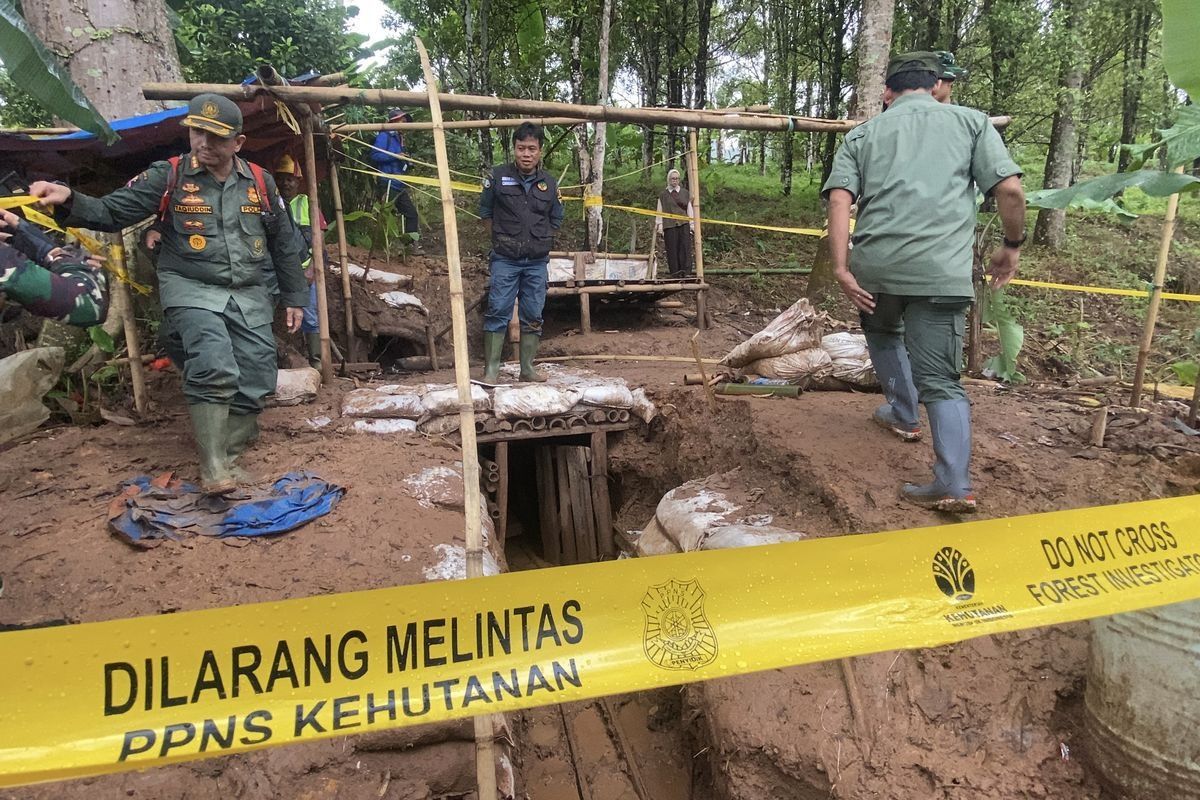
Indonesia's energy ministry has moved to prosecute 24 foreign nationals implicated in a sprawling illegal gold mining operation that was actively constructing mining infrastructure across Maluku's Gunung Botak area. The criminal charges represent an escalation in the government's response to what authorities say was an organised, well-resourced mining venture operating without proper licencing or environmental oversight in one of the country's eastern regions.
According to energy ministry official Jeffri Huwae, the foreign suspects allegedly directed the construction of roads, processing plants, and other facilities necessary to support large-scale gold extraction in the Gunung Botak district. Rather than purely extractive activities, the scope of the operation suggests sophisticated planning and capital investment to establish a functioning mining complex. The scale indicates this was not opportunistic or small-scale pilferage, but rather a coordinated commercial venture designed to move and process significant quantities of ore.
Those convicted under Indonesia's mining laws face potentially severe consequences. The energy ministry confirmed that violations carry maximum prison sentences of five years, a deterrent reflecting the seriousness with which the Indonesian government views the undermining of its mineral resource sovereignty and the environmental damage associated with unregulated extraction. This penalty framework establishes a significant legal jeopardy for those found guilty of the charges.
The breakdown of the accused reveals a prosecution effort complicated by jurisdictional challenges. Twelve of the 24 foreign nationals have already been detained within Indonesia and face prosecution domestically. However, the remaining twelve have succeeded in leaving Indonesian territory and are now beyond the immediate reach of law enforcement. This flight suggests advance warning of the investigation or a deliberate operational strategy to limit exposure, with some personnel based abroad while others managed on-site activities. The split custody situation has created asymmetrical prosecution challenges for authorities.
State news agency Antara had previously reported that the detained individuals were primarily Chinese nationals working under the sponsorship of local company PT Harmoni Alam Manise. That corporate sponsorship structure raises important questions about layers of complicity, whether the local company was a knowing participant in illegal operations or itself victimised by foreign operatives, and what role local business registration might have played in providing cover for illicit activity. The ministry has not disclosed the nationalities of all 24 suspects, leaving open the possibility that other foreign nationals beyond those initially reported by Antara were involved.
The scale of gold production remains undisclosed, a notable gap that prevents assessment of whether this was a minor operation or one extracting commercially significant quantities. The refusal to quantify output limits public understanding of the environmental impact and the economic loss to the state in forgone royalties and taxes. This opacity may reflect ongoing investigative work or bureaucratic caution regarding sensitive resource figures.
Two Indonesian nationals have also been charged alongside the foreign suspects, suggesting that the operation succeeded partly through connivance or participation by local facilitators. These local suspects may have provided critical services such as land access, local supply chains, transportation, official contacts, or other support that would be difficult for foreign operators to arrange without deep local knowledge and connections. Their involvement underscores that illegal mining networks typically require domestic enablement to function effectively.
This case emerges within a broader pattern of foreign-driven illegal mining that has periodically surfaced across Indonesia's outer regions. The country's vast mineral wealth, particularly in eastern provinces with weaker institutional presence, creates recurring vulnerabilities to exploitation by transnational criminal networks. PNG and Papua have proven susceptible to such operations, and Maluku's geography and resource base make it similarly exposed.
Indeed, Papua's police recorded a comparable incident in the Senggi district where four Chinese nationals were arrested the previous year for illegal mining activities. That earlier case demonstrates that the Gunung Botak operation did not occur in isolation but rather represents a recurrent challenge. The repetition suggests that law enforcement successes in prosecuting individual networks have not yet deterred broader investment or participation in illegal extraction ventures.
For Malaysia and the wider Southeast Asian region, the Gunung Botak case carries important implications. As Chinese capital and expertise circulate throughout Southeast Asia seeking resource extraction opportunities, countries with substantial mineral endowments face heightened exposure to organised illegal mining. The operation's apparent sophistication—establishing infrastructure rather than merely extracting ore—indicates that enforcement must target not just point-source extraction but the entire logistical ecosystem that sophisticated networks construct. Regulators across the region should anticipate that illegal mining operators will attempt similar infrastructure-building strategies, requiring monitoring of unusual construction, earthmoving equipment deployment, and processing facility development in remote resource areas. The transnational dimension also underscores why regional intelligence sharing and coordinated enforcement protocols are increasingly necessary to disrupt these networks before they mature into entrenched operations capable of withstanding individual country enforcement actions.

