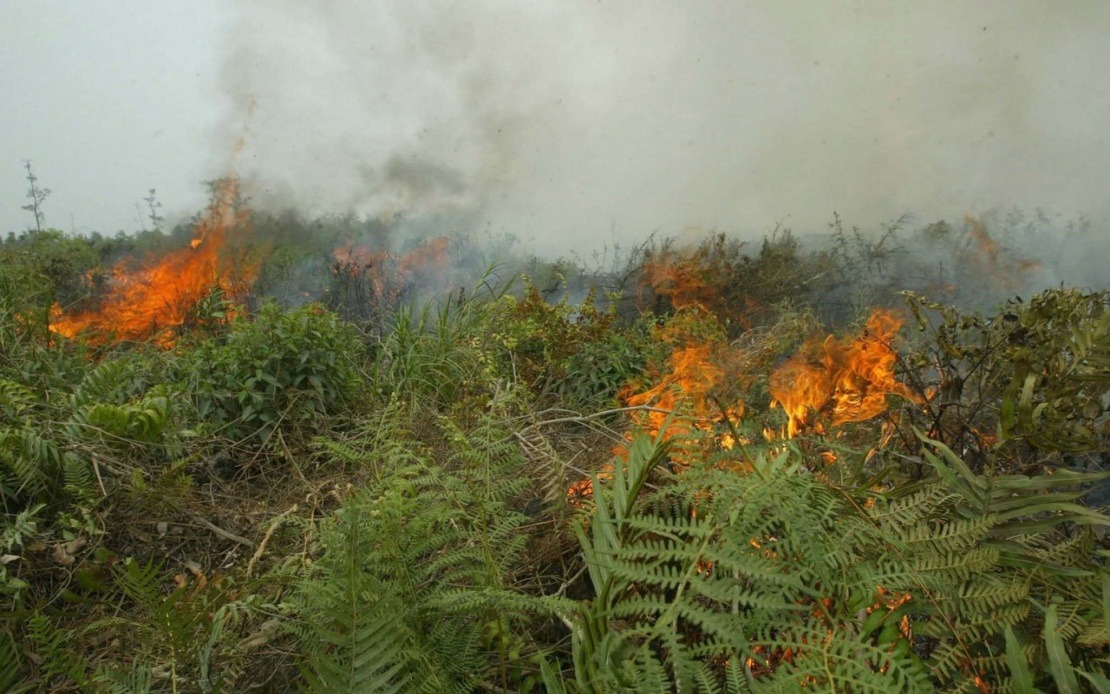
Indonesia is grappling with an intensifying forest fire emergency across its most fire-prone regions, with hotspot concentrations in West Kalimantan nearly doubling in a single day to 7,377 as of Monday, according to officials monitoring the crisis. The situation underscores the persistent vulnerability of Indonesia's vast forest resources to seasonal burning, a problem that reverberates across Southeast Asia through transboundary haze and creates economic and public health consequences for the entire region.
Data released by the National Disaster Mitigation Agency shows the alarming trajectory of the emergency. West Kalimantan experienced a surge of 3,553 hotspots in twenty-four hours, while simultaneous fire spots climbed to 104 from the previous count of 16. Visibility in affected zones has deteriorated dramatically, dropping below one kilometre in many areas. Berton Panjaitan, acting head of the agency's data and communications centre, presented these figures during a Monday online briefing, signalling the rapid deterioration across the fire-affected territories.
The situation across other Kalimantan provinces reveals a more mixed pattern, though the overall trend remains troubling. Central Kalimantan recorded a modest decline of 147 hotspots, settling at 5,244, yet the number of active fire spots climbed by 16 to reach 72. South Kalimantan saw hotspots decrease by 405 to 504, but paradoxically recorded 33 additional fire spots, bringing the total to 55. This disconnect between declining hotspot numbers and increasing active fires in some regions suggests fires are becoming more concentrated and harder to control as resources are stretched thin across response teams.
Sumatra's fire situation presents a somewhat different regional pattern. South Sumatra joined the crisis escalation, with hotspots rising by 209 to total 1,013, indicating that fire pressure is spreading beyond traditional Kalimantan epicentres. Conversely, Riau and Jambi provinces registered notable improvements, with hotspots declining substantially in both locations. Fire spot counts also decreased across all three Sumatran provinces, suggesting that containment efforts in Sumatra are bearing some fruit, even as the Kalimantan front deteriorates.
The human toll extends well beyond the immediate fire zones into the broader Southeast Asian population. Approximately 5.5 million people across Sumatra and Kalimantan face direct exposure to hazardous smoke and air quality degradation, creating cascading health consequences that stretch Indonesia's medical infrastructure. Deputy Health Minister Prof Dante Saksono Harbuwono warned that cumulative acute respiratory infection (ISPA) cases reached approximately 13,500 across July and August, with 4,082 active cases recorded as of Sunday. The trajectory of respiratory ailments represents a substantial increase compared to the previous year, indicating both the intensity of current fires and their broader health footprint across vulnerable populations including children, elderly citizens, and those with pre-existing respiratory conditions.
Government authorities have initiated enforcement action against commercial entities suspected of contributing to the crisis. The Environment Ministry has identified 42 companies operating within concession areas where fires have been detected, triggering investigation protocols that cross-reference satellite hotspot data against concession boundary maps. Environmental Law Enforcement Deputy Rizal Irawan explained that 19 of these companies currently undergo field verification, while remaining entities face inspection during a subsequent phase. The legal framework applies strict liability regardless of whether fires were deliberately set or arose accidentally, meaning concession holders bear responsibility and face either administrative penalties or civil sanctions.
This enforcement approach reflects Indonesia's effort to hold commercial interests accountable for land management within their licensed territories. The strict liability principle shifts burden of proof away from government prosecutors, requiring companies to demonstrate they took adequate prevention and response measures rather than requiring authorities to prove negligence or intent. Such frameworks have proven challenging to implement consistently across Indonesia's vast forestry sector, where monitoring capacity remains limited and enforcement often faces political or economic pressure from influential operators.
Regional cooperation mechanisms are being activated to address the transboundary dimension of the fire crisis. Indonesia has coordinated with neighbouring countries, particularly Malaysia and Singapore, through ASEAN frameworks following an environment ministerial meeting held in Bali last month. These diplomatic channels prove essential given that haze from Indonesian fires regularly affects air quality across Malaysia, Singapore, and southern Thailand, generating public health and economic impacts that transcend borders. Cross-border coordination helps establish early warning systems, mutual aid protocols, and pressure on source countries to implement preventive measures.
On the prevention front, Indonesia has established a community-based fire response network to enhance early detection and rapid suppression capabilities. The government reports that 95 Fire Care Community (MPA) groups comprising 1,425 personnel have been activated across six fire-prone provinces in Sumatra and Kalimantan, with an additional 35 groups planned for deployment during 2024. These community-based units serve as frontline defenders, leveraging local knowledge and rapid response times to contain small fires before they escalate into major conflagrations that overwhelm official disaster response capacity.
Corporate accountability mechanisms complement grassroots prevention efforts through mandatory preparedness requirements. Notices distributed to 2,226 companies last year mandated they establish personnel and equipment capacity for fire prevention and response within their concession areas. Approximately 80 per cent have since reported readiness compliance, though 20 per cent remain non-responsive, suggesting implementation gaps that authorities must address through follow-up enforcement. These corporate preparations aim to establish private-sector responsibility for first-response activities, reducing reliance on stretched government resources while creating incentive structures for fire prevention investment.
The escalation in West Kalimantan hotspots serves as a stark reminder of Indonesia's seasonal fire vulnerability and the region's interconnected environmental challenges. The crisis demands sustained commitment to enforcement, corporate accountability, community mobilisation, and international cooperation to mitigate both immediate health impacts and long-term ecological damage. For Malaysian and other Southeast Asian readers, the situation underscores how environmental management decisions in one jurisdiction create tangible consequences across regional borders, reinforcing the case for coordinated regional environmental governance frameworks that can address transnational challenges with unified urgency and coordinated response mechanisms.

