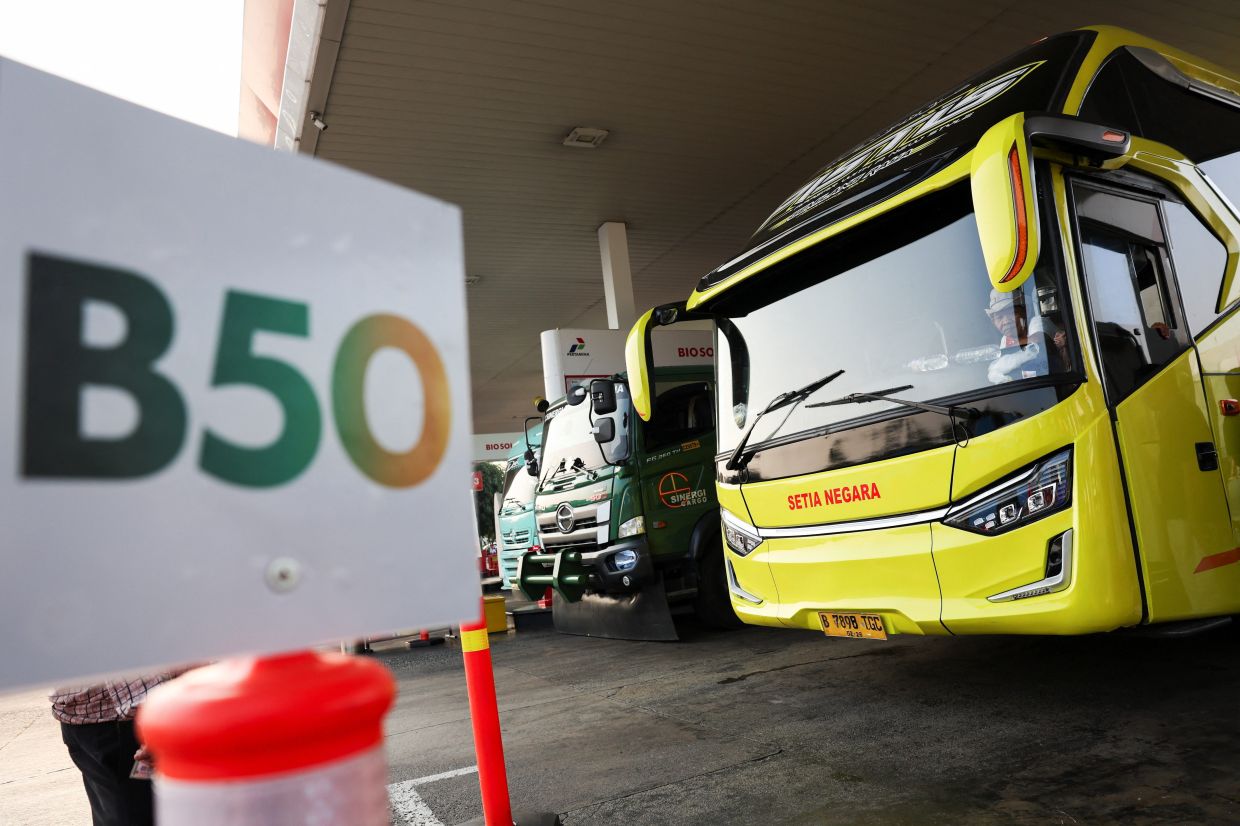
Indonesia has formally commenced operations of its B50 biodiesel programme, ramping up the mandatory palm oil content in blended fuel to 50% from the previous 40% threshold. Energy Minister Bahlil Lahadalia disclosed during a ceremony in Karawang, West Java, that this elevated mandate will drive crude palm oil consumption upward to between 16.3 million and 17 million metric tons annually, representing a significant increase from the current 15.2 million tons. The announcement, made in the presence of President Prabowo Subianto, marks a pivotal moment in Indonesia's energy strategy as the world's dominant palm oil producer seeks to leverage its agricultural abundance for fuel security.
The B50 initiative operates within a broader policy architecture designed to substantially diminish Indonesia's dependence on imported diesel fuel. By mandating that half of all biodiesel blends derive from domestically produced palm oil, the government aims to achieve meaningful savings in its import expenditure while simultaneously providing substantial market outlets for the nation's palm oil sector. This dual objective reflects Jakarta's recognition that energy independence and agricultural competitiveness are deeply intertwined within its economic development model. The programme ranks among the most ambitious mandatory biodiesel blending schemes globally, positioning Indonesia as a leader in this particular approach to energy transition.
President Prabowo employed the Karawang ceremony as an opportunity to frame Indonesia's biodiesel expansion within the context of global climate action. He asserted that Indonesia is spearheading international efforts to diminish carbon emissions through renewable fuel initiatives. However, his own testimony revealed the political complexity surrounding the programme's parameters. Prabowo indicated that he had personally championed a B100 mandate—meaning pure biodiesel—but had been counseled by ministerial advisers that a 50% blend would suffice to eliminate diesel imports entirely. This narrative suggests that the chosen 50% threshold represents a compromise between ambitious environmental aspirations and pragmatic implementation concerns, rather than the outer limit of technical feasibility.
Looking beyond the current B50 framework, the government has already signaled its intention to push the boundaries further. Prabowo called for continued pursuit of a 60% blend, indicating that the 50% level should be viewed as an intermediate step rather than a final destination. Energy Minister Bahlil acknowledged this trajectory by announcing that the government would initiate research into formulating a viable 60% biodiesel mixture. This forward-looking stance suggests that policymakers perceive substantial room for expansion within Indonesia's palm oil capacity and the domestic fuel market's absorption capability.
The financial dimensions of the B50 programme underscore its significance for Indonesia's fiscal position. Raising the biodiesel blend to 50% is projected to reduce this year's import expenditure by 170 trillion rupiah, equivalent to approximately $9.41 billion USD. When contextualized against the ministry's projection of 133 trillion rupiah in savings for 2025 under the previous B40 regime, the incremental jump to B50 demonstrates the substantial additional foreign exchange preservation expected from this policy shift. For a nation perpetually concerned with maintaining healthy reserves and managing its current account balance, these savings translate into resources that can be redirected toward infrastructure, healthcare, education, or debt servicing.
Operational implementation of the B50 programme requires careful coordination across Indonesia's sprawling energy and agriculture sectors. The government has allocated between 16.7 million and 18 million kilolitres of fatty acid methyl ester (FAME)—the technical designation for biodiesel produced from vegetable oils—under the new mandate. This compares with the 15.64 million kilolitres distributed during the B40 programme in the current year, itself representing a 4.68% increase over the prior year's consumption of 14.94 million kilolitres. The upward trajectory of allocations reflects both the expanding blend percentage and the presumed growth in overall diesel consumption across Indonesia's transportation and industrial sectors.
Yet significant administrative questions remain unresolved at the implementation stage. Industry participants have been awaiting formal notification of revised biodiesel allocations from the government to facilitate their transition planning and investment decisions. The energy ministry has not yet issued supplementary quotas specifically designated for the B50 programme, creating a period of uncertainty for refineries, distributors, and palm oil producers who must calibrate their operations and supply chains according to the new parameters. This lag between policy announcement and operational detail allocation is not uncommon in Indonesia's regulatory environment, but it underscores the complexity of orchestrating changes across multiple supply chains simultaneously.
The transition from B40 to B50 will unfold over a defined timeline. Businesses have been granted until the end of September to exhaust their remaining B40 stocks, providing a grace period within which the older fuel specification can be used up before the full shift to the higher blend occurs. This staged implementation approach mitigates potential disruptions to the distribution network and provides stakeholders with breathing room to adjust their logistics, storage, and handling procedures. Nonetheless, companies must begin preparing immediately if they are to avoid bottlenecks or operational delays once the September deadline passes.
For Malaysia and other Southeast Asian observers, Indonesia's biodiesel expansion carries multifaceted implications. The programme simultaneously addresses energy security, supports agricultural producer incomes, and generates foreign exchange savings—a combination that many regional governments find compelling. However, it also intensifies competitive pressure within the palm oil market and raises questions about the sustainability implications of rapidly expanding cultivation to meet fuel demand. Malaysia, as the region's second-largest palm oil producer, faces the prospect of Indonesian market share consolidation in the biodiesel sector, potentially affecting prices and trade dynamics across Southeast Asia's energy and commodity markets.
The B50 mandate also reflects a strategic decision by Indonesia to pursue renewable energy transition through its existing comparative advantages rather than through portfolio diversification into solar, wind, or other energy sources. This path-dependent approach maximizes utilization of established agricultural infrastructure and supply chains but potentially concentrates energy security and climate strategy around a single commodity. As global scrutiny of biodiesel's genuine environmental benefits intensifies—given concerns about land use change, peatland protection, and carbon accounting—Indonesia's expanding reliance on palm oil-based fuel may face increasing international scrutiny in carbon accounting frameworks and trade negotiations.
The success of the B50 programme will ultimately depend on whether the government can maintain stable policy frameworks, ensure transparent allocation mechanisms, and prevent excessive volatility in palm oil prices that could undermine the projected import savings. Industry observers will be monitoring whether the promised allocations materialize on schedule and whether refineries and distributors can absorb the higher blending percentages without quality issues or supply disruptions. The government's stated intention to eventually advance toward B60 and potentially higher blends suggests that this initial phase represents merely the beginning of a longer-term energy transformation built substantially on Indonesia's dominant position in global palm oil production.

