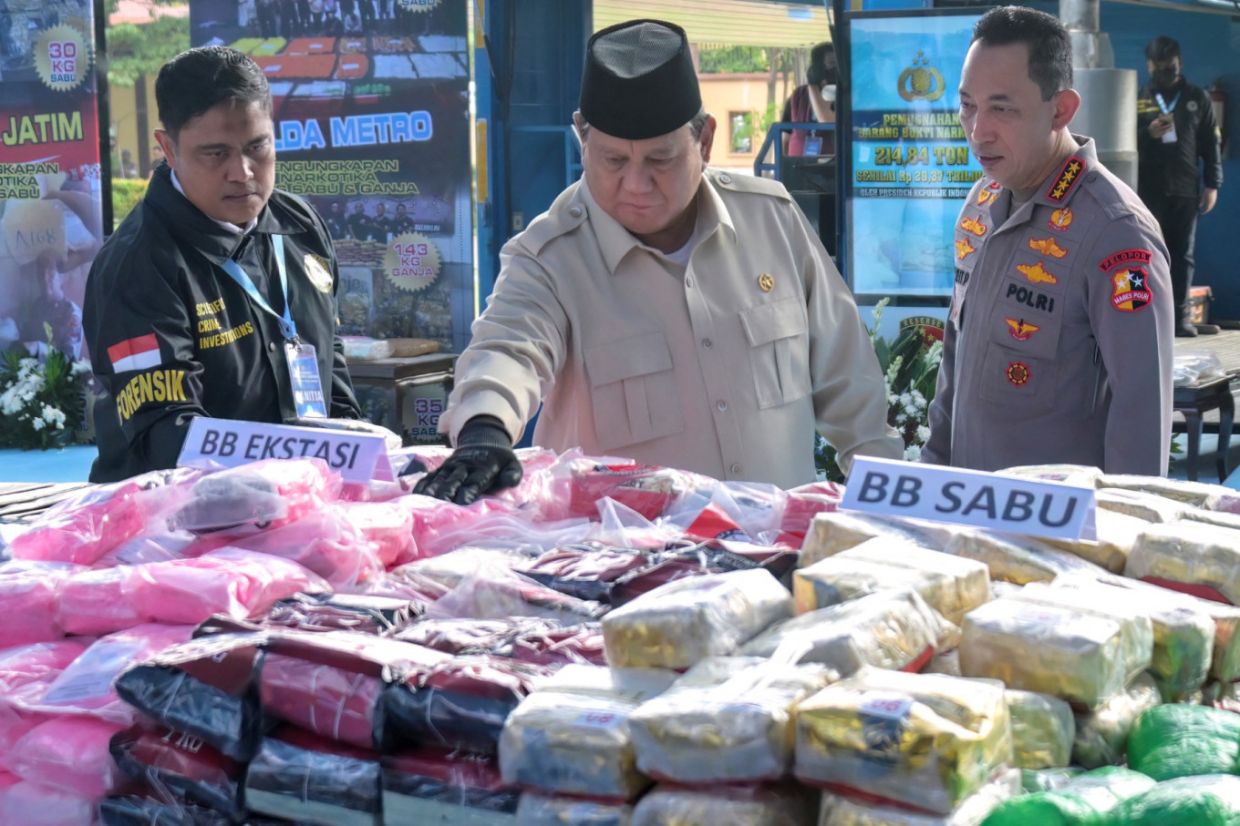
Indonesia has executed one of its largest drug interdiction operations in recent years, seizing 2.6 tonnes of liquid methamphetamine from a vessel operating under a false identity in the waters off Bengkalis, Riau province. The National Narcotics Agency announced the operation late on Tuesday, August 18, following the interception of the MV Rain Maker on the preceding Monday evening. Ten crew members, all nationals of Myanmar, were taken into custody as a result of the operation, marking a significant blow against transnational drug trafficking networks that have increasingly targeted Indonesian waters as a transit route.
Intelligence gathered by the narcotics authority had flagged a suspicious cargo shipment originating from Sarawak, Malaysia, which was moving through the Andaman Sea with Indonesia as the apparent destination. This advance warning prompted the agency to mobilize a coordinated enforcement action alongside customs officials to intercept the vessel before it could deliver its contraband. The MV Rain Maker, despite operating under a legitimate-sounding vessel name, had been flagged in intelligence reports as potentially involved in narcotics trafficking, leading authorities to halt and conduct a thorough examination of the ship and its contents.
During the inspection, law enforcement discovered the methamphetamine concealed within a deliberately obscured fashion, distributed across eight water barrels and a large water tank aboard the vessel. Roy Hardi Siahaan, a senior official with the National Narcotics Agency, confirmed the discovery, emphasizing the operational sophistication of the smuggling attempt and the scale of the haul. The use of water containers as a concealment method represents a common trafficking tactic designed to evade routine cargo inspections and exploit the visual similarity to legitimate maritime supplies. The interception demonstrates both the persistence of smuggling networks and the increasing capacity of Indonesian authorities to detect such operations.
Beyond the primary methamphetamine shipment, sniffer dogs deployed during the vessel's inspection detected additional contraband, uncovering more than 1.5 million illegal cigarettes stowed aboard the MV Rain Maker. This secondary discovery suggests the vessel may have been engaged in multiple illicit trading activities, converting maritime voyages into comprehensive smuggling operations. The cigarette seizure, while smaller in scale than the drug haul, represents another enforcement victory against transnational criminal enterprises operating through Indonesian waters and ports.
The broader context of this operation reveals intensifying trafficking pressure along Southeast Asian maritime corridors. In the previous year, Indonesian authorities had announced what they characterized as the nation's most substantial drug bust involving crystal methamphetamine, when two tonnes were discovered aboard a fishing vessel traveling from the Andaman Sea toward Batam Island. The latest seizure, while involving a different chemical form of the drug, indicates that traffickers continue to exploit maritime routes with undiminished frequency and ambition. The Andaman Sea corridor and passages through Indonesian archipelago waters remain persistent vulnerabilities despite heightened enforcement efforts.
The timing and pattern of recent interdictions suggest concentrated trafficking campaigns targeting the region. Earlier in August, on the eighth of the month, Indonesian authorities had seized 1.3 tonnes of ketamine from another vessel operating in waters proximate to the Riau Islands, positioned near Singapore's maritime borders. That operation resulted in eight arrests, comprising seven Myanmar nationals and one individual from Taiwan. The involvement of crews predominantly from Myanmar points toward organized trafficking networks utilizing labor from the same source regions, suggesting coordinated supply chains rather than sporadic smuggling attempts.
The repeated deployment of Tanzanian-flagged vessels in trafficking operations within the same month underscores a deliberate strategy by criminal syndicates to utilize vessels registered under specific flag states, potentially to exploit regulatory gaps or perceived vulnerabilities in maritime enforcement protocols. The use of false vessel names further demonstrates the calculated methods employed to circumvent identification systems. These tactical adjustments indicate that trafficking organizations possess operational intelligence about enforcement patterns and actively adapt their methodologies accordingly.
Indonesia maintains among the world's most stringent pharmaceutical and narcotics legislation, with capital punishment theoretically available as punishment for major traffickers involved in drug distribution and production. However, the nation has implemented a de facto moratorium on executions for several years, transitioning toward imprisonment as the predominant penalty structure. This legal framework remains a significant deterrent despite the moratorium, yet the continued high volume of interdiction operations suggests that trafficking networks calculate acceptable risk levels against the commercial returns from successful deliveries.
The enforcement success reflects both enhanced intelligence capabilities and operational coordination between Indonesian agencies responsible for narcotics enforcement and customs administration. The National Narcotics Agency's capacity to receive and act upon advance intelligence regarding specific shipments demonstrates institutional development in maritime domain awareness. For Malaysia and other regional neighbors, these operations provide reassurance that Indonesia remains committed to interdicting flows of illicit substances, though the continued high frequency of seizures indicates that comprehensive supply chain disruption remains elusive. The persistent targeting of Southeast Asian maritime corridors by international trafficking organizations underscores the need for sustained, coordinated regional enforcement responses across multiple national jurisdictions to address trafficking at source, transit, and destination points.

