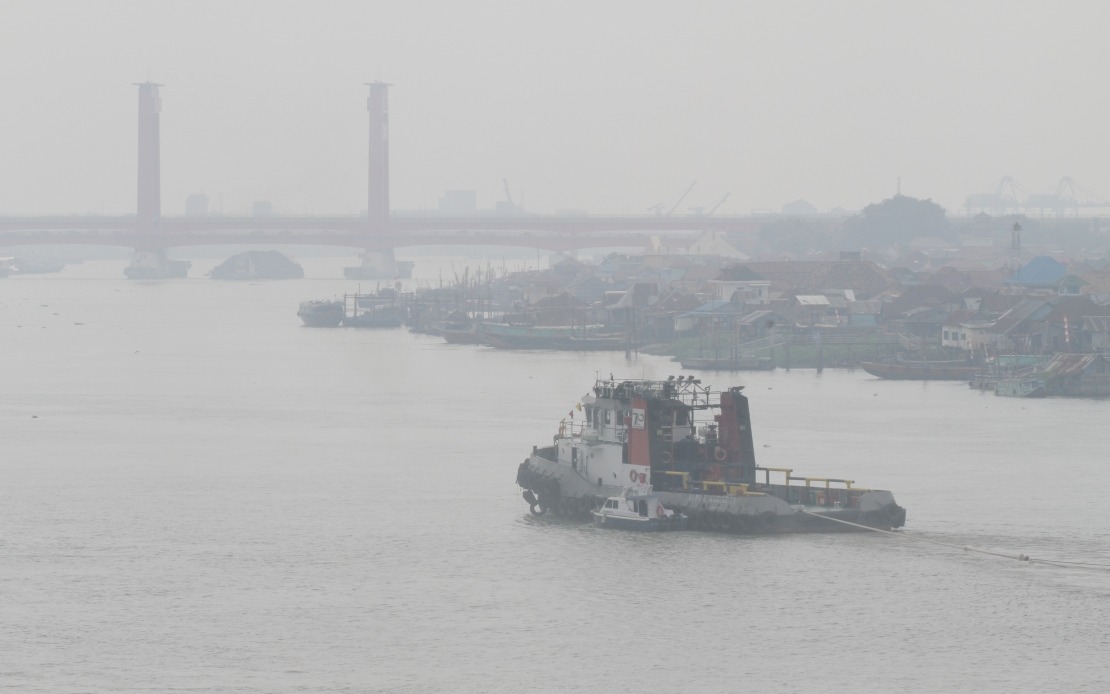
Indonesia has stepped up diplomatic coordination with Malaysia to address the intensifying transboundary haze crisis, with both nations agreeing to deploy weather modification technology as a key component of their joint response. The National Disaster Mitigation Agency's Acting Head of Data, Information, and Disaster Communication Centre, Berton Panjaitan, confirmed that bilateral discussions have progressed beyond initial consultations, establishing a framework for enhanced cooperation spanning prevention, real-time monitoring, and cloud-seeding initiatives across the shared border zone.
The deteriorating air quality across Southeast Asia reflects the severity of forest and land fires raging through West Kalimantan, where smoke plumes have created hazardous conditions far beyond Indonesia's borders. As of Friday morning, the Air Pollutant Index readings in severely affected areas of Sarawak reached 195, approaching the very unhealthy threshold of 201 and above, leaving residents and businesses grappling with reduced visibility and respiratory health concerns. The crisis extends across Malaysia's peninsula, with Kuala Lumpur, Selangor, Penang, Kedah, and Perak all recording unhealthy air quality levels that have prompted public health advisories and triggered operational adjustments across schools and workplaces.
The significance of this coordinated approach lies in its recognition that transboundary haze requires mechanisms transcending national boundaries. Malaysia has already secured permission from Jakarta to conduct cloud-seeding operations within Indonesian airspace, a diplomatic achievement that signals Jakarta's willingness to permit external intervention in addressing the environmental emergency. This arrangement, confirmed following discussions between Malaysian Natural Resources and Environmental Sustainability Minister Datuk Seri Arthur Joseph Kurup and Indonesian Environment Minister Jumhur Hidayat on August 24, represents a departure from historical tensions surrounding haze diplomacy in the region.
Although Indonesia has not yet formally requested direct firefighting assistance such as water-bombing operations from Malaysia, Berton indicated that Jakarta maintains openness to expanded support should circumstances warrant escalation. This measured approach reflects the complexities of sovereignty and operational coordination, yet signals that both governments recognise the need for flexibility as the situation develops. Malaysia has demonstrated commitment to practical bilateral support previously, having contributed six water pumps to West Kalimantan's provincial administration during the 2023 crisis, establishing a precedent for non-military technical assistance.
The urgency of the current situation stems from a significant departure from recent trends. The Malaysian Consulate in Pontianak observed that haze conditions this year have markedly worsened compared to the relatively benign environmental conditions of 2024 and 2025, suggesting that meteorological or fire management factors have combined unfavourably. This escalation carries particular implications for the expatriate community, with 577 Malaysian nationals registered across West Kalimantan facing prolonged exposure to degraded air quality. The consulate has implemented protective measures including mandatory mask-wearing protocols, transition of school curricula to online delivery, and restrictions on non-essential outdoor movements—steps that reflect both cautious governance and acknowledgment of genuine public health risks.
For Malaysia's broader population, the haze represents more than a temporary air quality inconvenience. The phenomenon disrupts economic activity, strains healthcare systems treating respiratory complications, and raises long-term environmental concerns about transboundary pollution patterns. The fact that major urban centres across the peninsula—from Kuala Lumpur to Penang—are simultaneously experiencing unhealthy air readings underscores the regional scale of atmospheric transport mechanisms at work. Unlike isolated incidents confined to specific localities, widespread simultaneous degradation suggests that atmospheric conditions are facilitating long-distance smoke dispersion across the South China Sea corridor.
The weather modification strategy represents a technological intervention aimed at suppressing fire-prone conditions through cloud-seeding operations that theoretically increase precipitation over affected forest areas. Whilst the effectiveness of such operations remains subject to scientific debate, their deployment signals political commitment to active problem-solving rather than passive acceptance of environmental deterioration. For Malaysian policymakers, the arrangement securing airspace access carries symbolic importance as evidence that bilateral environmental governance mechanisms can function despite broader geopolitical complexities.
Indonesia's engagement through Berton's statements emphasises communication channels with neighbouring countries extending beyond Malaysia, suggesting a regional diplomatic approach to haze management. This multilateral consciousness reflects recognition that transboundary pollution affects broader ASEAN dynamics and that effective regional environmental governance requires sustained institutional relationships. The August 24 ministerial discussions between Kurup and Hidayat represent formal governmental commitment at appropriate decision-making levels, ensuring that haze cooperation receives priority attention rather than relegation to lower bureaucratic tiers.
Moving forward, the effectiveness of this coordinated framework will depend on sustained political will and adequate resource allocation. Weather modification operations require technical expertise, financial investment, and precise meteorological coordination that cannot be improvised during active crisis periods. The establishment of agreed protocols now, whilst atmospheric conditions remain challenging, provides opportunity to refine coordination mechanisms before emergency pressures demand rapid decision-making. For Malaysian stakeholders monitoring this situation, the demonstrated willingness of both governments to engage constructively suggests that transboundary environmental challenges, though politically sensitive, need not escalate into diplomatic confrontations when managed through established bilateral channels and committed ministerial engagement.

