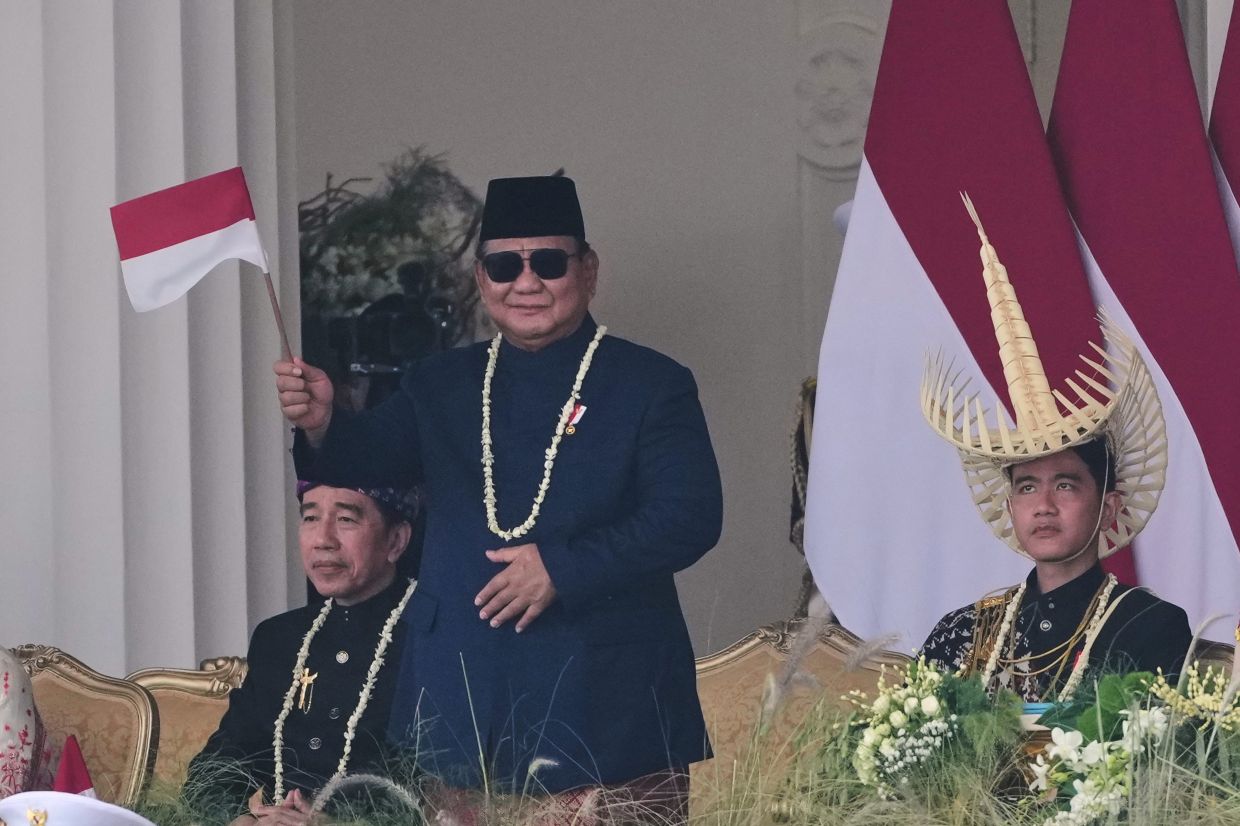
President Prabowo Subianto presided over Indonesia's 81st Independence Day observance in Jakarta on Monday, conducting the nation's flag-hoisting ceremony at Merdeka Palace while the country simultaneously grappled with the aftermath of a catastrophic earthquake that struck Flores Island in East Nusa Tenggara province. The formal occasion, marked by traditional pageantry and solemn commemoration, underscored the dual reality facing Southeast Asia's largest nation: the celebration of hard-won independence alongside an urgent humanitarian crisis demanding immediate government response and resources.
The President appeared in ceremonial dress, donning a navy beskap paired with a black peci and a jasmine garland as he assumed his role as inspector of the Independence Day commemoration. The formal proceedings unfolded with characteristic grandeur, featuring artistic performances and a military parade that transported a replica of Indonesia's iconic red-and-white flag and the original Proclamation of Independence from the National Monument to the presidential palace. The procession included 114 cavalry troops and 45 motorcycle-mounted security personnel, reflecting the ceremonial importance the state attaches to this annual marking of the nation's August 17, 1945 declaration of independence.
However, the triumphalism typically associated with Independence Day took on a more muted character this year, as Prabowo led attendees in a moment of silence to honour the nation's historical sacrifices while specifically calling for prayers for citizens affected by ongoing natural disasters. This invocation of compassion towards disaster victims represented a notable pivot from purely patriotic commemoration towards acknowledgment of present-day suffering, reflecting the gravity of the situation unfolding on Flores Island.
The timing of the ceremony proved particularly poignant given the scale of destruction in East Nusa Tenggara. On Saturday, August 16, a powerful 7.7-magnitude earthquake struck Flores early in the morning, killing 53 people and causing extensive damage to hundreds of residential and commercial structures. The initial tremor unleashed a cascade of seismic activity, with the National Disaster Mitigation Agency recording nearly 1,000 aftershocks of varying intensities in the immediate aftermath. The disaster forced approximately 5,400 residents to evacuate their homes, and official records documented more than 130 injured individuals, many suffering fractures and other serious injuries requiring medical intervention.
The seismic crisis extended into Independence Day itself when a subsequent 5.8-magnitude earthquake struck off the island on Monday morning, originating from a depth of 10 kilometres with its epicentre positioned roughly 39 kilometres north of NTT according to data from Indonesia's Meteorology, Climatology and Geophysics Agency. This continued seismic activity heightened anxieties among residents already traumatised by the weekend's destruction and complicated relief efforts by forcing additional evacuations and hampering reconstruction work.
The government's response to the crisis manifested in the notable absence of several senior ministers from the Jakarta ceremony. State Secretary Prasetyo Hadi disclosed that Coordinating Human Development Minister Pratikno, Home Minister Tito Karnavian, Public Works Minister Dody Hanggodo, and Deputy Health Minister Benjamin Paulus Octavianus had travelled to NTT instead of attending the Independence Day festivities. These ministerial deployments reflected the administration's prioritisation of disaster response coordination over ceremonial attendance, with officials on the ground managing humanitarian assistance, damage assessment, and reconstruction planning.
Prasetyo framed the ministerial absences as an expression of the government's commitment to ensuring affected citizens received timely support, explicitly stating that celebrations could not proceed in isolation from the suffering of disaster victims. His comments underscored an attempt by the Prabowo administration to balance national commemoration with demonstrated responsiveness to crisis, though the optics of senior officials absent from the main ceremony also suggested the genuine scale of the emergency facing the government.
When questioned about the possibility of President Prabowo travelling to Flores to inspect damage and meet with survivors, Prasetyo declined to confirm any such plans. Instead, he indicated that the administration would assess the evolving situation on the ground before determining whether a presidential visit would be appropriate or operationally feasible. This cautious approach reflected uncertainty about the stability of the disaster zone, the adequacy of current ministerial presence, and whether a high-profile presidential visit might divert resources from urgent relief work or create additional security and logistical demands during a sensitive period.
The juxtaposition of Independence Day celebrations with an active humanitarian crisis highlighted the unpredictable challenges facing Indonesia's leadership. The country's location on the Pacific Ring of Fire makes it one of the world's most seismically active regions, with earthquakes capable of striking suddenly and with devastating consequences. For Malaysian observers and Southeast Asian policymakers, the incident illustrated the vulnerability of densely populated island nations to natural disasters and the importance of maintaining robust disaster preparedness infrastructure.
Indonesia's response mechanism also warranted scrutiny from a regional perspective. The rapid deployment of multiple ministers to the affected area demonstrated institutional capacity to mobilise resources quickly, yet questions remained about the adequacy of pre-positioned emergency supplies, evacuation procedures, and medical capacity in remote eastern provinces. These considerations held relevance for Malaysia, which shares similar geographical vulnerabilities and must continuously evaluate its own disaster response frameworks.
The broader context included recent tensions that had marked the same weekend, as unrest occurred during commemorative events related to the Aceh peace agreement in the northern province. This confluence of Independence Day ceremonies, earthquake disaster management, and regional political sensitivities reflected the complex operating environment for the Prabowo administration during its early months in office, requiring simultaneous attention to historical commemoration, crisis response, and internal stability.
As Independence Day observances concluded in Jakarta, the focus increasingly shifted towards East Nusa Tenggara, where the immediate priorities centred on consolidating rescue operations, providing medical care to the injured, establishing temporary shelter for the displaced, and beginning the lengthy process of infrastructure reconstruction. The incident served as a sobering reminder that national celebrations, while important to collective identity, must ultimately serve populations whose most pressing concerns involve survival, security, and recovery from natural catastrophes.

