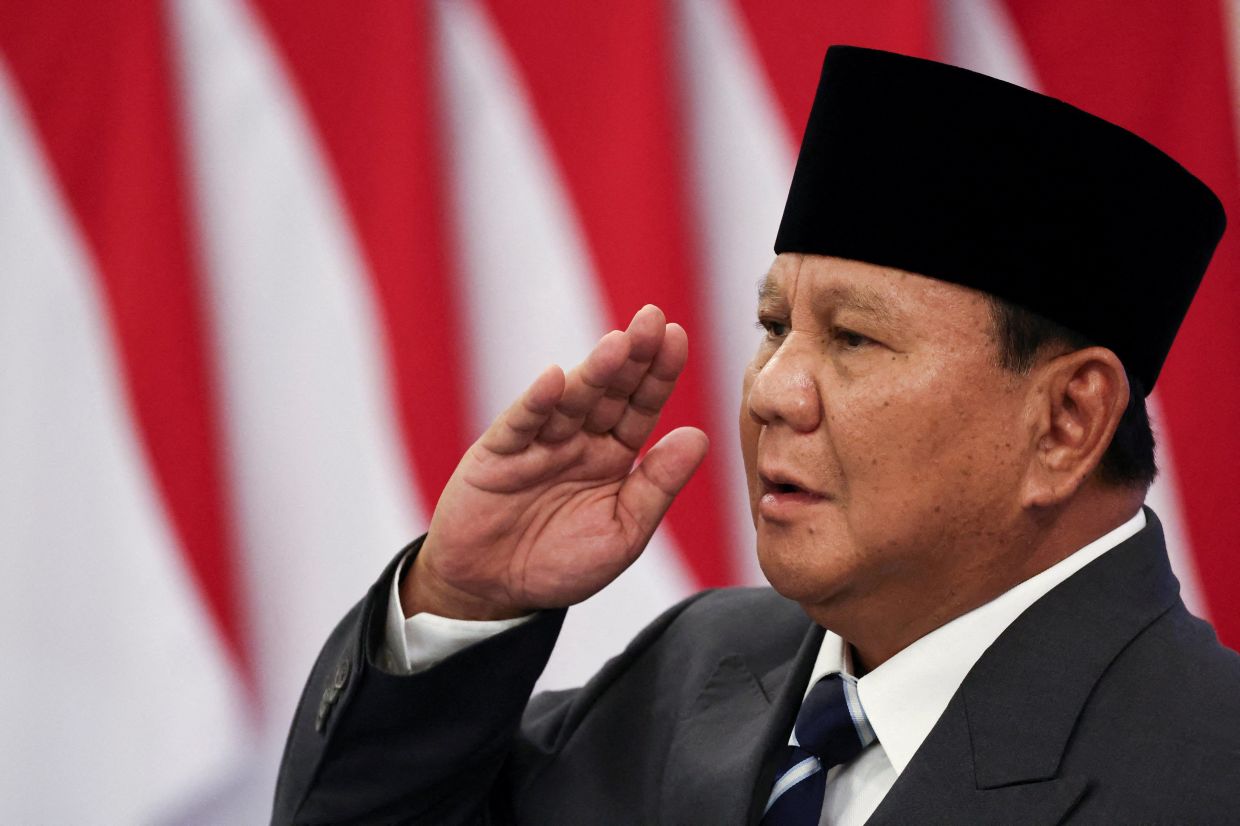
Indonesia's defence ministry has substantially reformed the basic military training component of President Prabowo Subianto's flagship village cooperative initiative following a series of fatalities that sparked public concern and official scrutiny. Defence ministry spokesperson Rico Sirait announced on Tuesday, June 30, that the training curriculum has been fundamentally restructured after five participants died within the opening fortnight of what was originally planned as a rigorous 45-day programme commencing June 14 and concluding July 31.
The Red and White Cooperatives scheme represents an ambitious effort to establish approximately 80,000 village-based cooperative enterprises across the archipelago, with the stated objective of generating employment opportunities and underpinning the administration's economic growth targets of 8% by 2029. These cooperatives are designated to distribute essential commodities including subsidised cooking gas and agricultural fertiliser to rural communities, positioning the initiative as both an economic and social intervention. Nearly 35,000 aspiring cooperative managers are undergoing the training across multiple regional military installations, with successful completion required before individuals can assume managerial positions within their assigned cooperatives.
The deaths occurring between June 17 and June 26 were attributed to multiple causes including cardiac arrest, heat stroke, tuberculosis, and pneumonia, prompting rapid reassessment of the programme's safety protocols. The defence ministry had initially maintained that all deceased participants had satisfied mandatory medical screening requirements prior to enrolment and that the training regime did not involve exceptionally demanding physical exertion. However, the accumulation of fatalities within such a compressed timeframe generated significant scrutiny, ultimately compelling the ministry to acknowledge fundamental deficiencies in the training framework.
Following an internal evaluation, the defence ministry has now eliminated all military-specific components previously embedded within the curriculum. Shooting activities and formal military tactics instruction have been completely removed, reflecting acknowledgment that civilian cooperative managers do not require such operational training. The physical conditioning component has been substantially moderated to account for participants' civilian status and varying levels of individual fitness, moving away from the standardised military training protocols typically applied to security force personnel.
Spokesperson Sirait clarified that the restructured programme now prioritises character development, institutional discipline, leadership capacity-building, and collaborative skills. This reorientation represents a meaningful departure from the original military-centric approach, suggesting that the defence ministry recognised a disconnect between its conventional training methodology and the civilian administrative objectives of the cooperative project. The revised curriculum reflects an implicit acknowledgment that the psychological and organisational skills required for effective cooperative management differ substantially from the disciplinary frameworks developed for military personnel.
The scaling back of the training programme arrives following significant pressure from civil society and state institutions. Indonesia's human rights commission issued a formal statement on Sunday explicitly urging the government to terminate the military training component altogether, positioning the deaths as symptomatic of a fundamentally flawed approach to preparing civilian managers. This intervention from an official rights body underscores broader concerns about the appropriateness of militarised training protocols for civilians engaged in economic management roles.
For Malaysian observers and regional analysts, the Indonesian experience illuminates the complexities inherent in large-scale state programmes that intersect military and civilian domains. The cooperative initiative's design choices reflect a particular governance philosophy emphasising military-led capacity building and institutional discipline, yet the practical consequences revealed tensions between security force training methodologies and civilian occupational requirements. This pattern echoes across Southeast Asia, where military institutions sometimes assume broader developmental roles extending beyond traditional security functions.
The revision of the Indonesian programme also highlights how rapidly public and institutional response can force policy adaptation in contemporary governance contexts. Social media documentation of the deaths and family testimonies generated sufficient pressure to compel the defence ministry to fundamentally restructure its approach within days, demonstrating that even state-led initiatives involving military bureaucracies remain subject to significant public accountability pressures in Indonesia's democratic framework.
The continuation of the cooperative programme despite these modifications suggests that the Prabowo administration remains committed to its underlying economic and social objectives, even as the specific implementation mechanisms require substantial adjustment. The retooled training curriculum, while dramatically less intensive and militarised, will still aim to equip cooperative managers with foundational organisational competencies. However, the deaths and subsequent programme restructuring may dampen enrolment enthusiasm or generate lingering public concern about the government's capacity to administer large-scale civilian training initiatives safely.
Regionally, the Indonesian case presents cautionary lessons for other Southeast Asian governments contemplating militarised approaches to civilian capacity-building. The effectiveness and appropriateness of security force training methodologies for non-security personnel increasingly faces questioning, particularly where mortality or serious injury occurs. Malaysia and other ASEAN members monitoring Indonesia's cooperative programme experience may reassess similar initiatives within their own contexts.
Looking forward, the reformed training programme's effectiveness in achieving the cooperative initiative's economic objectives will warrant close observation. Whether the reduced military emphasis compromises the institutional discipline and organisational cohesion that the original design intended to cultivate remains uncertain. The defence ministry's reorientation toward character and leadership development without military tactics represents a significant recalibration, fundamentally altering the programme's pedagogical philosophy midstream. The completion of the restructured 45-day cycle and subsequent performance of trained cooperative managers will provide important data regarding whether the modification successfully balances participant safety with institutional capacity development.

