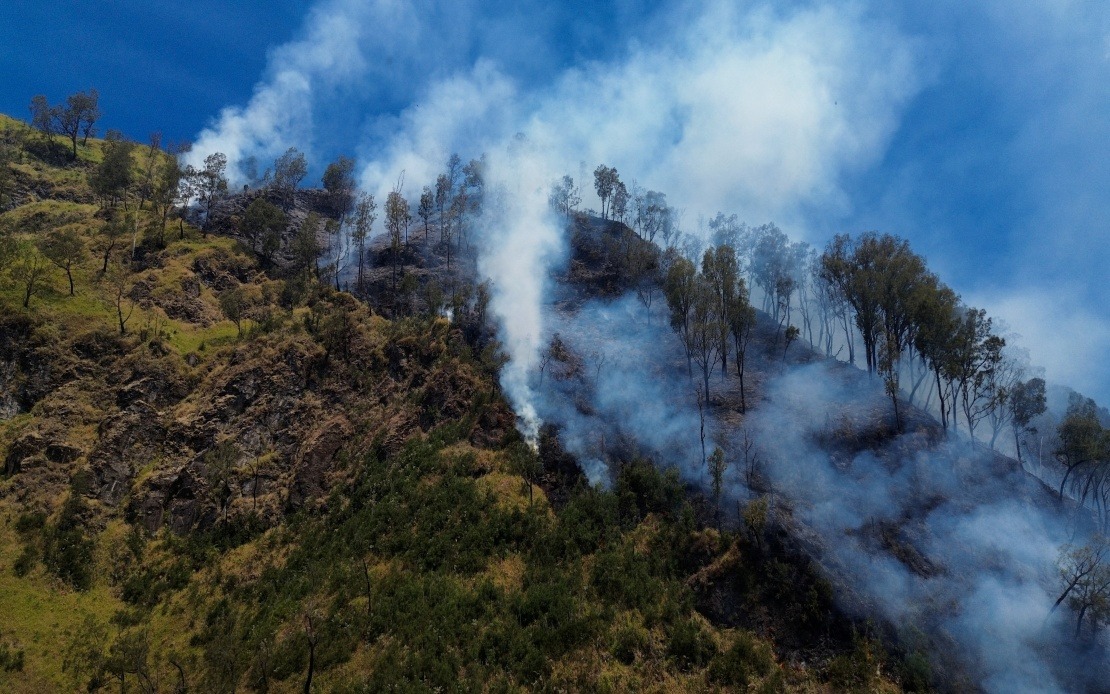
Indonesia's most iconic volcano has gone dark to tourists. The Bromo Tengger Semeru National Park shut its gates to all visitors effective 10pm on Saturday as a spreading wildfire consumed swathes of forest across the Bromo Caldera region in East Java. The decision, announced by park authorities, aims to create space for intensive firefighting operations while protecting the safety of hikers and travellers who would otherwise be vulnerable in the mountainous terrain consumed by smoke and flames.
The closure affects five major entry points that funnel the majority of the region's domestic and international tourism. Visitors can no longer access the park through Cemorolawang in Probolinggo Regency, Wonokitri in Pasuruan Regency, or the southern gateways at Jemplang and Coban Trisula in Malang Regency. The Senduro entrance in Lumajang Regency is also sealed. For the thousands of tourists who had already purchased online tickets for the affected period, the park has offered the option to reschedule visits or claim refunds, though the process of coordinating alternative dates remains unclear given the uncertainty around fire containment.
The blaze, which ignited on Monday, had torched an estimated 176.20 hectares across the Probolinggo and Malang regencies by Saturday evening, according to Abdul Muhari, head of the National Disaster Management Agency's Disaster Data, Information, and Communication Centre. A single hotspot continued emitting dense smoke late Saturday night, while meteorological conditions—moderate winds in the region—complicated suppression efforts. The ongoing presence of active fire zones underscores why authorities felt compelled to halt public access entirely rather than implementing partial restrictions.
Indonesia's disaster management apparatus has mobilised significant aerial resources to combat the Mount Bromo fire. Two helicopters capable of each carrying 1,000 litres of water have been deployed to the affected area, representing a concentrated aerial response to a fire that traditional ground crews struggle to reach across the rugged volcanic landscape. The deployment reflects the scale officials believe necessary to prevent further expansion, though the effectiveness of aerial operations often depends on weather windows and terrain accessibility—factors that remain challenging in mountainous zones like the Bromo Caldera.
The incident carries particular significance for East Java's tourism economy. Mount Bromo stands as one of Indonesia's most visited natural attractions, drawing visitors globally who travel specifically to witness the dramatic volcanic landscape and hike across its distinctive black sand plains. The suspension of all activities, announced as indefinite, threatens to disrupt travel itineraries, cancel accommodation bookings, and reduce income for local guides, hotel operators, and restaurant staff who depend on the consistent flow of trekkers. For regional tourism operators across Southeast Asia who package Bromo visits into multi-country tours, the closure necessitates rapid itinerary revisions.
The Mount Bromo fire is not an isolated incident. Simultaneously, a separate forest fire broke out in the Sembalun Resort area of Mount Rinjani National Park in East Lombok Regency, approximately 150 kilometres to the east. That blaze erupted around 8pm on Friday and consumed roughly 30 hectares before ground teams brought it under control by 1.30am on Saturday. The emergence of two major fires across different volcanic parks within the same 48-hour window suggests a broader fire season phenomenon affecting East Java and Nusa Tenggara provinces, potentially linked to seasonal weather patterns or ongoing drought conditions in the region.
Investigators have not yet determined the cause of either fire. Determining origin is crucial for understanding whether these were natural events—lightning strikes, spontaneous combustion in dry vegetation—or anthropogenic, such as unattended campfires, illegal burning of agricultural land, or deliberate arson. The volcanic terrain of both parks makes forensic investigation challenging, as burn patterns are difficult to trace across loose ash and rocky slopes. Preliminary findings may take weeks or months to emerge, delaying accountability and prevention strategies.
The closure of Mount Bromo reflects broader concerns about Indonesia's vulnerability to landscape fires during certain seasons. The archipelago's monsoon climate creates alternating wet and dry periods, and during dry seasons, vegetation across volcanic zones becomes highly combustible. Climate change has been linked to extended dry periods and more intense fires globally, suggesting that incidents like Mount Bromo may become more frequent or severe unless prevention and preparedness systems are substantially strengthened.
For Malaysian travellers and tour operators, the Mount Bromo closure represents a significant disruption. The volcano typically attracts thousands of visitors from Malaysia annually as part of longer itineraries through East Java or Indonesia-wide tours. Travel agencies will need to communicate changes to booked clients, potentially offering alternative destinations such as Mount Merapi in Central Java or other volcanic attractions. The situation also underscores the importance of travel insurance and flexible booking policies when visiting active natural disaster zones in the tropics.
Parkers authorities have not provided a timeline for reopening. The decision to keep the park closed indefinitely reflects uncertainty about fire containment and the priority given to suppression over premature reopening that could endanger visitors and complicate firefighting logistics. As crews continue monitoring hotspots and deploying aerial support, the timeline for restoration of tourism depends on both weather conditions and the effective suppression of remaining fire zones across the caldera.

