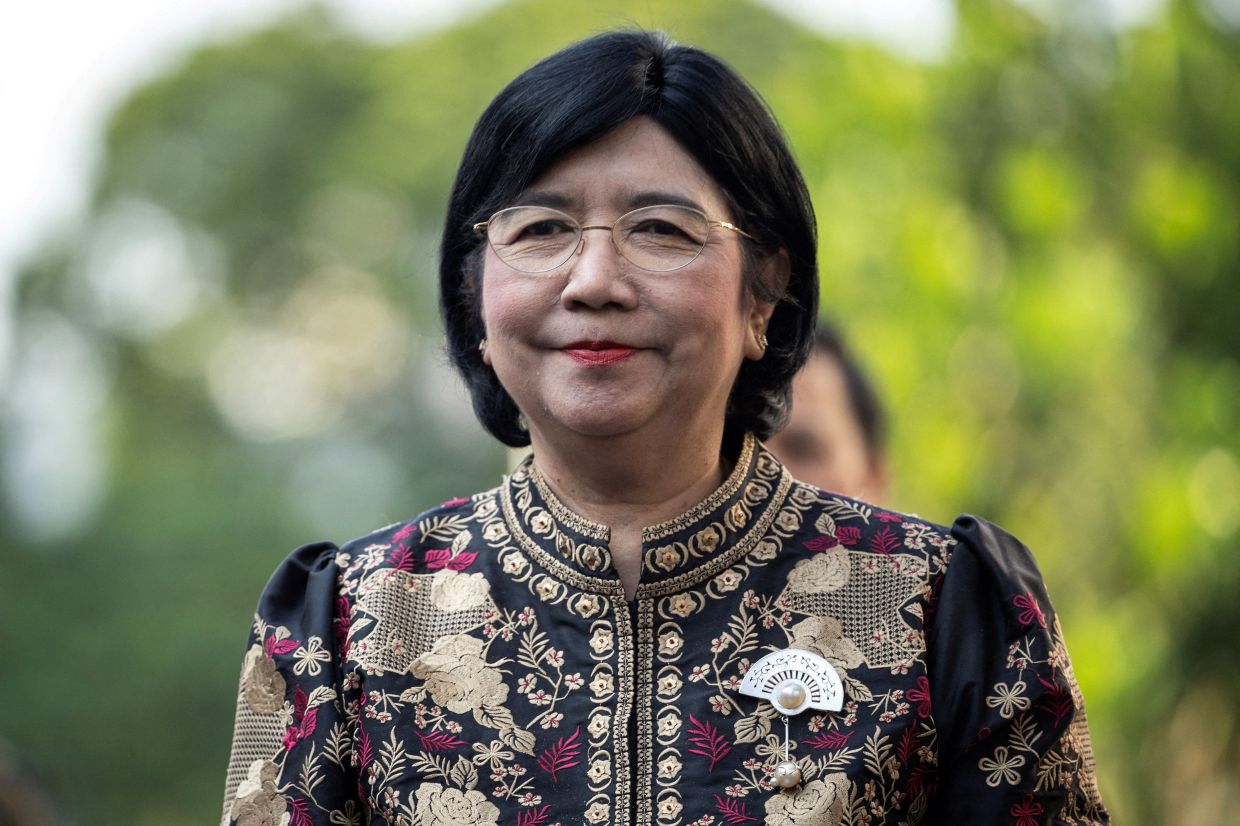
Indonesia's President Prabowo Subianto has put forward Destry Damayanti as the sole contender to assume the role of central bank governor, according to an announcement from the presidential office on Monday. The nomination follows the abrupt resignation of incumbent Perry Warjiyo, who stepped down in late September citing personal circumstances. Damayanti, who has been filling the position in an interim capacity, currently serves as Bank Indonesia's senior deputy governor—the institution's second-most-senior role, which she has held since 2019.
The move has generated considerable relief within financial markets. The rupiah strengthened noticeably on the announcement, reaching its best performance against the United States dollar since mid-June. Market participants had been watching the nomination process intently, concerned that leadership uncertainty at the central bank could undermine investor confidence in Indonesia's monetary policy framework during a period when the economy faces headwinds from multiple directions.
Warjiyo's sudden exit created significant anxiety among international and domestic investors tracking Indonesia's economic trajectory. The G20 member economy has been grappling with mounting concerns over government spending patterns, questions about the independence of monetary policy decisions, governance transparency in its stock market, and broader geopolitical risks stemming from regional tensions. These accumulated worries had already begun dampening investor appetite for Indonesian assets before the central bank leadership vacuum emerged.
Damayanti's appointment would represent institutional continuity given her extensive background within Bank Indonesia. Her elevation from the deputy governor position to the top job follows a logical career progression and reflects the institution's preference for internal advancement. Investors appear to view her nomination positively, interpreting it as a stabilizing signal that monetary policy will maintain consistency with the approaches taken under her predecessor, at least in the near term.
The parliament, where Prabowo commands substantial support through his governing coalition, holds the power to either approve or reject the nomination. Under constitutional procedures, legislators have one calendar month to render their decision. Historically, this formal approval stage has proven largely ceremonial—no sitting president has seen their central bank governor nominee rejected by parliament since 2008, suggesting Damayanti's confirmation is virtually assured.
Yet Damayanti will inherit a central bank facing significant institutional pressure from multiple quarters. The Prabowo administration has been urging Bank Indonesia to prioritize economic growth acceleration, with the president seeking to lift annual expansion to 8 percent from the current rate hovering around 5 percent. This growth target, while politically attractive, sits in tension with the central bank's other statutory obligations to maintain price stability and defend the rupiah's value in currency markets.
Under Warjiyo's watch, Bank Indonesia had gradually tightened monetary conditions this calendar year, increasing its benchmark interest rate by one full percentage point in response to persistent inflation pressures and rupiah weakness. The institution simultaneously implemented rupiah hedging incentives and flooded the market with high-yielding short-term securities to encourage international capital inflows, attempting to prop up the exchange rate through demand-side intervention. These policy instruments balanced growth support with financial stability objectives, but managing both remains inherently challenging.
Damayanti will need to navigate a delicate political economy as the new governor. The administration's growth ambitions naturally align with calls for monetary accommodation and lower interest rates, yet premature rate cuts without corresponding inflation improvements could destabilize the rupiah further and trigger capital outflows. Indonesia's external position has weakened relative to regional peers, making the central bank's reserve management and currency defence functions increasingly critical.
For Malaysian observers and business stakeholders in the region, Damayanti's appointment holds significance for cross-border economic relationships. Indonesia represents the largest economy in Southeast Asia, and its monetary policy trajectory influences regional asset flows, exchange rate dynamics, and investment patterns. A rupiah that strengthens due to improved market confidence in central bank credibility could affect the competitiveness of Indonesian exports relative to Malaysian and Thai producers, while also influencing regional capital allocation.
Damayanti inherits an institution that has maintained technical competence and policy consistency despite recent political uncertainties. Her extensive experience in the central bank's operations suggests she understands the institutional constraints and technical complexities of monetary policy formulation. However, her effectiveness as governor will ultimately depend on her ability to preserve central bank independence while acknowledging the administration's legitimate development aspirations.
The market's positive reception to her nomination indicates that investors believe she can strike this balance. Financial participants appear confident that she will continue applying professional standards to monetary policy decisions rather than simply deferring to executive branch preferences. This perception of institutional autonomy, whether fully justified or not, serves to underpin market confidence in Indonesia's economic stewardship during a period when regional and global economic headwinds are intensifying.
As Damayanti prepares to assume the governor's office pending parliamentary formality, she faces the dual challenge of advancing Indonesia's growth agenda while preserving the purchasing power of the rupiah and the stability of the financial system. Her success in balancing these competing objectives will shape not only Indonesia's economic performance but also the broader dynamics of Southeast Asian finance and trade over the coming years.

