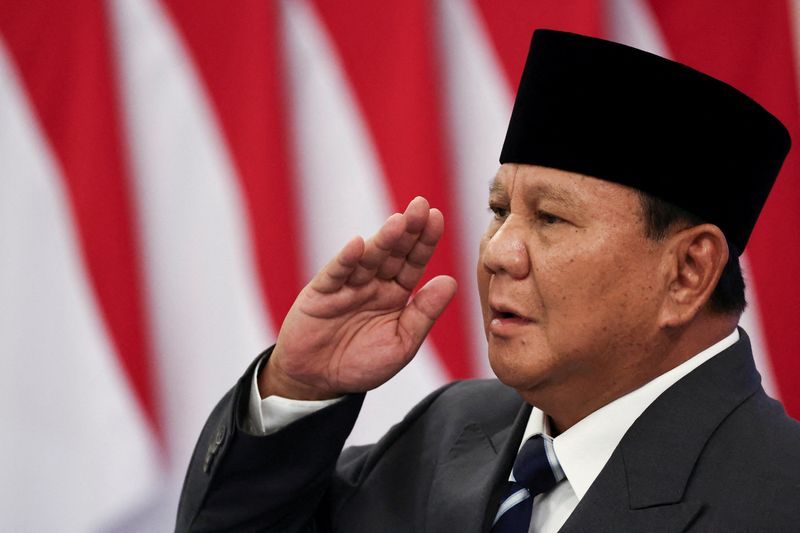
Indonesia is moving ahead with plans to integrate artificial intelligence across major government initiatives, with a draft presidential regulation currently awaiting President Prabowo Subianto's signature. The comprehensive policy framework targets the embedding of AI capabilities throughout the public sector between 2026 and 2029, with particular emphasis on flagship programmes including the country's substantial $15 billion free meals scheme. The government's ambition extends beyond operational efficiency, framing AI adoption as a pathway to raising gross domestic product by an estimated 12 percent—equivalent to some $366 billion—by the end of the decade.
The strategic roadmap represents Jakarta's latest effort to position itself as a serious player in Southeast Asia's artificial intelligence landscape, a space where competitors like Singapore and Malaysia have already secured billions in investments from global technology companies establishing regional development and infrastructure hubs. Indonesia's relative lag in this sector stems from multiple structural challenges that experts identify as fundamental barriers to rapid advancement. The country lacks sufficient semiconductor infrastructure, grapples with a shortage of skilled professionals capable of developing and deploying sophisticated AI systems, and has not yet built the institutional frameworks necessary to support indigenous AI innovation at scale.
According to Wahyudi Djafar, a technology analyst involved in drafting the regulation and serving on the government's AI task force, multinational firms including Meta Platforms, IBM and Microsoft have contributed directly to shaping this policy framework. Microsoft's earlier commitment of $1.7 billion towards expanding cloud and AI services in Indonesia over several years underscores the commercial interest multinational players maintain in the country's digital infrastructure development. Yet this external engagement must be understood within a broader context where foreign companies are primarily seeking to establish markets for their products and services rather than collaborating on fundamental technological advancement.
The proposed regulation assigns AI specific functions within several government programmes, with the free meals initiative serving as a prominent pilot case. Within this context, artificial intelligence would address longstanding governance challenges through targeted applications: designing menus tailored to regional nutritional needs and local food availability, monitoring food preparation standards in distributed kitchen facilities, forecasting ingredient demand patterns to minimize waste and spoilage, and flagging operational irregularities that might indicate mismanagement or fraud. Additionally, AI systems would integrate health data from programme participants to enable early detection of foodborne illness outbreaks and other nutritional emergencies.
These applications carry particular resonance given the free meals programme's troubled operational history. The initiative faced severe public criticism following a major food poisoning incident last year that affected tens of thousands of schoolchildren, prompting questions about safety protocols and emergency response capabilities. Earlier this month, the programme's administrator was dismissed and subsequently arrested amid allegations of financial irregularities and deficiencies in kitchen facility standards. Such challenges have fueled concerns about both the competence of programme management and the sustainability of massive public expenditure when institutional controls appear inadequate, making technological solutions potentially attractive to policymakers seeking to restore public confidence.
Beyond the meals programme, the regulation envisions AI applications in healthcare delivery, specifically supporting Indonesia's free health screening initiatives and tuberculosis testing programmes. The regulation explicitly acknowledges that AI-enabled automation can substantially enhance organizational efficiency while simultaneously reducing operational expenses—a particularly salient argument for a government managing constrained budgetary resources and competing demands across multiple sectors.
However, scepticism persists among Indonesia's technology establishment regarding the feasibility of these ambitions. Derwin Suhartono, an artificial intelligence professor at Bina Nusantara University in Jakarta, characterizes Indonesia's current technological positioning as fundamentally defensive rather than innovative. In his assessment, the country risks remaining essentially a consumer market for foreign technology corporations rather than developing competitive domestic AI capabilities. He acknowledges the government's capacity to implement AI systems within structured programmes through competent management and clear implementation roadmaps, yet expresses concern that current policy discussions remain largely rhetorical without corresponding commitment to execution at the operational level where success ultimately depends.
The regulatory framework incorporates mechanisms intended to overcome structural obstacles, including plans for a "sovereign AI fund" to be administered primarily through Danantara Indonesia, the newly established national wealth management vehicle. The proposal also contemplates fiscal incentives directed toward AI researchers and deliberate talent recruitment strategies to address documented workforce shortages in the sector. These elements suggest recognition that market forces alone will not generate the investment in human capital and research infrastructure necessary for meaningful technological progress.
Accompanying the AI adoption regulation is a separate proposed rule requiring government agencies to systematically report risks associated with artificial intelligence deployment. This includes potential misuse of biometric data collected through government programmes, violations of intellectual property rights in training data, and the generation of deepfakes that could undermine public trust or manipulate information environments. Such oversight provisions indicate awareness among policymakers that rapid AI integration without robust governance frameworks could introduce new vulnerabilities alongside the promised efficiency gains.
The regulation builds on groundwork established through a white paper released last year, demonstrating incremental policy development rather than an abrupt strategic pivot. The absence of a confirmed signing date for President Prabowo's endorsement leaves questions about implementation timing and the extent of political priority allocated to AI integration relative to other government priorities. The regulation's passage would commit Indonesia to a five-year implementation trajectory beginning in 2026, positioning AI adoption as a medium-term strategic initiative rather than an immediate transformation of government operations.
For Malaysia and other Southeast Asian nations, Indonesia's approach offers instructive lessons about the challenges inherent in rapidly adopting advanced technologies across public sector operations. The case illustrates how infrastructure deficits, skill shortages, and governance weaknesses can constrain the practical benefits of sophisticated technological solutions, and how foreign corporate involvement in policy design reflects global capital's interest in expanding markets rather than building endogenous innovation capacity. Indonesia's experience may prove particularly relevant as other regional governments contemplate similar integration strategies.