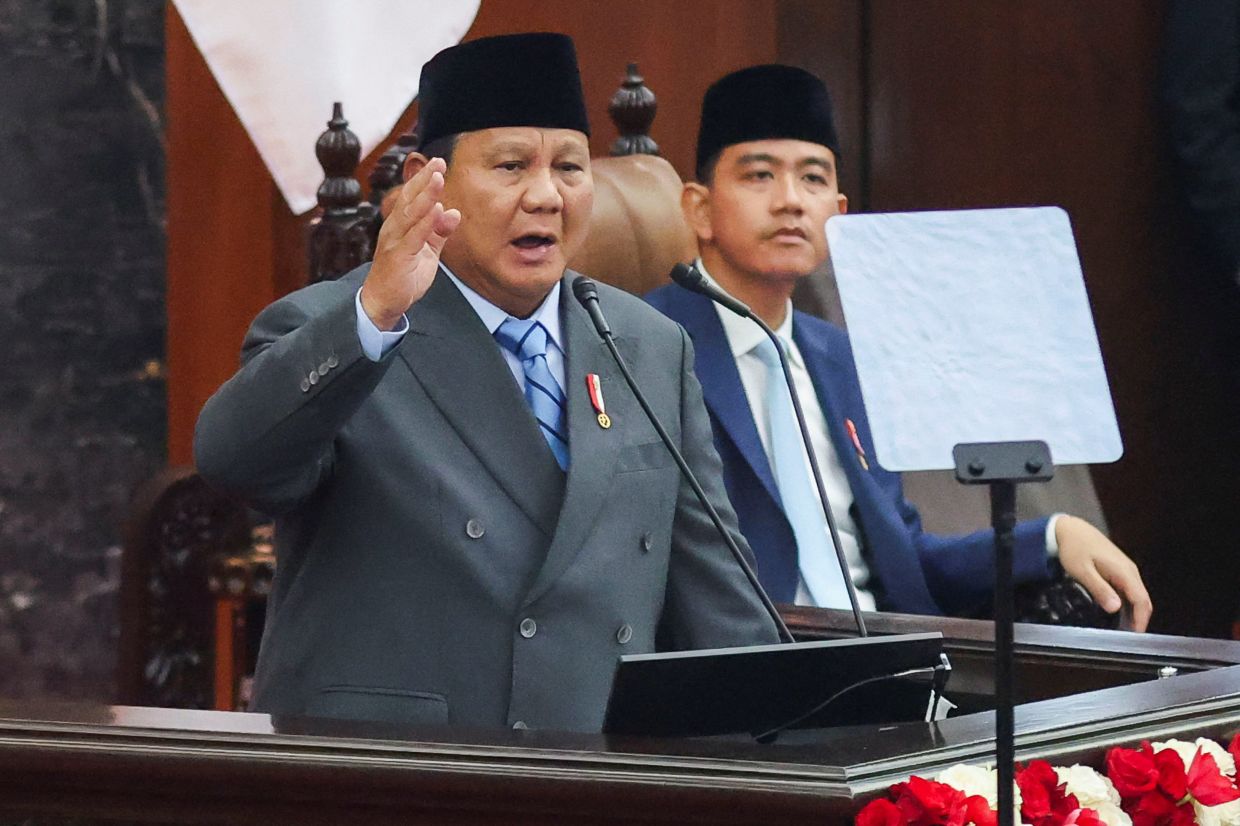
Indonesia's government is embarking on what may be the largest state enterprise consolidation ever attempted. President Prabowo Subianto announced Friday that his administration will shutter more than 750 state-owned companies by December 31, retaining only those that generate genuine value and operate profitably. The plan represents a dramatic remaking of the country's unwieldy public sector, which the president discovered contains far more entities than previously understood when Indonesia established its Danantara sovereign wealth fund last year.
The scale of the restructuring became apparent only after officials began auditing state assets. When Prabowo took office, he believed Indonesia operated around 300 to 400 state enterprises. The reality proved startling: a comprehensive inventory revealed 1,074 separate entities operating across the economy, many with minimal accountability or strategic purpose. The president painted a damning portrait of this corporate landscape, describing businesses that "operate as they please, with no sense of responsibility to the nation, to the state," while presenting falsified financial accounts to obscure their true performance.
For Malaysian observers, Indonesia's situation underscores challenges facing large Southeast Asian economies struggling to modernize aging state-sector infrastructure. The discovery that such a vast network existed beyond meaningful oversight raises uncomfortable questions about governance capacity and institutional transparency throughout the region. Similar patterns of bloated state enterprise rosters persist across emerging markets, making Indonesia's corrective effort potentially instructive—or cautionary—for policymakers elsewhere in ASEAN seeking to improve fiscal discipline and operational efficiency.
Already, the closure drive has yielded measurable savings. Roughly 290 enterprises have been shut since the initiative began, generating approximately 50 trillion rupiah in cost reductions through eliminated overhead expenses including executive compensation, facility rentals, vehicle leasing, and travel budgets. The administration targeted savings exceeding 70 trillion rupiah for the current year, sums that could be redirected toward infrastructure, healthcare, or education initiatives. These figures suggest that much of Indonesia's state sector was functioning primarily to support bloated management structures rather than deliver goods or services to citizens.
Prabowo credited the streamlining with dramatic financial improvements among remaining enterprises. State-owned company profits surged more than 75 percent year-on-year to reach 326 trillion rupiah, according to presidential claims. However, independent analysts have expressed persistent skepticism about the reliability of Indonesia's official economic statistics, including growth figures and corporate earnings data, cautioning against accepting government numbers at face value without external verification. This credibility gap reflects deeper institutional weaknesses that extend beyond the enterprise reform agenda.
Addressing the structural corruption that enabled such wasteful mismanagement, Prabowo proposed establishing a specialized investigative court with unusual temporal reach. The tribunal would examine state enterprise management and board conduct potentially dating back thirty years, effectively reopening decades of decisions and financial arrangements for criminal scrutiny. Simultaneously, he suggested lawmakers consider offering "special amnesty for those who repent," a carrot-and-stick approach designed to encourage cooperation while prosecuting the most egregious offenders. This dual mechanism reflects a pragmatic recognition that systemic corruption cannot be fully prosecuted without cooperation from insiders willing to testify against colleagues.
Indonesia's anti-corruption challenge remains stubbornly resistant despite sustained governmental attention and legal strengthening. The country scored just 34 out of 100 on Transparency International's 2025 Corruption Perceptions Index, placing it among the world's more corrupt large economies. Graft has emerged as a potent political grievance, amplifying popular anger about rising living costs as fuel prices surge from Middle Eastern geopolitical tensions. Citizens increasingly view corruption as inseparable from their economic struggles, demanding that government eliminate waste before imposing additional fiscal burdens on ordinary households.
Prabowo's anti-corruption campaign intersects directly with his flagship social initiative, a free school meals programme now facing criticism over implementation costs and efficiency. The president acknowledged room for "improvements and efficiency" while reaffirming commitment to the scheme, emphasizing that malnutrition remains an urgent national crisis affecting one in four Indonesian children experiencing stunting. For Southeast Asian readers, this tension between ambitious social spending and fiscal sustainability represents a broader regional dilemma: how developing nations can afford essential welfare programmes while simultaneously addressing infrastructure deficits and debt service obligations.
Regarding macroeconomic prospects, Prabowo expressed confidence that Indonesia would achieve six percent economic growth by end of 2026, though recent performance offers limited grounds for optimism. The economy expanded 5.6 percent in the first quarter and 5.3 percent in the second quarter of this year, decelerating modestly. International analysts have repeatedly questioned the accuracy of Indonesia's growth accounting methodology, suggesting official figures may overstate actual performance. Prabowo acknowledged that growth itself should not be the ultimate objective, reframing policy priorities around job creation and quality-of-life improvements for lower-income Indonesians.
The enterprise closure initiative must be understood within this broader context of institutional reform and economic repositioning. Rather than pursue growth acceleration alone, the administration is attempting to fundamentally restructure how public resources are allocated and utilized. By eliminating unproductive state entities, reducing administrative bloat, and establishing accountability mechanisms, Prabowo hopes to redirect capital toward productive investment yielding genuine employment and poverty reduction. Whether this ambitious restructuring achieves its stated objectives—and whether external oversight can verify claimed efficiency improvements—will significantly influence Indonesia's development trajectory and regional economic influence over coming years.

