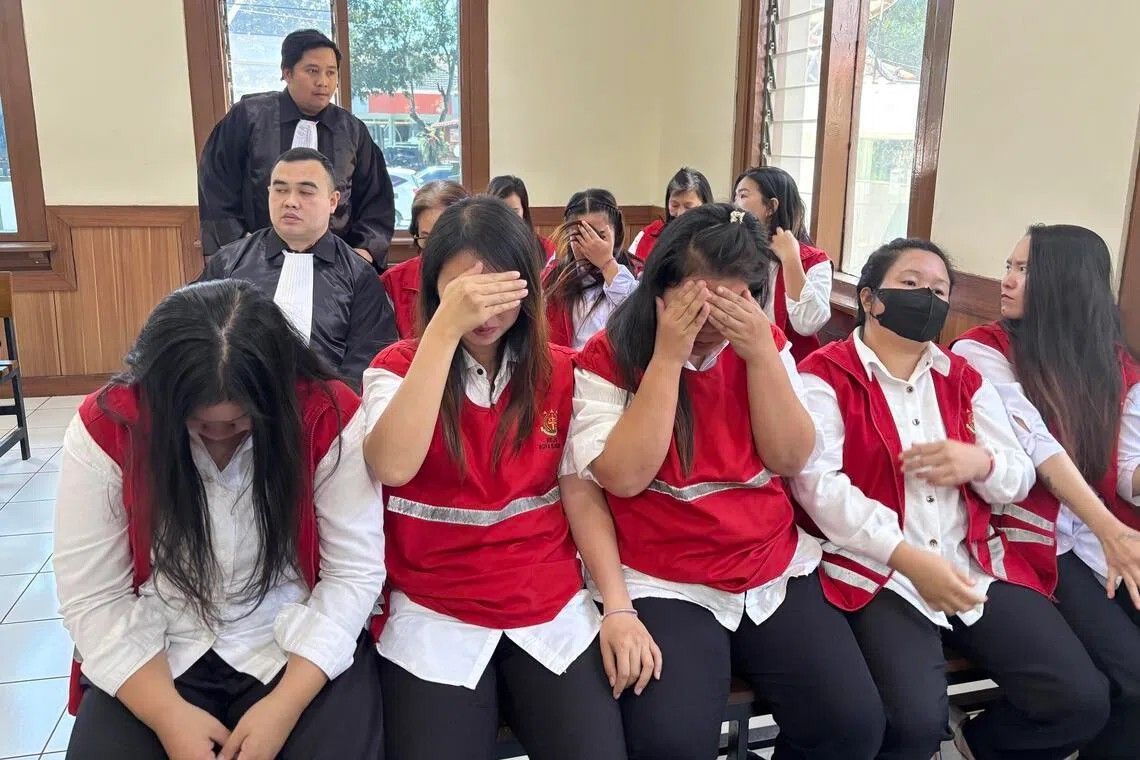
An Indonesian court has concluded a major human trafficking case by convicting all 19 defendants in a baby-smuggling operation that targeted Singapore and potentially other nations. On July 21, the Bandung District Court in West Java found the syndicate's 70-year-old mastermind, Lie Siu Luan, guilty of orchestrating the trafficking of dozens of infants and sentenced her to seven years imprisonment. The conviction marks the conclusion of a trial that began in April and has shed light on a disturbing criminal network operating across Southeast Asia.
Lie Siu Luan, who operated under aliases Popo and Lily, held the highest position within the trafficking ring and directed its most critical operations. She oversaw the recruitment of babies destined for illegal adoption abroad, coordinated the production of forged adoption documentation to facilitate their movement across borders, and personally arranged for the infants to be transported overseas to waiting buyers. The three-judge panel led by Judge Gatot Ardian Agustriono issued a formal declaration that Lie had been "legally proven guilty of committing the criminal act of recruiting, harbouring, sending, transferring, or receiving a person... for the purpose of exploiting said person within the territory of the Unitary State of the Republic of Indonesia."
While the sentencing fell short of prosecution demands—which sought a 10-year custodial term—the conviction itself represents a significant victory for Indonesian authorities tasked with combating human trafficking. The criminal justice system's handling of the case demonstrates judicial capacity to address serious transnational crimes, though questions remain about enforcement mechanisms and victim protection protocols throughout Southeast Asia. The sentence reflects a judicial assessment that balanced the severity of the crimes with applicable sentencing guidelines for trafficking offences under Indonesian law.
The broader investigation revealed the systematic nature of the operation, which authorities allege trafficked at least 34 infants over approximately two years spanning 2023 and 2025. Singapore featured prominently as a destination market, with prosecutors establishing that at least 12 of the trafficked children were sent there, each commanding prices between 200 and 250 million rupiah—equivalent to approximately S$18,110 per child. The substantial pricing structure indicates an organised, profit-driven enterprise rather than isolated criminal activity, suggesting sophisticated networks capable of connecting suppliers in Indonesia with affluent buyers in wealthy city-states.
The remaining 18 defendants, predominantly women, received varying prison sentences reflecting their roles within the hierarchy. Astri Fitrinika, identified as the syndicate's chief recruiter and one of three individuals given the second-longest sentence, received six years and seven months imprisonment. Two additional recruiters, Djaka Hamdani and Elin Marlina, similarly drew sentences of six years and seven months for their involvement in locating and acquiring babies from vulnerable families. Lai Su Hua, whose responsibilities centred on forging official documents necessary to satisfy adoption legalities, also received six years and seven months, highlighting the essential role that document falsification played in the operation's ability to move children across borders undetected.
The remaining 14 defendants, who operated as caregivers within the network, received lighter sentences of three years and four months. While their roles involved direct contact with the trafficked infants and ostensibly carried responsibility for their welfare during captivity, the court apparently recognised that execution-level positions in trafficking hierarchies typically attract reduced culpability compared to leadership and coordination roles. These individuals likely represented lower-risk workers within the organisation, though their involvement in warehousing and managing trafficked children remains deeply troubling from a child protection standpoint.
Notably, both Lie and Astri, the operation's two highest-ranking members, admitted to most charges during investigation and trial proceedings. However, their admissions came with significant caveats that challenge the severity of the characterisation. Both maintained consistently that no children had been forcibly abducted but rather voluntarily surrendered by parents facing economic hardship or inability to provide care. This distinction, if credible, would differentiate the operation from outright child theft whilst remaining undeniably exploitative. The defendants further asserted that trafficked infants received appropriate care and suffered no abuse—claims that remain unverified and difficult to reconcile with the fundamental reality of their illegal removal from Indonesia and placement in unknown circumstances abroad.
The case has significant implications for child protection and adoption regulation across Southeast Asia. The identification of an organised trafficking ring targeting infants highlights vulnerabilities in current adoption frameworks, particularly regarding oversight of cross-border placements and verification of prospective adoptive parents. Malaysian stakeholders should recognise that similar networks could potentially operate regionally, making strengthened border controls, inter-agency intelligence sharing, and international cooperation essential. The case underscores that wealth disparity between nations creates incentive structures for traffickers targeting children from poorer economies and directing them toward affluent destinations.
Singapore's prominent role as a receiving nation raises questions about adoption vetting procedures and whether regulatory frameworks adequately prevent trafficking-related placements. The willingness of buyers to engage in illegal adoption at substantial cost suggests either inadequate legal adoption channels meeting demand in destination countries or deliberate preference for circumventing safeguards. Addressing this issue will require not only enforcement action against trafficking supply chains but also examination of demand-side factors that motivate parents and intermediaries to pursue illegal adoptions rather than regulated processes.
The conviction of all 19 defendants represents comprehensive legal accountability for a single trafficking network, yet broader systemic challenges remain. Indonesian law enforcement has demonstrated capability to investigate and prosecute complex organised crime involving international dimensions, a positive indicator for regional security. However, the case also highlights the reactive nature of trafficking enforcement—authorities discovered this network through ongoing investigation rather than preventive mechanisms identifying vulnerable entry points. Strengthening social safety nets for economically distressed families in Indonesia, improving child protection service capacity, and enhancing international cooperation on adoption regulation could reduce the desperation that makes families vulnerable to traffickers' promises.
The sentences handed down by the Bandung court serve simultaneously as punishment and deterrent, though evidence suggests deterrent effects of criminal penalties on trafficking remain limited without simultaneous efforts addressing root causes of vulnerability. The case will likely influence Indonesian prosecutorial strategy for similar offences and may encourage regional partners to examine their own adoption frameworks for gaps exploitable by traffickers. For Malaysia, the case offers instructive lessons about the sophisticated methods employed by trafficking networks and the necessity for robust inter-agency coordination combining immigration, social services, and law enforcement resources.

