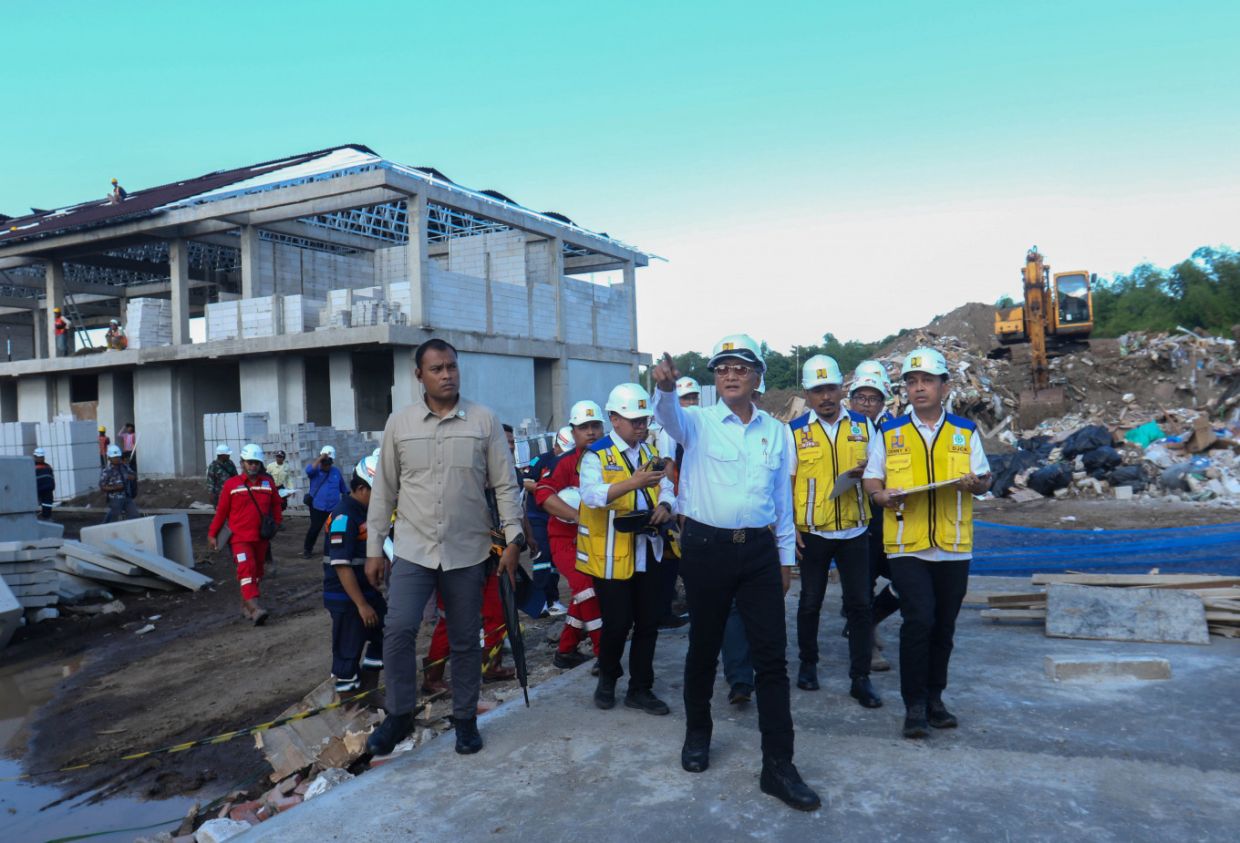
Indonesian Public Works Minister Dody Hanggodo faces mounting scrutiny after his wife and daughter appeared on an official ministry roster for a planned delegation to the United States, prompting questions from the country's Ombudsman and the wider public about government transparency and the proper use of state resources for official travel.
The controversy emerged when a letter from the Public Works Ministry circulated widely on social media, revealing that eight individuals had been scheduled to travel to New York between July 13 and 19. The document, signed by Ministry Secretary-General Apri Artoto on June 29, named Dody's wife Irma Hermawati and their daughter Aurellia Tsabitha Meidirama as participants in the delegation. According to the letter, Irma would travel using a diplomatic passport while Aurellia would use a standard passport for the journey.
The delegation's stated purpose is to attend the High-level Meeting on the Midterm Review of the New Urban Agenda, a gathering convened by the United Nations General Assembly and managed by the UN Human Settlements Programme, better known as UN-Habitat. This meeting is scheduled to take place on July 16 and 17 in New York, focusing on urban development and settlement issues that fall within the Public Works Ministry's mandate.
The inclusion of the minister's family members in what was presented as an official state delegation triggered considerable backlash online, with many Indonesians questioning whether their participation serves a legitimate government purpose and whether such arrangements align with President Prabowo Subianto's stated austerity agenda. The timing of the controversy is particularly sensitive given the administration's emphasis on fiscal responsibility and reducing unnecessary government expenditure.
Ministry officials have moved quickly to address the concerns, with Secretary-General Apri asserting that no state budget would be allocated to cover the expenses of family members participating in the trip. He emphasised that should Irma and Aurellia join the delegation, all associated costs would be paid from personal funds rather than the government budget. Apri further explained that the family members' names were included in the official documentation solely to facilitate the visa application process through Indonesia's Foreign Ministry, maintaining that this procedural step was standard practice.
Regarding the diplomatic passport issued to Dody's wife, Apri contended that this arrangement complies with existing regulations governing such documentation. He suggested that the inclusion of spouses in official documentation is not uncommon in government delegations, particularly when visa processing and travel logistics are involved. However, this explanation has done little to calm public concern about the appropriateness of the arrangement.
Maneger Nasution, a member of Indonesia's Ombudsman office, has called for substantially greater transparency from the ministry regarding multiple aspects of the situation. Beyond simply explaining why the minister's family members were included in the delegation, Nasution urged the ministry to clarify how it would guarantee that no state funds or government-financed facilities would be utilised for their participation. He emphasised that the Ombudsman intends to scrutinise whether the arrangement constitutes a legitimate use of government authority or represents a potential abuse of ministerial privilege.
The Ombudsman's intervention underscores broader concerns about accountability in Indonesian government. Nasution stressed that the ministry must ensure that all aspects of the delegation's composition are lawful, free from conflicts of interest, and cannot be construed as using official position for personal gain. These statements suggest that Indonesia's oversight bodies view the situation as raising fundamental questions about how government authority should be exercised and whether ministerial discretion is being properly constrained.
Dody Hanggodo's political career contains elements that add context to the current controversy. Before joining the Democratic Party and entering electoral politics, the 60-year-old minister maintained significant business relationships with prominent South Kalimantan businessman Andi "Haji Isam" Syamsuddin Arsyad, whose commercial interests include stakes in enterprises associated with President Prabowo's ambitious food estate initiative in Merauke, South Papua. These historical business connections could complicate public perceptions of his conduct as a minister, even when his current actions may not directly implicate those earlier relationships.
Further complicating the picture, Hanggodo has previously claimed that a "deep state" faction was attempting to undermine his position, allegations that emerged after an internal audit document from his ministry was leaked to the public. That leaked audit reportedly suggested that influential figures within the government were attempting to involve him in corruption allegations. Whether the current family-members-in-delegation controversy represents a separate issue or connects to those earlier allegations remains unclear, but the overall pattern suggests that Hanggodo's tenure at the Public Works Ministry has been marked by repeated instances of controversy and questions about proper conduct.
For Malaysian observers and regional analysts, the Hanggodo situation reflects broader questions confronting Southeast Asian governments about ministerial accountability, the transparency of official travel arrangements, and how family connections to state resources are managed. The incident demonstrates how modern scrutiny through social media can rapidly escalate workplace controversies into matters of national concern. It also illustrates the challenges that oversight bodies like ombudsman offices face in enforcing standards of conduct when the line between legitimate government business and improper use of official position remains disputed and depends significantly on how particular regulations are interpreted and applied.

