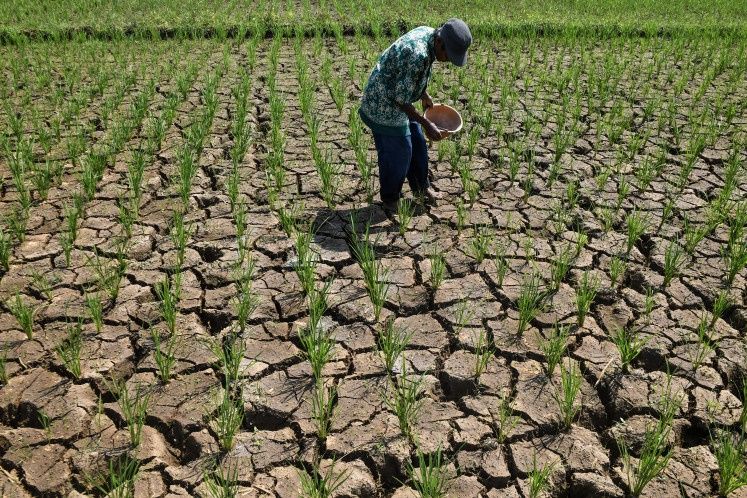
The Indonesian archipelago is confronting an escalating water crisis as drought conditions worsen across numerous provinces, driven by El Niño weather patterns that are bringing prolonged periods of below-average rainfall. The National Disaster Mitigation Agency (BNPB) has expanded its list of affected areas to include Gunungkidul in Yogyakarta, Semarang in Central Java, and Jember in East Java, with approximately 700 additional households now struggling to access clean water in these three regions alone. Local authorities have begun deploying water tanker trucks to provide emergency supplies, yet this reactive approach masks a much broader challenge engulfing the nation.
The cumulative impact across Indonesia is substantial, with over 7,100 households already enduring prolonged water scarcity in previously identified drought zones. Central Java has emerged as a particular hotspot, with communities in Cilacap, Klaten, and Jepara facing severe shortages. West Java regions including Karawang, Tasikmalaya, and Sukabumi are similarly affected, whilst Bantul in Yogyakarta and Seram in Maluku have activated emergency distribution systems. This geographic dispersion underscores the systemic nature of the current crisis rather than isolated, localized problems that might be addressed through temporary relief measures.
Facing the severity of the situation, several provincial and regional administrations have declared 90-day drought alert status to expedite emergency response protocols. Gunungkidul initiated this alert phase in June, whilst West Java followed suit this month. In West Nusa Tenggara, authorities in West Lombok escalated their response by declaring a full drought emergency on June 15, with approximately 3,600 households directly impacted. Banten province was still evaluating conditions as of the latest reporting period, preparing to make decisions about province-wide drought declarations that would unlock accelerated water distribution mechanisms.
The meteorological foundation underlying these shortages traces directly to El Niño conditions, characterized by abnormally warm sea surface temperatures across the Pacific Ocean. The Meteorology, Climatology and Geophysics Agency (BMKG) has characterized this year's dry season as potentially "extreme," with projections indicating that more than 80 per cent of the Indonesian archipelago will experience below-normal rainfall during the peak drought period expected between July and September. Already by mid-June, approximately 37 per cent of Indonesia's climate zones had transitioned into the dry season, with nearly half the country recording precipitation levels beneath historical norms. This convergence of factors creates a particularly precarious situation for an agricultural nation heavily dependent on consistent water availability.
The implications for Indonesia's food security have prompted urgent action from senior government figures. The Meteorology agency has called for immediate implementation of comprehensive mitigation strategies, including adjustments to agricultural planting schedules, cultivation of drought-resistant crop varieties with shorter maturation cycles, and diversification of food production beyond traditional staples. Ardhasena Sopaheluwakan, BMKG's deputy for climatology, emphasized that these measures require immediate deployment to prevent cascading crop failures across the archipelago. Agriculture Minister Amran Sulaiman has indicated that his ministry has already anticipated worsening drought scenarios and accelerated mitigation initiatives, including expanded deployment of irrigation pumps to maintain water availability and sustain food production momentum throughout the planting cycle.
Government efforts to reassure the public have centered on national food security assurances, with Amran repeatedly emphasizing that strategic rice reserves have reached historically elevated levels sufficient to satisfy national demand through the subsequent year. The House of Representatives' Commission IV, responsible for overseeing agricultural and food production policy, has urged the administration to intensify assistance flows to vulnerable communities, encompassing distribution of seeds, fertilizers, farming equipment, and livestock feed. These interventions represent attempts to cushion agricultural productivity against immediate climate shocks, yet experts caution that such short-term measures, whilst necessary, cannot address systemic vulnerabilities that plague Indonesia's water sector.
Beyond emergency response mechanisms, water policy analysts are advocating for fundamental restructuring of Indonesia's approach to drought management. Bagas Yusuf Kausan, a researcher at the water policy think tank Yayasan Amerta Air Indonesia, has argued persuasively that lasting solutions require substantial long-term investment in water infrastructure, particularly targeting chronically drought-prone regions with historically limited access to reliable clean water supplies. He advocates for expansion of piped water services delivered through regional water utilities (PDAM), suggesting that demonstrating genuine political commitment to drought-vulnerable communities would involve subsidizing these services to ensure affordability and accessibility for populations with limited financial resources.
Kausan's analysis highlights a critical dimension often overlooked in immediate crisis response: the degree to which recurring drought impacts reflect not merely climatic variations but also environmental degradation driven by human activities. Land conversion from agricultural and natural landscapes into alternative uses, combined with unsustainable extraction of groundwater reserves, has systematically increased regional vulnerability to drought conditions. These human-induced environmental changes have fundamentally altered hydrological cycles in numerous areas, reducing natural water storage and infiltration capacity. Consequently, identical rainfall patterns produce more acute shortages in degraded landscapes compared to regions with intact environmental systems.
The government's current policy approach, according to water security experts, should leverage the El Niño crisis as an opportunity to implement stricter environmental regulations. Recommendations include tightening restrictions on land conversion, particularly in water catchment areas that serve as natural repositories for rainfall and groundwater recharge zones. Such measures would address root causes of vulnerability rather than merely treating symptoms through emergency water distribution. The intersection of climate variability and environmental degradation creates a compounding risk that demands simultaneous action on both fronts to build genuine long-term resilience across Indonesia's diverse geography.

