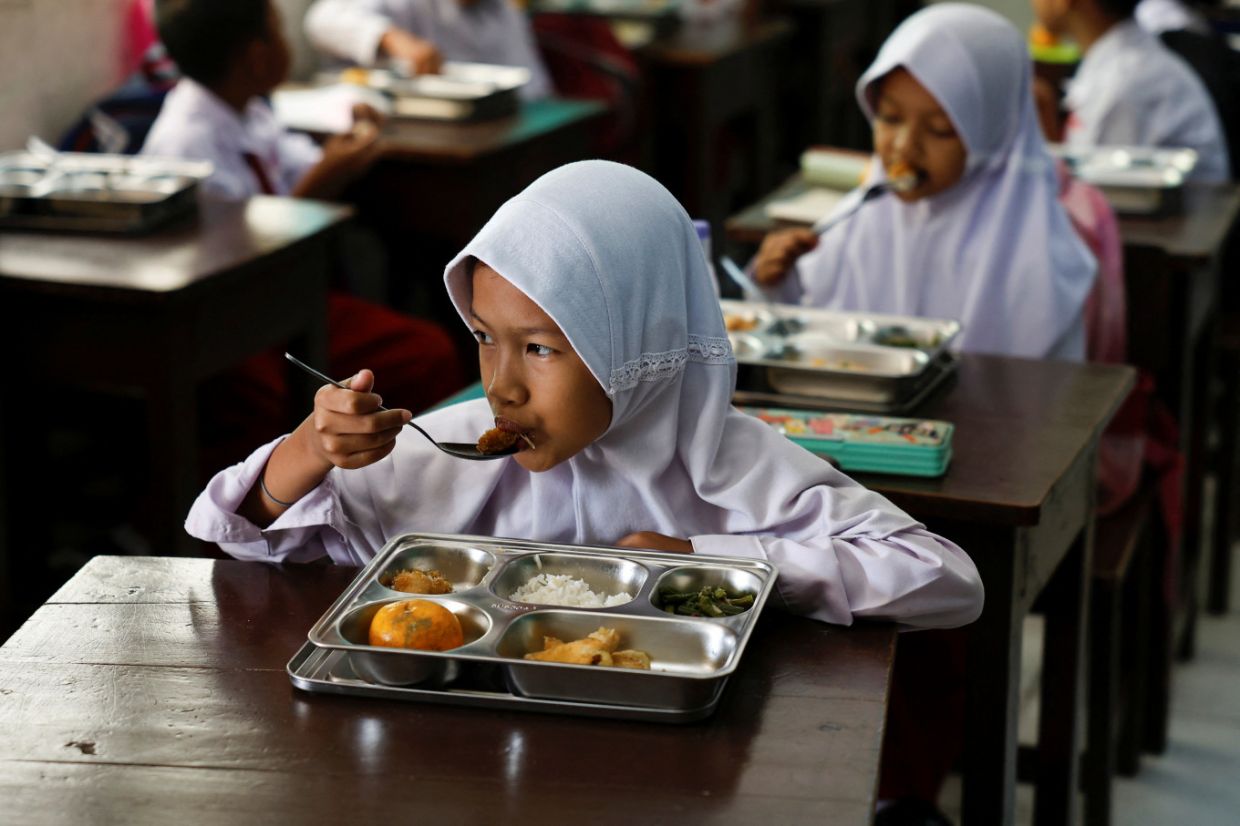
Proposed amendments to Indonesia's foundational education legislation have triggered alarm among teachers organisations, who worry that carefully worded provisions could engineer a legal pathway to reverse a major Constitutional Court ruling. The July 30 decision prohibited President Prabowo Subianto's free nutritious meal initiative from drawing funds allocated for education, a finding that challenges how Rp 223 trillion—nearly one-third of this year's mandatory education spending—has been diverted from classroom needs toward feeding students.
The Indonesian Teachers Association (P2G) has raised red flags about the deliberation draft of the National Education System Law (Sisdiknas) revision, currently being examined by the House of Representatives. The union suspects that a clause permitting government and society to "provide health services, including those concerning mental health, at educational institutions in a manner that is integrated with the national health policies as well as the national education goals" creates dangerous ambiguity. Such language, P2G national coordinator Satriwan Salim warned, could be weaponised to classify the free meals program as a legitimate health service component of education, thereby justifying its continued financing from education budgets that are constitutionally mandated to reach at least 20 percent of annual state spending.
The Constitutional Court's ruling represented a watershed moment for education advocates who have long contended that nutrition programmes, however socially valuable, should not cannibilise resources desperately needed for teacher salaries, school infrastructure, and learning quality improvements. Indonesia's education sector remains chronically underfunded relative to its developmental needs, and the diversion of Rp 223 trillion exemplifies how competing social agendas can erode sector-specific budget protections. The court explicitly determined that the free meals initiative constitutes a health policy rather than an education expenditure, and ordered the government to remove the program from education budget allocations for the 2028 fiscal year.
Constitutional law specialist Feri Amsari has stressed that the court's constitutional principles transcend any single legislative instrument and bind all future legislation. He contends that no amount of clever statutory rewording—whether through renamed budget lines, reclassified spending categories, or new legislative provisions—can legally resurrect education funding for the meal scheme. From a constitutional standpoint, he argues, the substance of what is being financed matters far more than the nomenclature used to describe it. This legal interpretation holds significant implications for Southeast Asian nations wrestling with similar questions about budget integrity and the hierarchy of constitutional rulings.
The MBG Watch coalition, an alliance of civil society organisations including Transparency International Indonesia, shares these concerns and has publicly cautioned lawmakers against attempting to circumvent the ruling through regulatory sleight of hand. Agus Sarwono of TII emphasised that any recourse to "budget nomenclature, budget engineering or regulatory adjustments" designed to maintain education funding for free meals would fundamentally undermine the court's authority and constitutional integrity. Such manoeuvres would signal that court rulings can be evaded through legislative creativity rather than respected and implemented, a precedent with troubling implications for rule of law in the region.
This dispute emerges against a troubled backdrop of delayed Constitutional Court implementation. Indonesia has experienced instances where binding court decisions languished without timely execution, including a December 2025 ruling that active-duty police officers cannot simultaneously hold other government positions. The free meals controversy thus represents not merely a budgetary disagreement but a test of whether constitutional rulings possess enforceable teeth or function merely as advisory recommendations that resourceful officials can circumvent.
Golkar Party lawmaker Hetifah Sjaifudian, who chairs the House Commission X overseeing education and manages deliberations on the Sisdiknas revision, has defended the legislative process while acknowledging the concerns. She asserted that the bill remains under development and has not yet entered formal publication, implying that problematic provisions could still be remedied. Sjaifudian pledged that the commission would carefully calibrate every article to preclude interpretative ambiguity and prevent conflict with constitutional principles. She further committed to ensuring education budgets remain devoted primarily to improving instructional quality, teacher compensation, and educational services rather than peripheral social programmes.
The education commission has invited public consultation throughout the deliberation process, recognising that transparency and stakeholder engagement strengthen legislative legitimacy. However, the fact that teachers organisations felt compelled to issue public warnings suggests that initial draft language raised sufficient red flags to demand course correction. This dynamic reflects broader tensions in Indonesian policymaking between executives seeking flexible budgetary tools to implement flagship social initiatives and legislature-cum-guardians concerned with sectoral funding integrity.
The stakes extend beyond Indonesia. Throughout Southeast Asia, governments struggle to balance competing social priorities—nutrition, healthcare, education—against constitutionally protected budget allocations meant to shield critical sectors from political whim. How Indonesia navigates this educational law revision will likely influence similar debates across the region. If ambiguous statutory language successfully resurrects the meals program's education funding despite constitutional prohibition, it would demonstrate that determined executives can outmanoeuvre courts and constitutional constraints through legislative persistence.
Teachers unions across Southeast Asia monitor such developments closely, recognising that education budgets constantly face encroachment from other pressing social needs. The Indonesian case illustrates how constitutional safeguards require vigilant interpretation and that legislative draftsmanship carries profound consequences for which programmes receive protected funding. The months ahead will reveal whether Indonesia's lawmakers craft education legislation that genuinely respects the Constitutional Court's ruling or whether they produce a statute that merely provides new legal architecture for the same budgetary diversion, simply wearing different clothes.

