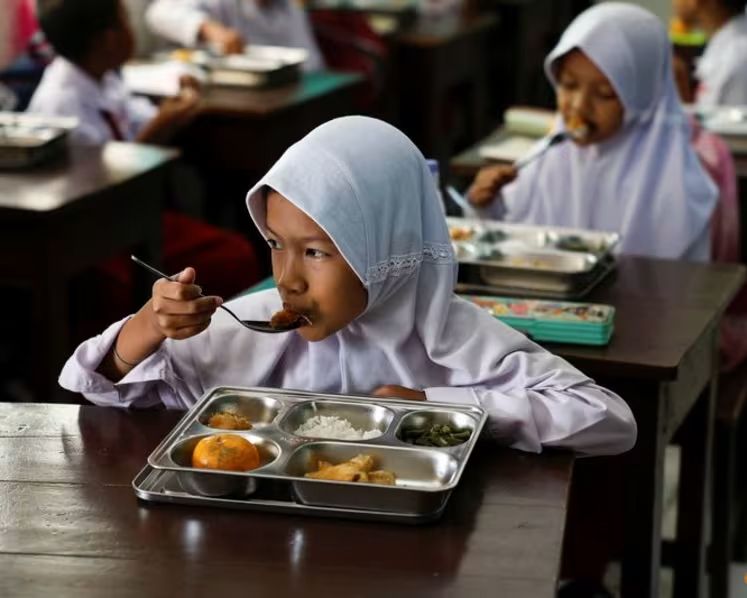
Indonesia's ambitious free meals initiative, touted as President Prabowo Subianto's flagship social programme, faces mounting administrative turmoil following the resignation of National Nutrition Agency chief Nanik Sudaryati Deyang on Wednesday. Her departure marks the second significant leadership change at the troubled agency within roughly five weeks, underscoring deepening instability within an initiative that has consumed enormous government resources since its rollout in January 2025. Nanik attributed her departure to severe health complications, specifically citing extreme stress that has compromised her cardiovascular condition, though her exit arrives amid escalating budgetary pressures and an ongoing criminal investigation into the programme's management and execution.
Nanik, who assumed the agency's top position only in June, cited her doctor's warning that her arteries had deteriorated significantly due to work-related strain. In announcing her decision via Facebook, she sought to frame her departure as a personal health decision rather than an administrative failure, noting that President Prabowo had agreed to her request out of personal consideration for her wellbeing. However, the timing of her resignation—arriving as the agency confronts its second major budget reduction in recent months—suggests that the operational and financial pressures surrounding the programme have proven unsustainable even for its leadership. The announcement that Prabowo is contemplating the establishment of a supervisory board to oversee the agency's operations further signals recognition that institutional governance structures require substantial reinforcement.
Her resignation follows a tumultuous period that witnessed the dismissal and subsequent arrest of her predecessor on corruption allegations. That leadership change, orchestrated by Prabowo himself last month, resulted from a high-profile raid on the agency's offices that uncovered evidence connected to the multibillion-dollar programme. The rapid succession of senior-level departures has created significant uncertainty regarding the agency's operational continuity and management capacity, particularly concerning the coordination of such a geographically dispersed and logistically demanding initiative. The criminal investigation dimension adds another layer of institutional vulnerability, raising questions about internal compliance mechanisms and oversight protocols that were ostensibly in place to prevent financial irregularities.
The financial pressures confronting the programme have intensified markedly in recent weeks. The agency announced on Tuesday that its 2026 budget allocation would be slashed to 229 trillion rupiah, down from the previously determined figure of 268 trillion rupiah. This reduction represents only the latest in a series of downward revisions, with the current allocation falling more than 100 trillion rupiah below the initial budgetary framework of 335 trillion rupiah that was originally established for the programme. Officials have signalled that additional budget reviews remain forthcoming, creating ongoing uncertainty about future funding levels and therefore the scale at which the programme can operate. These successive cuts fundamentally alter the scope and sustainability of an initiative that was explicitly framed as addressing childhood malnutrition across Indonesia's diverse population.
The programme's reach has already contracted considerably from its original ambitions. Officials stated that the initiative was designed to encompass approximately 83 million individuals, encompassing schoolchildren, pregnant women, and other vulnerable demographic groups throughout the archipelago. Yet prior to the most recent budget revision, the agency disclosed that it had successfully distributed free meals to some 62.5 million beneficiaries. The widening disparity between intended coverage and actual implementation reflects both the logistical complexity of executing such an expansive social intervention and the resource constraints that have increasingly circumscribed the programme's operational capacity. Additional budget reductions will necessarily compress coverage further, potentially undermining the public health objectives that the programme was designed to achieve.
Since its January 2025 launch, the free meals initiative has encountered substantial implementation challenges that extend well beyond administrative dysfunction. The programme has confronted persistent logistical complications, recurring quality control failures, and several alarming incidents involving mass food poisoning outbreaks among beneficiaries. These operational problems have generated public concern about both the effectiveness and safety of the initiative, creating reputational damage that extends beyond the programme itself to broader perceptions of government capacity. The convergence of health incidents, quality failures, budgetary reductions, and leadership instability has intensified scrutiny of a policy that commanded considerable political investment and electoral salience during Prabowo's presidential campaign.
Nanik's resignation statement attempted to depoliticise the programme by repositioning it as fundamentally a nutritional intervention initiative rather than a contentious political commitment. She emphasised that the meals scheme represents a public health measure directed at children's nutritional outcomes and should not become ensnared in partisan political debate. However, the reality that the programme has evolved into a focal point for broader concerns regarding Indonesia's fiscal sustainability and government spending priorities suggests that such rhetorical repositioning may prove insufficient. International observers and domestic fiscal policy analysts have increasingly scrutinised the programme's budgetary dimensions against the backdrop of Indonesia's broader macroeconomic challenges and debt management imperatives.
The institutional uncertainty surrounding succession and leadership appears to extend beyond the immediate administrative vacancy. Nanik indicated that her prospective successor would be a junior colleague within the agency, suggesting that institutional continuity may be prioritised over recruitment of external expertise. Simultaneously, her statement that she has been asked to lead a proposed supervisory board indicates that governance structures are undergoing reconceptualisation, though the precise mandate, membership, and operational authority of such a body remain undefined. The National Nutrition Agency itself declined to comment on these developments, maintaining strategic silence that may reflect institutional caution amid the ongoing corruption investigation.
For Malaysian observers and policymakers, Indonesia's experience with the free meals programme offers instructive lessons regarding the implementation challenges that accompany large-scale, rapid social policy expansion. The convergence of logistical complexity, budget constraints, oversight deficiencies, and staffing instability demonstrates the multidimensional governance challenges that emerge when social ambitions exceed institutional capacity or financial sustainability. As Southeast Asian nations grapple with similar social policy objectives—particularly initiatives directed at childhood nutrition and educational access—the Indonesian experience underscores the importance of phased implementation, robust institutional frameworks, and realistic budgetary allocations aligned with actual operational requirements.

