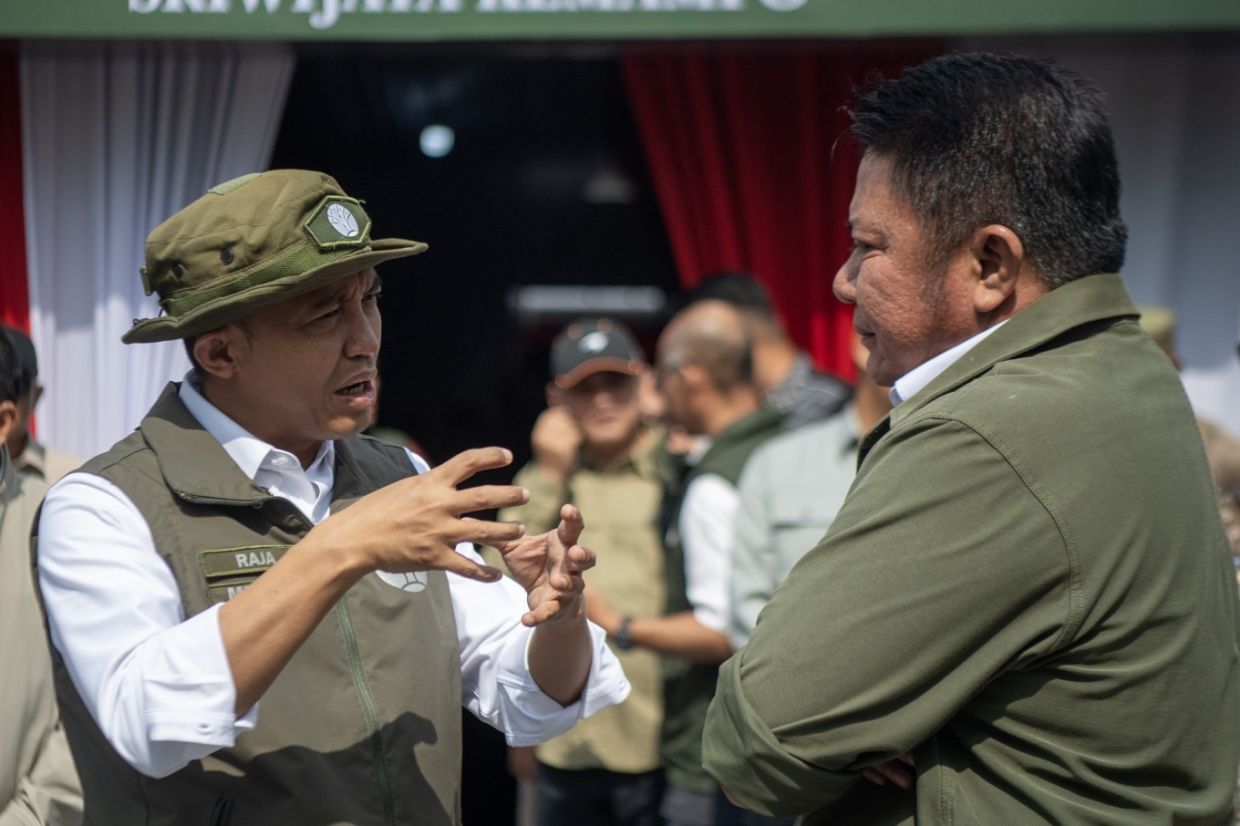
Indonesia's Corruption Eradication Commission has reopened investigations into Forestry Minister Raja Juli Antoni over suspicions that he may not have completely returned bribes allegedly provided by a regional official. The development marks an intensification of scrutiny on a minister already facing public pressure and legislative questioning regarding his handling of an apparent conflict of interest centring on forest conversion permits in Riau province.
The KPK's concerns stem from discrepancies between the amount of money the minister claimed to have received and what was actually returned. According to the antigraft agency's spokesperson Budi Prasetyo, investigators are examining whether Raja Juli truthfully reported the total value of improper payments from Suhardiman Amby, the regent of Kuantan Singingi. The envelope in question allegedly contained Singapore dollars equivalent to approximately US$10,919, handed over during a June 2 meeting between forestry officials and the regency's administration.
The circumstances surrounding this transaction reveal the mechanics of alleged corruption within Indonesia's bureaucracy. Beyond the minister, other forestry ministry personnel reportedly received kickbacks totalling S$12,500 from various Kuantan Singingi officials, suggesting a systematic pattern rather than isolated misconduct. The timing and nature of these payments—occurring before official requests for forest land reclassification—underscore how illicit transfers often precede administrative decisions that benefit those making the payments.
Raja Juli's account of events differs markedly from the KPK's suspicions. The minister stated that he declined the initial bribe attempt and returned the envelope to Kuantan Singingi Police headquarters on June 12, claiming he had no authority to accept such gifts. However, under Indonesian law, officials who receive improper gifts related to their position must report them directly to the KPK within 30 days, not to local police. This procedural misstep, whether intentional or negligent, may complicate the minister's defence and suggests potential misunderstanding of his legal obligations.
The underlying subject matter of the alleged bribery adds significant weight to the investigation. Suhardiman and his administration sought to reclassify more than 1,800 hectares of limited production forest in Kuantan Singingi, land designated for restricted harvesting operations. The Forestry Ministry possesses exclusive authority over such decisions, giving Raja Juli considerable gatekeeping power over outcomes that would substantially benefit the regent's regional interests. The convergence of financial transactions with pending administrative requests creates natural grounds for suspicion of quid pro quo arrangements.
The broader political context colours these allegations. Suhardiman, a member of President Prabowo Subianto's Gerindra Party, was arrested in late June as a suspect in a separate kickback scheme involving payments to his regional secretary. The KPK subsequently expanded its investigation to encompass the alleged bribes directed toward the Forestry Ministry. This escalation suggests investigators view the forest reclassification matter as integral to a larger pattern of corruption within Kuantan Singingi's administration, potentially implicating multiple officials across different agencies.
Raja Juli's political position compounds the controversy. As secretary-general of the Indonesian Solidarity Party, the minister occupies a significant role within Indonesia's fractious coalition politics. His entanglement in a high-profile corruption investigation carries implications beyond his individual accountability, affecting his party's reputation and credibility within government. The scandal has already prompted House of Representatives Commission IV, which oversees forestry policy, to demand clarification from the minister, though he notably absented himself from a July 14 hearing, citing an umrah religious pilgrimage.
The investigation also illuminates how regional administrators leverage their relationships with national officials to advance local interests. Budi Prasetyo confirmed that Raja Juli met with Suhardiman at least three times across April, May, and June—a frequency suggesting either routine administrative engagement or deliberate relationship-building preceding the bribery attempt. Determining the nature and content of these conversations will prove crucial to establishing whether any quid pro quo understanding existed between the parties.
The Forestry Ministry's response has emphasised cooperation with KPK investigators while maintaining that no land reclassification has been approved for Kuantan Singingi. Officials stated that recent proposals from the regency remain either rejected or under verification, suggesting the ministry may be attempting to demonstrate that the alleged bribery failed to influence policy outcomes. However, this position does not necessarily eliminate culpability for accepting improper payments, which constitutes an offence independent of whether the gift successfully altered administrative decisions.
Indonesia's anti-corruption legal framework establishes severe penalties for officials convicted of accepting illicit gifts connected to their positions, with maximum sentences of 20 years imprisonment plus substantial fines. The severity reflects policymakers' recognition that allowing such transactions undermines institutional integrity and public confidence in government decision-making. For Raja Juli, conviction would effectively terminate his political career and expose him to extended incarceration.
The investigation carries relevance across Southeast Asia's forest governance landscape. Riau province, where these events occurred, sits within one of the world's most biodiverse and ecologically threatened regions. Corruption affecting forest reclassification decisions potentially compromises conservation efforts and contributes to deforestation. Regional observers examining Indonesia's environmental governance will scrutinise how thoroughly and impartially the KPK pursues this case, viewing the outcome as indicative of whether the country can effectively combat corruption within its natural resource management apparatus.
Moving forward, the discrepancies between reported and received bribes represent the central evidentiary question. The KPK must trace the money's movements, identify recipients, and establish clear chains of possession. Banking records, witness testimony, and forensic accounting may reveal whether funds were ultimately retained, transferred to third parties, or genuinely returned. These technical determinations will prove decisive in determining both Raja Juli's individual culpability and the broader investigation's trajectory.

