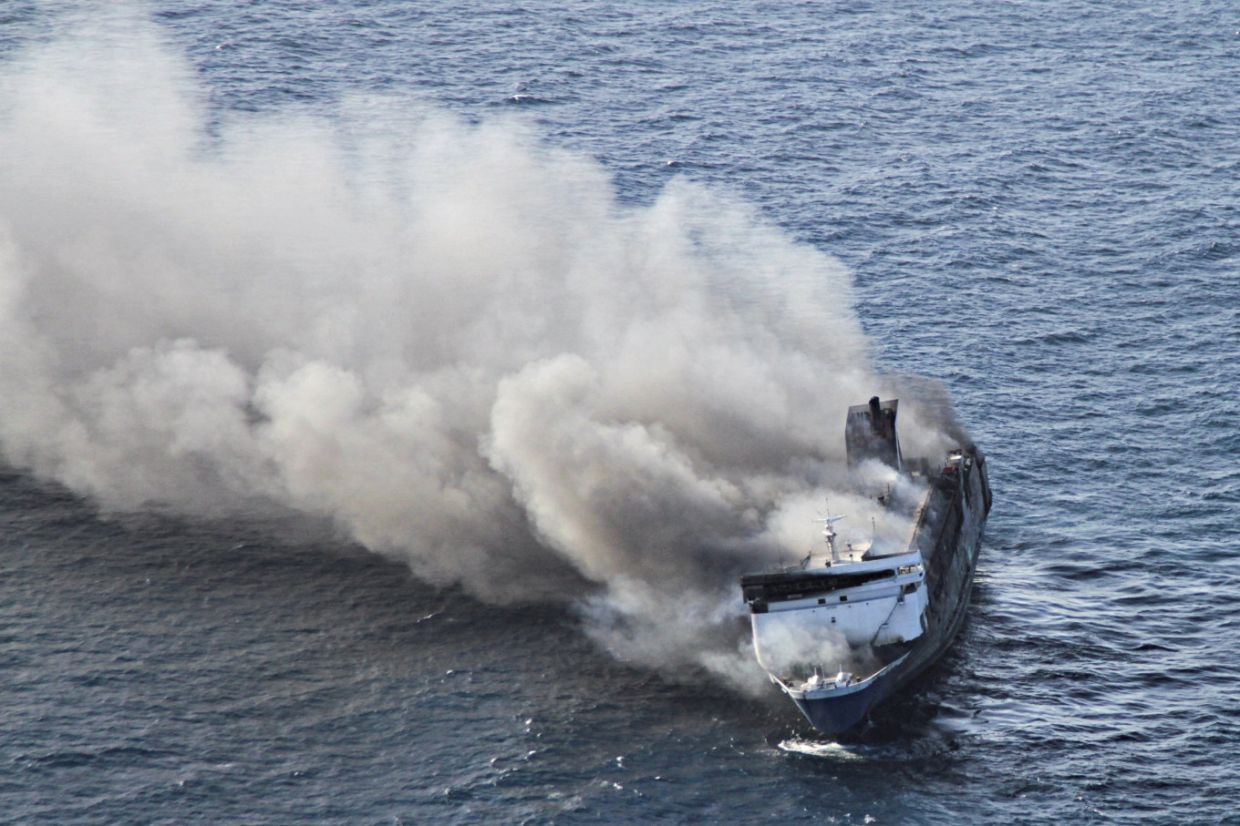
Indonesia's maritime safety regime faces renewed scrutiny following a catastrophic fire aboard the KMP Mutiara Sentosa II on August 2 off Madura, East Java, which claimed at least five lives and left two people missing. The incident, involving a roll-on/roll-off passenger vessel operated by PT Atosim Lampung Pelayaran (ALP) carrying 236 passengers and 39 crew members on a route between Surabaya and Makassar, has triggered alarm among transport authorities, industry representatives and lawmakers who question whether Indonesia's regulatory framework adequately protects seafarers and passengers.
The disaster unfolded during the pre-dawn hours when the 160-meter vessel suddenly caught fire. Survivors and witnesses have painted a damning picture of the evacuation process, alleging that crew members failed to provide coordinated emergency guidance to passengers. Udin Karo Karo, chairman of the Makassar–Surabaya Truck Drivers Association, reported that approximately 40 percent of the truck drivers aboard—the vessel's primary passenger demographic—were forced to save themselves by jumping into the sea with only life jackets, as no visible lifeboats or inflatable rescue rafts appeared to be deployed during the emergency. This account directly contradicts established maritime safety protocols that mandate organized evacuation procedures and the availability of certified life-saving equipment proportional to vessel capacity.
The structural and procedural failures identified in the KMP Mutiara Sentosa II incident point toward deeper systemic problems within the company's safety management framework. Edi Priyanto, Deputy Chairman of the East Java Occupational Safety and Health Council, emphasized that the fire represents more than a technical malfunction—it suggests institutional deficiencies in how the operator approaches safety culture, organizational learning and risk management. His assessment gains weight when considering that PT ALP operates the KMP Mutiara Sentosa I, a sister vessel that caught fire near the same waters in May 2017, also resulting in five fatalities. The recurrence of major incidents involving the same company within five years indicates that lessons from the earlier disaster either were not learned or were not properly implemented into operational procedures and maintenance protocols.
Industry observers and government officials have begun questioning whether Indonesia's maritime certification and inspection processes are sufficiently rigorous. Abdul Hadi, a member of the House of Representatives Commission V responsible for overseeing transportation and infrastructure, warned that successive ferry disasters occurring within brief timeframes signal systemic failure rather than isolated accident events. He argued that safety inspections and seaworthiness certification procedures have become routine administrative formalities disconnected from genuine vessel safety assessment. His concern reflects a broader anxiety within parliament that regulatory agencies may be rubber-stamping safety approvals without conducting thorough, independent verification of actual operational readiness and emergency response capabilities.
Transportation Minister Dudy Purwagandhi announced that the government would undertake a comprehensive evaluation of PT ALP once investigators from the National Transportation Safety Committee (KNKT) completed their preliminary assessment. However, he acknowledged that PT ALP's documented history of maritime accidents—at least two significant incidents involving company vessels—compounds concerns about whether existing oversight mechanisms are sufficient to detect and prevent operational deficiencies before they result in loss of life. The minister's measured response suggests that authorities are treating the August 2 fire as a potential catalyst for broader regulatory reform, though concrete policy changes remain pending investigation findings.
The timing of the KMP Mutiara Sentosa II disaster carries particular significance for regional maritime safety discourse. The incident occurred merely one month after another ferry tragedy near Selayar, South Sulawesi, where a vessel carrying over 70 passengers sank, resulting in at least four confirmed deaths and 14 missing persons presumed dead. The proximity of these disasters raises questions about whether Indonesia's expanding maritime transport sector has outpaced the institutional capacity of regulatory agencies to maintain safety standards across an increasingly complex and geographically dispersed fleet.
For Malaysian maritime authorities and regional shipping operators, the Indonesian ferry disasters carry cautionary implications. Southeast Asia's maritime sector remains heavily dependent on vessels and operational practices that traverse jurisdictions with varying regulatory standards. Malaysian ports regularly accommodate Indonesian-registered vessels, and Malaysian shipping companies compete within the same regional market. The systemic safety deficiencies identified in the KMP Mutiara Sentosa II incident—inadequate evacuation procedures, unclear crew responsibilities during emergencies, questionable maintenance and inspection oversight—could potentially exist among other operators across the region, creating indirect risks for regional passengers and cargo movements.
Edi Priyanto's analysis provides a framework for understanding why isolated technical investigations may prove insufficient to prevent future incidents. He emphasized that comprehensive accident investigation must examine not merely the fire's origin, but the broader operational and managerial context that allowed the fire to spread rapidly and prevented effective emergency response. This systemic approach requires investigators to evaluate crew training standards, maintenance schedules, safety management documentation, and the extent to which company leadership prioritizes safety culture over operational efficiency and cost reduction. Without such multifaceted examination, subsequent investigations of similar incidents will likely reach similar conclusions without generating meaningful behavioral change.
The pressure on Indonesia's maritime regulator to demonstrate accountability and competence will shape how the government addresses PT ALP's operational fitness going forward. Transportation Minister Dudy Purwagandhi's commitment to evaluation suggests that the operator may face enhanced inspections, operational restrictions, or potentially suspension of routes pending remediation of identified deficiencies. However, the government's approach will also signal to other maritime operators whether Indonesia intends to strengthen enforcement of existing safety standards or whether the regulatory response will prove largely performative, designed primarily to manage public perception rather than fundamentally alter operational practices.
From a passenger protection perspective, Udin Karo Karo's demand for compensation and accountability reflects broader questions about Indonesia's maritime incident response protocols and victim support mechanisms. Unlike aviation accidents, which trigger automatic investigation triggers and standardized victim compensation processes, maritime incidents often result in protracted legal disputes, limited liability frameworks and uncertain compensation outcomes for affected families and cargo interests. The KMP Mutiara Sentosa II fire will test whether Indonesia's maritime authorities and operator liability frameworks can deliver transparent, timely compensation to victims and whether the incident accelerates adoption of more robust safety management standards applicable sector-wide.
The broader regulatory context reveals that Indonesia's maritime safety framework may suffer from fragmented authority, competing institutional priorities, and resource constraints that complicate consistent enforcement. Multiple agencies—maritime regulators, safety councils, port authorities and transportation ministries—maintain overlapping responsibilities but potentially unclear lines of accountability. Harmonizing these institutional relationships and ensuring that safety compliance becomes a genuine operational requirement rather than a negotiable administrative burden will require sustained political commitment and resource allocation that extends well beyond the investigation phase of the current incident.
Looking forward, the KMP Mutiara Sentosa II disaster will likely become a reference point for regional maritime safety policy discussions. Organizations like the Association of Southeast Asian Nations and the International Maritime Organization may use the incident to assess whether member states adequately implement established international maritime safety conventions and whether gaps between formal compliance and actual operational practice warrant enhanced regional oversight mechanisms. For Indonesia specifically, the incident presents an opportunity to demonstrate whether the government can translate public outrage over maritime tragedies into sustained, meaningful regulatory improvements that protect the lives of the hundreds of thousands of passengers who depend on maritime transport throughout the archipelago and across Southeast Asian waters.

