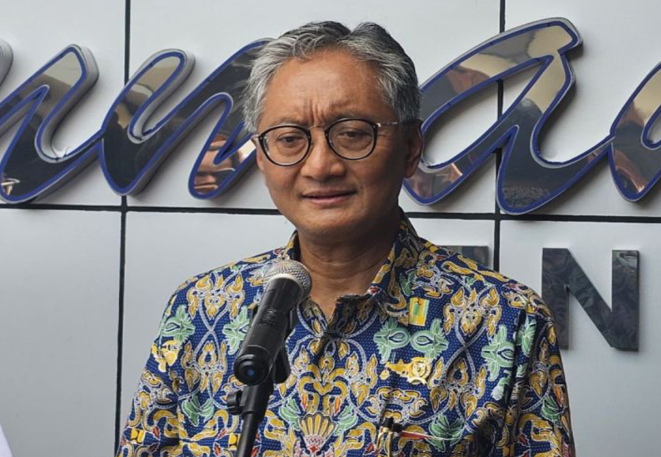
Indonesia's Public Works Ministry has descended into turmoil following the leak of an official document that revealed Minister Dody Hanggodo planned to bring his wife Irma Hermawati and daughter Aurellia Tsabitha Meidirama on a state-funded trip to New York, casting fresh scrutiny on governance standards and fuelling speculation about widespread internal purges.
The controversy erupted when a document signed by the ministry's secretary-general Apri Artoto on June 29 circulated across social media beginning this month. The letter outlined plans for eight delegates to travel to New York from July 13 to 19 to participate in a United Nations body meeting scheduled for mid-month. The presence of the minister's family members among the listed attendees rapidly attracted criticism from observers who questioned the appropriateness of including relatives on official government travel, particularly where public resources might be involved.
Public outcry over the arrangement intensified concerns about misuse of state facilities, ultimately forcing the ministry to abandon the planned trip. The backlash revealed broader anxieties about administrative standards within the institution, with observers questioning whether such decisions reflected wider governance challenges. Apri subsequently explained that including family members was necessary to streamline visa applications through the Foreign Ministry, while insisting that no government funds would cover their participation. He also vowed to pursue the source of the leak and threatened legal action against any official discovered to be responsible.
Within days of the document going viral, social media platforms filled with assertions that Hanggodo had retaliated by reassigning numerous officials to regional postings, predominantly in areas outside Java. During a Wednesday media appearance, the minister acknowledged the transfers but rejected the suggestion they constituted punishment. "I have 38,600 employees, why shouldn't I be allowed to reassign them?" he stated, according to Kompas.com. His response did little to quell speculation that the personnel movements represented administrative retaliation for the embarrassing leak.
The broader pattern of reorganisation at the ministry extends well beyond this recent episode. Since his appointment in October 2024, Hanggodo has orchestrated multiple rounds of personnel movements. Social media compilations have documented more than 100 employee reassignments throughout his tenure, ranging from senior director-generals to junior civil servants. This May witnessed another substantial shake-up that included the appointment of seven high-ranking officials, with Apri elevated to secretary-general—a position previously held by Wida Nurfaida, who served for less than a year following another major restructuring in July 2025.
The relentless churn of personnel changes has triggered alarm among parliamentary overseers. During a June meeting, Yasto Soepredjo Mokoagow of the House of Representatives Commission V, which supervises infrastructure matters, highlighted the corrosive impact of these movements on institutional morale. The PDI-P lawmaker warned that disciplinary measures, including demotions of directors to non-structural positions, had created widespread apprehension among staff members. "Civil servants at the ministry are now afraid to carry out programs," he explained during a June 11 session, voicing concern that such fearfulness would undermine implementation of critical infrastructure projects.
Hanggodo has justified his aggressive restructuring by invoking the concept of a "deep state" operating within the ministry—an internal network he characterises as termites hollowing out institutional integrity. This framing has become his recurring explanation for the repeated purges and reassignments, though the claim remains difficult to verify independently. The narrative reflects broader anxieties within the government about hidden power structures resistant to ministerial direction, though critics question whether wholesale personnel turnover represents an effective remedy.
Adding to institutional instability, several senior ministry officials have become entangled in an active corruption investigation centred on water resources projects. In June, the Jakarta High Prosecutor's Office named multiple suspects, including former water resources director-general Dwi Purwantoro and ex-irrigation and swamp director Yosiandi Radi Wicaksono. Hanggodo responded by pledging full cooperation with law enforcement and assuring the public that he would not shield subordinates from prosecution, positioning himself as committed to accountability despite his apparent frustration with perceived institutional sabotage.
The minister's credibility has faced additional challenges following the resurfacing of recorded interactions with subordinates on social media. A particularly damaging video captured him reprimanding a staff member at a school construction site in East Java in April, during which he pointed at the employee while calling his explanation "dumb excuses." Such footage has amplified existing concerns about workplace culture and raised questions about whether the minister's approach to leadership encourages institutional dysfunction rather than addressing it.
For Malaysian observers, the Indonesian case offers instructive lessons about the consequences of prolonged ministerial turbulence. The combination of alleged impropriety, retaliatory personnel actions, ongoing corruption investigations, and documented displays of managerial intolerance has created an environment where institutional performance predictably suffers. The Public Works Ministry's evident instability poses risks to Indonesia's infrastructure development pipeline, a sector of regional significance given interconnections with neighbouring economies including Malaysia. The episode illustrates how governance vulnerabilities in one country's critical institutions can generate broader regional implications, particularly where project delays or cost overruns cascade across supply chains and investment frameworks.

