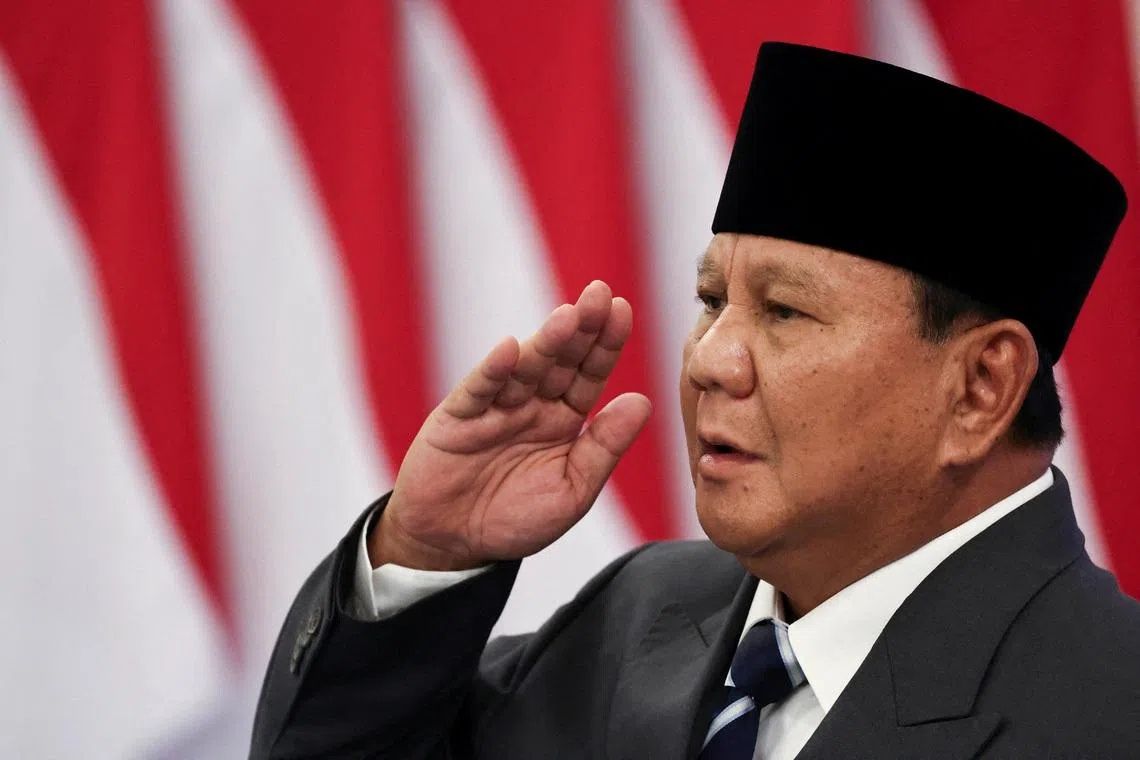
Indonesia's human rights commission has called on the government to terminate mandatory military training for participants in President Prabowo Subianto's Red and White Cooperatives initiative, citing the deaths of five trainees that occurred within the first ten days of a scheduled 45-day programme. The fatalities have sparked serious questions about the appropriateness of subjecting civilian cooperative managers to military-style conditioning, rekindling concerns about the military's expanding role in non-defence sectors under Prabowo's administration.
The cooperative programme, which launched in July last year, represents a central pillar of the government's economic strategy and aspires to create approximately 80,000 village-based cooperatives nationwide. These community enterprises are designed to distribute subsidised essential goods including cooking gas and fertiliser, whilst simultaneously generating employment opportunities and contributing toward the administration's stated objective of achieving 8% economic growth by 2029. The scale of the initiative is considerable: nearly 35,000 prospective cooperative managers are required to complete the military training component, which commenced on June 14 and extends through July 31 across multiple regional military installations.
Between June 17 and June 26, five participants succumbed to various medical conditions, according to the defence ministry's account. The ministry attributed these deaths to cardiac arrest, heat stroke, tuberculosis, and pneumonia—conditions the government insisted resulted from pre-existing health vulnerabilities rather than deficiencies in training protocols or oversight. Major General Ketut Gede Wetan, heading the ministry's human resource development division, emphasised that all participants had undergone medical screening prior to enrolment and received clearance to participate. The defence ministry further stressed that the training focused not on combat proficiency but rather on foundational military discipline, involving what officials characterised as minimal physical exertion.
The human rights commission, represented by Pramono Ubaid Tantowi, issued a stark challenge to this narrative. The body contended that basic military training is fundamentally misaligned with the stated objectives of cooperative management, which the commission identified as business acumen, member services, and organisational governance. Tantowi asserted that capacity-building programmes for cooperative leaders should concentrate on strengthening managerial competence, cultivating leadership capabilities, and developing financial literacy—competencies entirely distinct from military conditioning. This position reflects a broader critique of the government's approach to civilian development and raises questions about whether militarisation serves genuine developmental goals or represents an ideological preference for military involvement in governance.
In response to mounting pressure, the defence ministry committed to implementing a comprehensive reassessment of training methodologies. The evaluation framework will encompass enhanced health monitoring systems, early identification protocols for participants with underlying health risks, and modifications to activity intensity levels. The ministry acknowledged that the health ministry would be incorporated into the training oversight structure, signalling a recognition that civilian health expertise must complement military administration. However, critics argue that cosmetic adjustments to existing military-led training do not address the fundamental question of whether such training should occur at all.
The human rights commission escalated its position by demanding a formal government investigation into the five deaths and calling upon law enforcement authorities to pursue forensic autopsy examinations. This procedural insistence reflects concerns that official accounts may obscure the actual circumstances surrounding the fatalities and that criminal accountability mechanisms should be activated. The commission's recommendations position independent medical analysis as essential to determining whether deaths resulted from individual health vulnerabilities or from environmental and operational factors within the training programme itself.
Prabowo, a former military commander who assumed office in 2024, has demonstrated a notable inclination toward expanding military institutional presence across civilian domains and public administration. His government's decision to embed military training within an economic development programme exemplifies this broader pattern. For Southeast Asian observers, the development carries particular relevance, as the region has witnessed recurring tensions between military actors and democratic institutions. Malaysia's own historical experience with military overreach in civilian affairs provides cautionary context, making the Indonesian situation germane to regional stability discussions.
The cooperative programme itself represents substantial developmental ambition, addressing rural economic marginalisation through community enterprise models. However, the incorporation of mandatory military training introduces legitimacy questions and operational risks that appear disproportionate to the programme's civilian economic objectives. The deaths of five participants within a compressed training window constitute a human cost that demands rigorous investigation and accountability rather than incremental procedural refinements.
The episode also highlights persistent governance challenges in Indonesia regarding institutional boundaries and civilian oversight of defence sector activities. As the government proceeds with implementation of cooperative programmes across tens of thousands of villages, questions about the necessity, appropriateness, and safety of military involvement remain unresolved. The human rights commission's intervention suggests that civil society actors continue to exercise watchdog functions, though the government's receptiveness to these recommendations remains uncertain. Regional observers will closely monitor whether Indonesia's authorities implement fundamental structural changes or pursue limited modifications that preserve military roles in civilian economic development.

