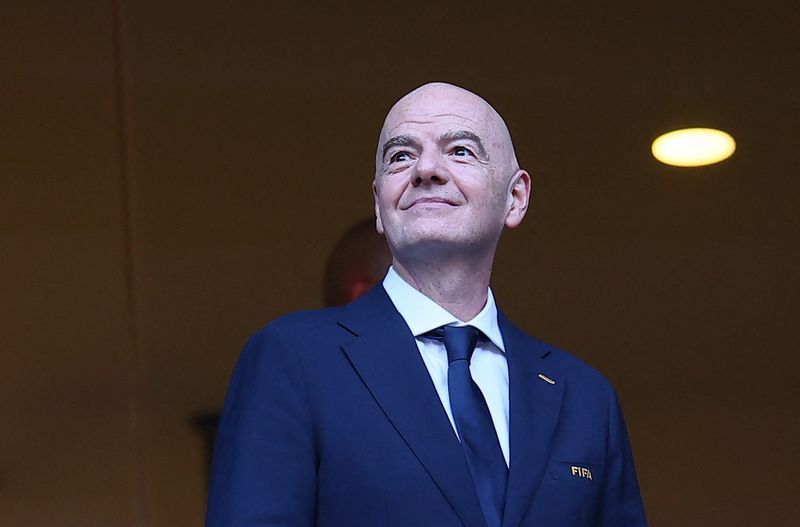
FIFA President Gianni Infantino's political foundations have begun cracking after his surprise withdrawal from a contentious proposal to raise $4.2 billion by selling commercial rights to a new World Cup entity. The reverberations from the failed initiative, which would have marked the first time private investment entered World Cup governance, continue to destabilise the Swiss-Italian administrator's previously commanding position atop world football's governing body. Within days of abandoning the plan on a Friday night late last week, Infantino has found himself isolated from some of the regional confederations that have historically supported him, setting the stage for what could be a fiercely contested reelection battle at the FIFA Congress scheduled for Morocco in March.
Infantino's attempt to present the proposal without adequate consultation from key stakeholders proved to be a catastrophic miscalculation that ignited three days of unprecedented turmoil within football's administration. The subsequent damage to his political capital became evident almost immediately as major confederations published scathing rebukes of his leadership style and decision-making processes. UEFA, the powerful European confederation, and CONCACAF, which oversees football across North and Central America as well as the Caribbean, issued strongly worded statements within 24 hours signalling their loss of confidence in Infantino's stewardship. The Asian Football Confederation, traditionally one of his more reliable voting blocs, stopped short of outright condemnation but made clear their displeasure by labelling the lack of consultation "totally unacceptable" and calling for institutional reform at FIFA.
According to reporting from The Times of London, the situation has escalated beyond mere public criticism. UEFA, CONCACAF, and the AFC are reportedly coordinating efforts to remove Infantino from his post, with discussions reportedly extending to the possibility of creating parallel continental competitions if he refuses to step down voluntarily. The prospect of rival tournaments would represent an unprecedented schism in world football, underscoring the depth of anger among some confederations over the proposal and its handling. Notably, both CONCACAF and the AFC declined immediate comment on these reports, while UEFA also refrained from confirming specific details about their strategic discussions. This measured silence suggests careful coordination among the confederations as they weigh their legal and political options.
Infantino's political survival now depends on navigating several critical thresholds in the coming months. His most immediate concern involves preventing the convening of an Extraordinary Congress, which requires formal written requests from just 43 FIFA member associations to trigger. Such a congress could fundamentally alter the electoral landscape and potentially allow for motions against the incumbent president that would otherwise require waiting until the scheduled March elections. With 211 national federations entitled to vote at Congress, the 43-member threshold represents less than 21 percent of the total voting body, a concerning benchmark given the level of discontent now publicly evident among regional confederations and wealthy European associations.
Public commitments to Infantino's reelection have fragmented significantly. Five major European national associations, including the English Football Association, have formally withdrawn their previous endorsements of his candidacy. Denmark has made clear it never intended to support him. Meanwhile, only a handful of countries have publicly declared continued backing, including the football federations of Morocco, Qatar, Kuwait, Lebanon, and Sri Lanka. These numbers remain modest in the context of the full voting body, but the symbolic importance of losing support from wealthy, influential European associations cannot be understated. Their departure signals that Infantino's traditional pathway to reelection through coalition-building among less wealthy confederations may no longer be sufficient to guarantee victory.
The proposed stake sale itself reveals much about Infantino's strategic approach to consolidating power and expanding FIFA's financial resources. The plan would have generated substantial immediate payouts, with promises of dividends ranging from $20 million to $40 million annually to each national federation that endorsed the scheme. This financial incentive structure was deliberately pitched at less wealthy associations in Africa, Asia, and elsewhere that depend heavily on FIFA disbursements to fund their operations. Infantino's power base has historically rested upon maintaining the loyalty of these poorer confederations, mirroring the approach of his predecessors Joao Havelange and Sepp Blatter. By effectively rewarding those confederations that backed his commercial initiative, he sought to reinforce that traditional coalition while marginalising the concerns of more prosperous European and South American federations.
The collapse of this strategy reflects a fundamental miscalculation about how much latitude Infantino possessed to make unilateral decisions affecting world football's future. UEFA confirmed on Monday that it had dispatched a "document preservation letter" to FIFA regarding all materials connected to the failed proposal, signalling serious legal proceedings may follow. The confederation has not yet committed to filing formal legal action, suggesting they are weighing multiple options for constraining the FIFA president's authority. This legalistic approach provides a mechanism for challenging Infantino independent of the electoral calendar and may prove more consequential than the reelection battle itself.
Infantino's seven-month window until the March Congress represents a crucial period for repairing fractured relationships and neutralising potential challengers. He will need to demonstrate that FIFA's governance has genuinely reformed and that future major decisions will be made through proper consultation with all confederations. His apology for how the proposal divided the game, while important, may prove insufficient without concrete structural changes and a track record of collaborative decision-making. The fact that even the usually cautious AFC signalled discontent suggests that Infantino's authority to govern by fiat has substantially diminished, requiring a fundamentally different approach going forward.
For Malaysian readers and Southeast Asian football administrators more broadly, these developments carry significant implications. The AFC's unprecedented criticism of FIFA leadership suggests that Asian confederations, which include football bodies from across the region, are asserting themselves more forcefully in global governance debates. Malaysia's own Football Association, as an AFC member, finds itself positioned within a confederation now actively constraining a FIFA president who has dominated the organisation since 2016. The proposed World Cup commercialisation scheme would have affected how football revenues are distributed globally, potentially impacting funding available to Southeast Asian federations for development programmes and infrastructure projects.
The immediate challenge facing Infantino's potential opponents involves identifying an alternative candidate capable of commanding support from both wealthy European associations and the less prosperous confederations whose votes ultimately determine FIFA elections. Any challenger must address the economic interests of poorer federations while also convincing Europe that governance has genuinely reformed. The November 18 nomination deadline approaches, and no obvious candidate has emerged publicly. This timing constraint potentially benefits Infantino by limiting the time available for opposition forces to coordinate around an alternative figure, though the unprecedented level of confederation-level opposition suggests that a serious challenger could emerge relatively quickly if political momentum continues building against the incumbent.
The football world now awaits whether the reported cooperation between UEFA, CONCACAF, and the AFC actually materialises into concrete action, or whether these confederations pursue separate strategies to constrain Infantino's authority. The possibility of founding rival continental tournaments represents such a radical departure from established football governance that its credibility as a negotiating position remains unclear. Nevertheless, the fact that such discussions are reportedly occurring at all demonstrates how completely Infantino's failed proposal has altered the political calculus surrounding his leadership. What appeared three weeks ago to be a straightforward reelection now presents genuine uncertainty about whether he will even remain FIFA president when the Congress convenes in Morocco.

