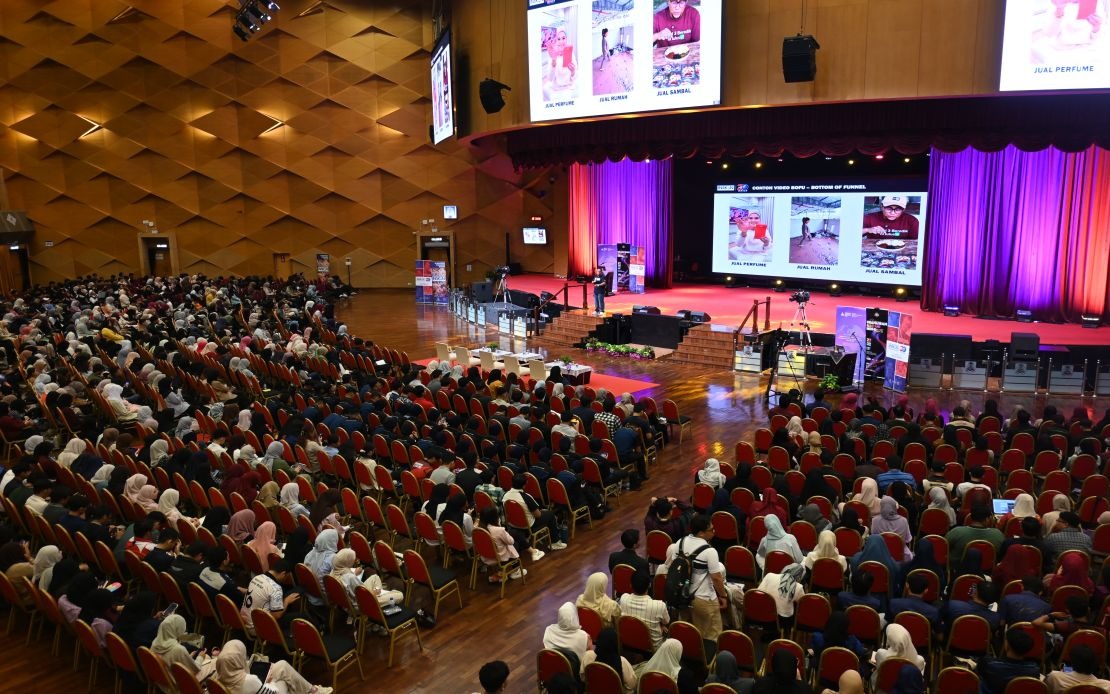
The National Entrepreneurship Institute (INSKEN) and Universiti Teknologi MARA (UiTM) have achieved a notable milestone by drawing 6,877 participants to the Usahawan MADANI Mega (SUM MEGA) 2026 entrepreneurship seminar in Shah Alam, earning recognition in the Malaysia Book of Records for the largest student participation in an entrepreneurship seminar. The event, held at Dewan Agung Tuanku Canselor at UiTM's Shah Alam campus, represented a significant mobilisation of student interest across the nation's tertiary institutions, demonstrating the appetite among young Malaysians for guidance on launching their own business ventures.
Organised through a partnership between INSKEN, the Malaysian Academy of SME and Entrepreneurship Development (MASMED), and UiTM, the seminar functioned as a comprehensive knowledge-sharing platform where participants engaged in capacity-building sessions and strategic networking opportunities specifically designed for the undergraduate and graduate population. This collaborative approach reflects a broader institutional commitment to embedding entrepreneurial thinking within Malaysia's higher education ecosystem, recognising that universities serve as critical incubators for the next generation of business leaders and job creators.
The Deputy Minister of Entrepreneur and Cooperatives Development, Datuk Mohamad Alamin, characterised the record attendance as evidence of shifting attitudes toward entrepreneurship among younger Malaysians. Rather than viewing self-employment as a fallback option, students increasingly recognise it as a legitimate and attractive career trajectory that aligns with their aspirations for independence and innovation. This attitudinal shift carries significant implications for Malaysia's economic development strategy, as the availability of motivated, educated entrepreneurs has long been identified as a constraint on small and medium-sized enterprise (SME) growth in the region.
Within the Malaysian policy context, entrepreneurship has evolved from a peripheral concern into a central pillar of national economic strategy. Mohamad Alamin underscored that the MADANI government, operating through the Ministry of Entrepreneur and Cooperatives Development (KUSKOP), views entrepreneurial activity as fundamental to generating employment, strengthening domestic supply chains, and fostering the innovation necessary to sustain competitiveness in an increasingly globalised economy. This positioning reflects recognition that large multinational employers alone cannot absorb Malaysia's educated workforce, making entrepreneurship a matter of national economic necessity rather than merely individual opportunity.
The ministry's comprehensive support framework encompasses multiple dimensions of entrepreneurial development. Initiatives span capacity-building programmes that equip aspiring entrepreneurs with technical business skills, financing mechanisms that address capital constraints faced by startup founders, market access initiatives that facilitate connections between new businesses and customers, digitalisation support that modernises business operations, and ongoing business development assistance. This multi-pronged approach acknowledges that entrepreneurial success depends not merely on individual motivation but on the availability of institutional support systems that reduce barriers to entry and increase survival rates among new ventures.
During the seminar itself, participants encountered practical instruction through what organisers termed the MOFA approach, a framework emphasising four critical dimensions of business management: marketing, operations, finance, and business administration. By grounding entrepreneurial education in these functional areas rather than abstract principles, the programme aims to build practical competence among student participants, ensuring that attendees acquire directly applicable knowledge they can deploy when launching their own enterprises. This pragmatic orientation reflects evidence suggesting that entrepreneurs often struggle less with motivation than with mastery of operational fundamentals required for sustainable business management.
Insken's Board of Trustees chairman and UiTM board member Datuk Mustaffa Kamil Ayub articulated a vision of entrepreneurship extending beyond individual career choices toward cultural transformation. By characterising entrepreneurship as a mindset, a culture, and a movement rather than merely an occupational path, he signalled that institutional success requires shifting how Malaysians collectively view business creation. This cultural reframing carries implications for how entrepreneurship is incorporated into school curricula, media narratives about business success, and societal reward systems that currently often privilege secure employment over entrepreneurial risk-taking.
Beyond SUM MEGA 2026 itself, INSKEN operates a portfolio of complementary programmes designed to sustain entrepreneurial development beyond the initial seminar exposure. The INSKEN Masterclass series provides advanced training for entrepreneurs seeking to enhance their capabilities, whilst the BANGKIT programme appears designed to stimulate early-stage venture development, and the PROTÉGÉ initiative likely offers mentoring relationships connecting experienced business practitioners with emerging entrepreneurs. This tiered ecosystem recognises that one-time seminars, however well-attended, generate limited lasting impact without follow-on programmes that convert initial interest into concrete venture development.
The seminar's timing and scale also reflect alignment with Malaysia's National Entrepreneurship Policy 2030, a long-term strategic framework that positions entrepreneurship as foundational to achieving the country's vision for sustainable economic growth and development. By bringing together government agencies, higher education institutions, industry participants, financial institutions, and entrepreneurship development bodies, SUM MEGA 2026 exemplified the cross-sectoral collaboration required to sustain momentum toward that policy vision. Such multi-stakeholder engagement increases the likelihood that students departing the seminar encounter ongoing support systems capable of translating initial enthusiasm into functioning enterprises.
For Southeast Asian observers, Malaysia's emphasis on student entrepreneurship development carries broader regional significance. As middle-income economies across ASEAN navigate the challenge of graduating from reliance on manufacturing and foreign direct investment toward knowledge-intensive industries, the capacity to generate home-grown entrepreneurs becomes increasingly important. Malaysia's institutional investments in entrepreneurship education thus represent not merely national priority but a regional trend toward recognising that sustainable economic growth requires cultivating entrepreneurial capability within the labour force rather than depending on external capital sources and multinational employment.
The Malaysia Book of Records recognition itself, whilst symbolic, signals official institutional validation of the entrepreneurship agenda. By documenting and celebrating record participation in entrepreneurship seminars, national record systems legitimate such activities as worthy of societal attention and resources. This symbolic recognition may prove as important as the seminar's direct educational content, as it shapes how young Malaysians perceive the social status and institutional support surrounding entrepreneurial endeavour. When government celebrates record participation in business creation initiatives, the implicit message to potential entrepreneurs becomes that such ambition commands national respect and support.
Looking forward, the challenge facing INSKEN, UiTM, and government partners involves converting the enthusiasm captured at SUM MEGA 2026 into measurable increases in actual business formation, particularly among lower-income and underrepresented communities where entrepreneurial participation remains constrained by capital access, social networks, and confidence. While nearly 7,000 participants represents significant reach, the sustainability test will emerge in subsequent years when tracking how many attendees progress toward actual venture creation and how many of those ventures achieve viability. The record attendance demonstrates demand for entrepreneurship support; translating that demand into economic outcomes represents the next frontier for Malaysian entrepreneurship policy.