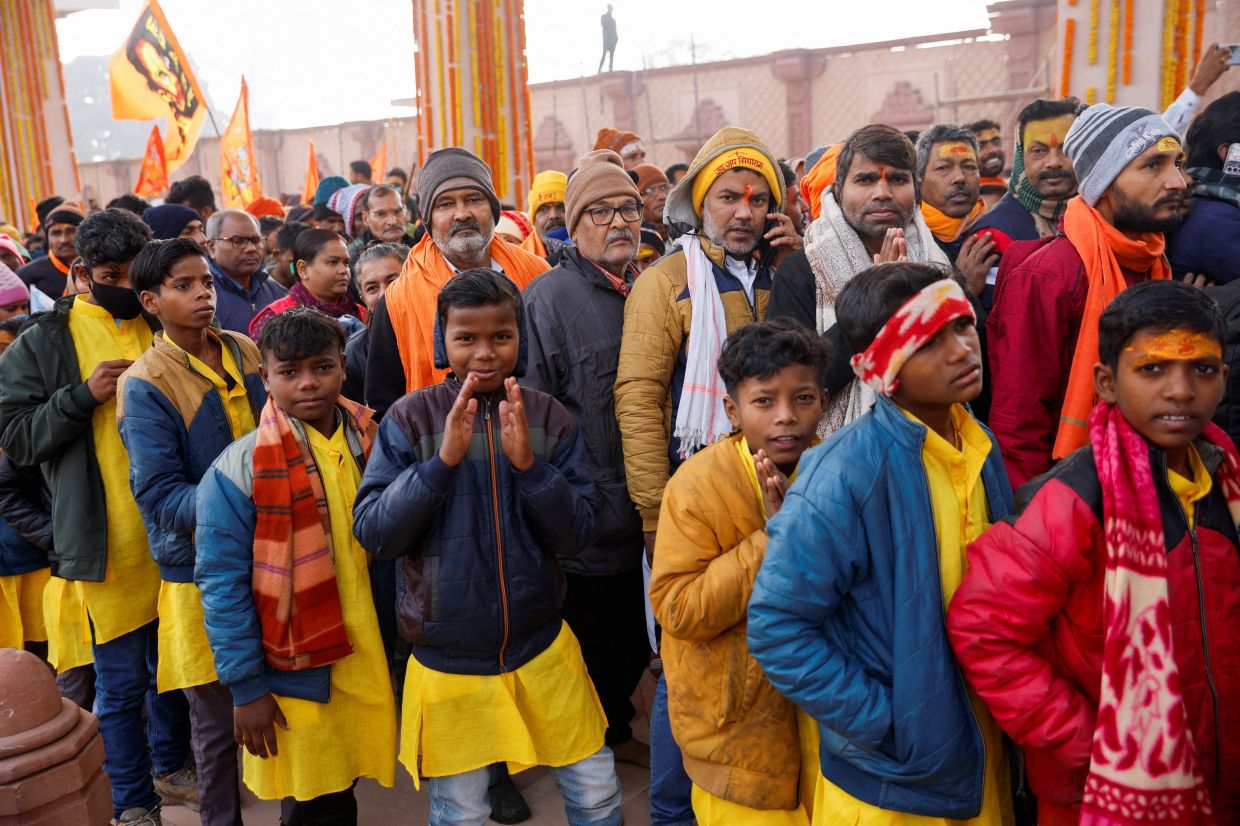
The arrest of eight temple staff members in June for allegedly siphoning donations at India's Ram temple in Ayodhya has triggered a wider conversation about financial governance at major pilgrimage destinations. While authorities have withheld details on the precise amount involved, media estimates suggest the theft could amount to around 30 million rupees—approximately US$314,000. The case underscores a persistent vulnerability affecting many of India's most prominent religious institutions, where vast sums of cash and precious metals flow in daily from millions of devotees seeking spiritual merit through charitable giving.
For ordinary worshippers, the scandal strikes at the heart of their faith. Ashok Prasad Kushwaha, an auto-rickshaw driver from Delhi who has made three pilgrimages to the Ram temple within two years, articulated the emotional weight of the betrayal. He explained that donations represent a sacred compact between the faithful and the divine, a voluntary sacrifice made even by those with limited means. When such offerings vanish through misappropriation rather than fulfilling their intended purpose of supporting temple operations and charitable work, it registers as a profound personal violation for donors who have foregone other uses for their hard-earned rupees.
This is not an isolated incident within India's religious landscape. The Ram temple theft follows a pattern of similar scandals at other major shrine complexes, including the Badrinath shrine in Uttarakhand and the sprawling Tirumala Tirupati Devasthanams in Tamil Nadu, widely regarded as one of the world's wealthiest temple trusts with assets valued at approximately US$31 billion. These successive revelations paint a troubling picture of systemic vulnerability across institutions that collectively manage enormous financial resources. The incidents suggest that rapid growth in donations and visitor numbers has outpaced the development of corresponding security and accountability measures.
The Ram temple itself represents a particularly significant flashpoint because of its centrality to recent Indian religious and political history. Inaugurated in 2024 by Prime Minister Narendra Modi, the shrine has rapidly become one of India's pre-eminent pilgrimage destinations, welcoming an average of 90,000 visitors daily. The sheer volume of foot traffic translates into continuous flows of donations—devotees present offerings ranging from loose currency notes to gold and silver ornaments. This constant influx, while testifying to the temple's spiritual appeal, also creates operational complexity that appears to have been inadequately managed.
The historical sensitivity of the site compounds the significance of the current scandal. The Ram temple stands on ground that was contested for decades through one of India's most divisive religious disputes. Hindu communities have long maintained that the god Ram was born at this location over seven millennia ago, while the site was previously occupied by the Babri mosque, constructed during the 16th century by a Muslim emperor. This disputed history exploded into violence in 1992 when Hindu activists demolished the mosque, triggering riots that claimed more than 2,000 lives across the country. The 2019 Supreme Court ruling that awarded the land to Hindu petitioners enabled the temple's construction, followed by an unprecedented nationwide fundraising campaign that ultimately generated approximately US$341 million.
The broader context reveals an Indian spiritual economy of staggering proportions. According to analysis by consultancy firm IMARC, India's religious and spiritual market reached a valuation of US$70.14 billion in 2025, with projections suggesting it will nearly double to US$135.41 billion by 2034. This expansion reflects both deeper religiosity and increased commercialisation of spiritual spaces, creating powerful incentives for improved financial governance. Yet the current scandal demonstrates that growth has not been matched by corresponding institutional development or regulatory oversight.
Rahul Easwar, a Hindu activist and descendant of a former chief priest at Kerala's Sabarimala temple, has articulated the core systemic problem succinctly: the absence of transparent financial mechanisms and meaningful accountability. Easwar argues that major religious institutions operating at corporate scale require comparable financial controls. His prescriptions include mandatory receipt issuance for all donations, transition to digital accounting systems that create permanent records, installation of CCTV surveillance monitoring cash-handling procedures, and establishment of independent external oversight bodies. These measures would align religious institutions with standards applied across commercial enterprises and public institutions handling significant funds.
The specific vulnerabilities exposed at the Ram temple involved inadequate cash-counting procedures and surveillance gaps that staff members exploited systematically. These lapses reflect not necessarily criminal sophistication but rather outdated operational practices inherited from earlier eras when individual temples managed far smaller volumes of donations. The modernisation challenge extends beyond security hardware to encompass fundamental shifts in how institutions conceptualise their fiduciary responsibilities to devotees.
Legal architecture compounds these difficulties. India's religious institutions operate under multiple overlapping laws and tax regimes that vary significantly by state, creating a patchwork rather than unified framework. Sonam Chandwani, managing partner at KS Legal & Associates, emphasises that no uniform national standard mandates consistent financial transparency across all religious institutions. This regulatory fragmentation means that compliance standards differ radically depending on a temple's location, size, and legal registration status, creating opportunities for institutions to adopt minimal disclosure practices.
The operational complexity increases exponentially during mass pilgrimage events. Easwar points to the Kumbh Mela as an example of the scale challenge—millions of devotees congregate simultaneously, generating enormous donation volumes that would tax even well-designed financial systems. Managing such flows requires infrastructure and training that most temples have not yet developed. Political analyst Anurag Naidu contends that the fundamental issue is institutional in nature. Religious institutions have evolved far beyond their traditional role as neighbourhood places of worship into entities commanding resources equivalent to major corporations. Yet many continue to operate with governance structures suited to smaller, simpler organisations.
The path forward requires recognition that temples managing substantial cash flows need institutional systems comparable to those in large public or commercial entities. This does not necessarily mean abandoning spiritual values or introducing secular frameworks inappropriate to religious contexts. Rather, it means acknowledging that fiduciary responsibility to devotees represents a spiritual obligation that demands professional financial management. The Ram temple investigation serves as a catalyst for this recognition across India's religious sector, potentially prompting systemic reform that protects both the integrity of institutions and the trust of millions of believers who depend on them.

