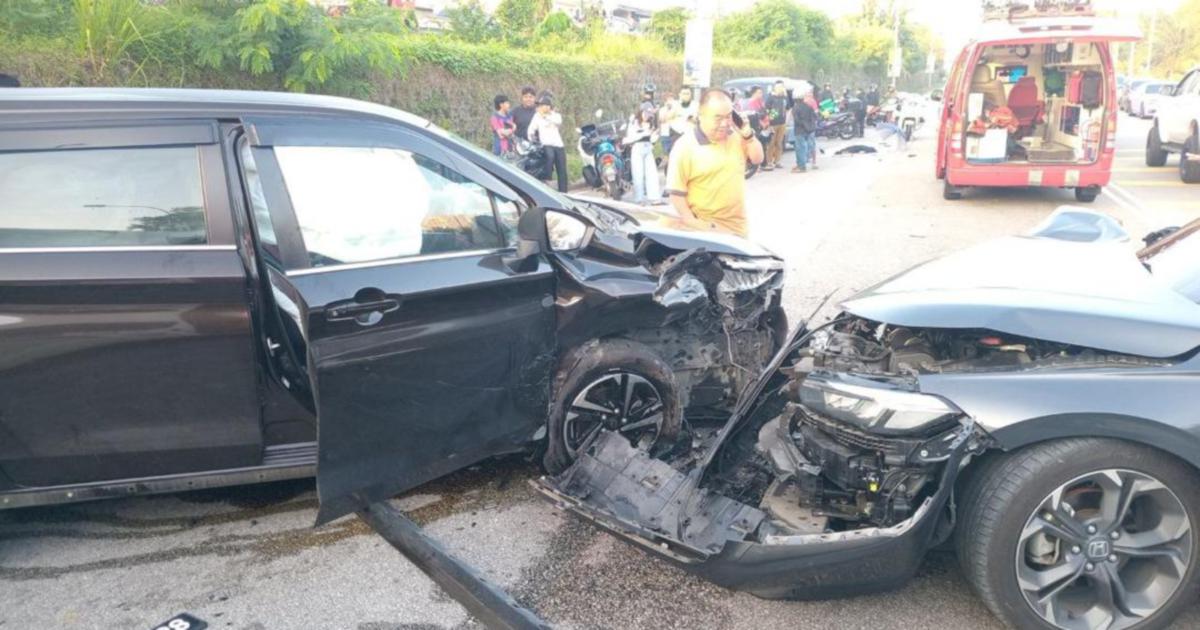
A factory operator lost her life in a devastating multi-vehicle collision on Jalan Permas Utama in Johor Baru this morning, prompting authorities to launch a comprehensive investigation into the circumstances that led to the tragedy. The fatal incident unfolded when the woman was thrown from a van during the crash before being crushed under the weight of the overturned vehicle, marking another serious road accident in the state.
The Johor Baru police have initiated a systematic investigation to determine the exact sequence of events that triggered the four-vehicle pile-up. Preliminary indications suggest that determining causation will require detailed examination of the crash site, witness statements, and vehicle damage patterns. The complexity of multi-vehicle collisions often makes establishing liability and root causes particularly challenging for investigators, as the chain reaction of impacts creates multiple variables requiring careful analysis.
The presence of a father travelling with three children in one of the vehicles involved has added significant concern to the incident. While initial reports do not specify the exact condition of all occupants, the involvement of young passengers underscores the broader public safety implications of road accidents. Families undertaking routine journeys are frequently exposed to risks that extend beyond their control, particularly when other vehicles are involved in sudden collision sequences.
Road safety data across Malaysia consistently demonstrates that multi-vehicle accidents represent a significant portion of fatal traffic incidents, particularly on urban and semi-urban roads where traffic density and vehicle speeds create compounding hazards. The morning timeframe of this collision aligns with patterns showing increased accident frequency during peak commuting hours, when road congestion and driver pressure to meet scheduling demands can compromise vehicle handling and decision-making.
The nature of the victim's injuries—ejection from the vehicle followed by crushing beneath the overturned van—highlights the critical importance of properly functioning safety systems in modern vehicles. Seatbelt usage, vehicle design factors affecting occupant retention, and structural integrity during rollover events all contribute to determining whether occupants survive such traumatic collisions. This particular incident serves as a sobering reminder of the catastrophic consequences when protective measures prove insufficient.
Johor Baru has experienced recurring patterns of serious traffic incidents despite ongoing road safety initiatives. The economic activity along major thoroughfares like Jalan Permas Utama generates substantial vehicle volumes, increasing collision probabilities. Urban expansion in the region has often outpaced infrastructure improvements, creating potential mismatches between road design capacity and actual traffic demands.
Investigators will likely examine multiple factors including vehicle mechanical condition, driver fatigue or distraction, adherence to traffic regulations, visibility conditions, and weather circumstances at the time of impact. Modern accident reconstruction techniques allow authorities to establish vehicle speeds and impact angles through physical evidence analysis, though determining causative human factors frequently relies on witness accounts and vehicle data recorder information where available.
The involvement of multiple vehicles complicates liability determination, as Malaysian traffic law requires establishing which party or parties bear responsibility for initiating the collision sequence. Insurance implications extend beyond the immediate participants, with potential recovery processes depending entirely on investigation findings. Such complications often leave affected families navigating protracted legal and administrative processes while grieving their loss.
This incident arrives amid ongoing discussions regarding road safety enforcement and prevention strategies in Malaysia. While authorities maintain speed enforcement operations and conduct regular safety campaigns, the frequency of fatal accidents suggests that current interventions have not achieved desired impact. Regional comparisons with other Southeast Asian nations indicate that Malaysia's road fatality rates remain elevated relative to comparable economic contexts, indicating systemic challenges requiring sustained policy attention.
For Malaysian motorists, this collision reinforces fundamental safety principles including vigilant attention to road conditions, compliance with speed limits particularly in urban areas, and ensuring all occupants utilise available safety equipment consistently. The tragedy affecting this factory operator and her fellow accident victims reflects broader patterns indicating that road accident prevention remains a critical public health priority requiring enhanced individual responsibility and continued systemic improvements.
The Johor Baru police will continue their investigation to establish definitive findings regarding responsibility and contributing factors. Once the investigation concludes, authorities may recommend additional enforcement measures or infrastructure modifications for this particular location, depending on identified causative elements. Meanwhile, the fatal outcome serves to underscore the unpredictable nature of road accidents and the imperative for continuous vigilance by all road users.

