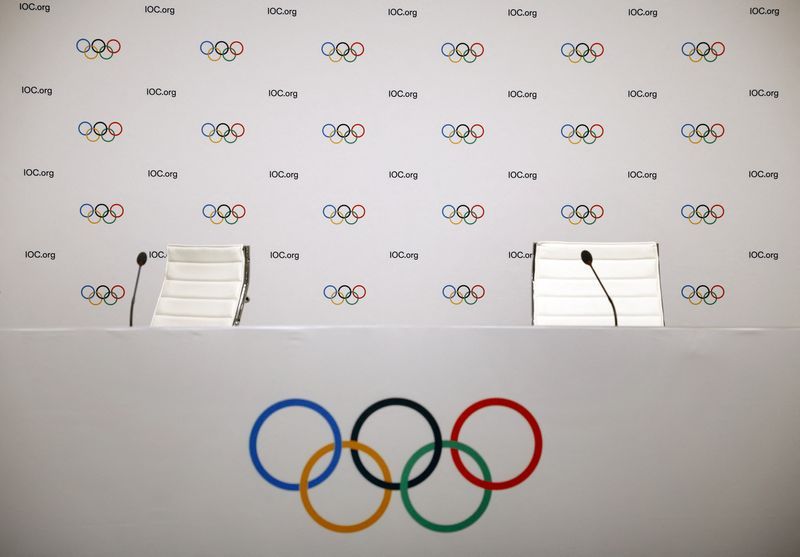
The International Olympic Committee will vote this week on amendments to the Olympic Charter designed to reinforce the separation of sport from political pressure, but the move has triggered sharp criticism from observers who contend it could pave the way for Russian athletes' unrestricted participation in future Olympic Games. The proposed revisions, set for consideration on Wednesday in Geneva, would strengthen language affirming that competitions should remain insulated from governmental, cultural, societal, and economic interference while reaffirming the IOC's responsibility to maintain impartiality at all times.
On the surface, the IOC frames these alterations as protective measures intended to shield athletes and sporting events from external manipulation and to prevent the Olympic Games from becoming a vehicle for geopolitical messaging. The committee has long positioned itself as guardian of the Olympic ideal that competition transcends national borders and political divides. Yet beneath this rhetoric lies a more contentious reality: the timing and scope of these amendments occur precisely as the global sports body has been gradually dismantling restrictions on Russian participation, a process observers view as incompatible with the historic barriers erected in response to systematic wrongdoing.
Rob Koehler, director general of advocacy group Global Athlete, articulated the concern with particular force, warning that the proposed neutrality framework sends a perilous signal to the international sports community. By emphasising political neutrality above all other considerations, he argues, the IOC risks establishing a precedent that could render previous disciplinary actions against nations effectively hollow. His statement—that the message would be unmistakable that "war, systematic doping and repeated violations of the Olympic Charter are no longer barriers to full participation"—underscores the tension between the committee's stated commitment to principle and its apparent willingness to accommodate Russian reintegration.
The backdrop to this controversy is complex and heavily weighted by recent history. Russian athletes have endured sanctions stretching back to a state-sponsored doping operation that contaminated the 2014 Sochi Winter Games, a scandal whose reverberations continue to define international sport's approach to anti-doping enforcement. When Russia invaded Ukraine in 2022, the IOC recommended that Russian and Belarusian athletes be excluded from competitions entirely, a recommendation that reflected the gravity with which the Olympic movement treated geopolitical aggression. In October 2023, the IOC suspended the Russian Olympic Committee itself after it recognised regional Olympic councils in Russian-occupied territories of Ukraine, an action the committee deemed a violation of both the Olympic Charter and Ukrainian sovereignty.
Yet over recent months, the IOC has executed a marked reversal in trajectory. In December, the committee announced that Russian and Belarusian youth athletes should be permitted to return to international competition without restrictions. Last month, the IOC lifted all restrictions on Belarusian athletes, effectively clearing the path for their participation in qualifiers for the 2028 Los Angeles Olympics. Notably, the committee declined to extend the same liberalisation to Russian athletes at that time, yet the pattern suggests that a parallel decision for Russia may follow within months. This sequence of incremental concessions has generated intensifying speculation about Russia's eventual full restoration to good standing.
The legal foundations for potential Russian readmission remain under examination. In May, the IOC announced that its legal affairs commission was conducting a review of information pertaining to the Russian Olympic Committee while simultaneously assessing Russia's anti-doping mechanisms. These parallel investigations complicate the committee's ability to present the lifting of restrictions as a straightforward application of neutral sporting principles; instead, ongoing concerns about anti-doping compliance and geopolitical considerations remain active variables in decision-making. The World Anti-Doping Agency continues investigating matters related to Russian sporting institutions, adding another layer of complexity to any imminent resolution.
Despite these complications, Russian officials have been signalling their expectations and priorities with increasing transparency. Mikhail Degtyarev, who serves as both Russia's sports minister and chairman of the Russian Olympic Committee, stated in April that his ministry and the committee were undertaking every conceivable measure to secure the complete return of the Russian national team to international competitions under the Russian flag—a formulation that underscores Moscow's desire not merely for participation but for recognition of national representation. President Vladimir Putin himself indicated in April that he anticipated a more amenable approach from the IOC's current leadership, a remark that reflects the Kremlin's assessment that political conditions may be shifting in Russia's favour.
Beyond the Russian question, the proposed Olympic Charter amendments encompass a second substantive reform that deserves scrutiny. The IOC intends to remove the fixed list of international federations from the charter, granting itself expanded authority to determine the Olympic programme based on criteria including cost, logistics, and global commercial appeal. This modification, while ostensibly technical, represents a significant concentration of power in the IOC's hands, reducing transparency and the codified role of established sports governing bodies. The two reforms together suggest a shift toward an IOC with greater autonomy in both political decisions regarding athlete eligibility and operational determinations regarding which sports constitute the Olympic agenda.
For Malaysian sports administrators and policy-makers, these developments warrant careful attention. Southeast Asian athletes compete internationally and aspire to Olympic participation; any framework that weakens accountability for doping or geopolitical behaviour establishes precedents that could affect the credibility of the entire Olympic system. Furthermore, Malaysia's own athletes depend on the integrity of anti-doping enforcement and the credibility of the IOC's commitment to political neutrality—principles that appear at risk of erosion if the committee proceeds with measures primarily designed to facilitate Russian reintegration rather than to strengthen sport itself.
The vote this week will reveal whether the IOC intends to prioritise abstract ideals of neutrality or to acknowledge the material weight of recent violations and ongoing concerns. The framing matters considerably: amendments justified as strengthening sport's independence from politics acquire a rather different character when they operate primarily to rehabilitate a state that has engaged in both systematic doping and military aggression. The international sports community will be watching closely to determine whether the Olympic movement's commitment to principles transcends the particular interests of any single nation, no matter how influential.