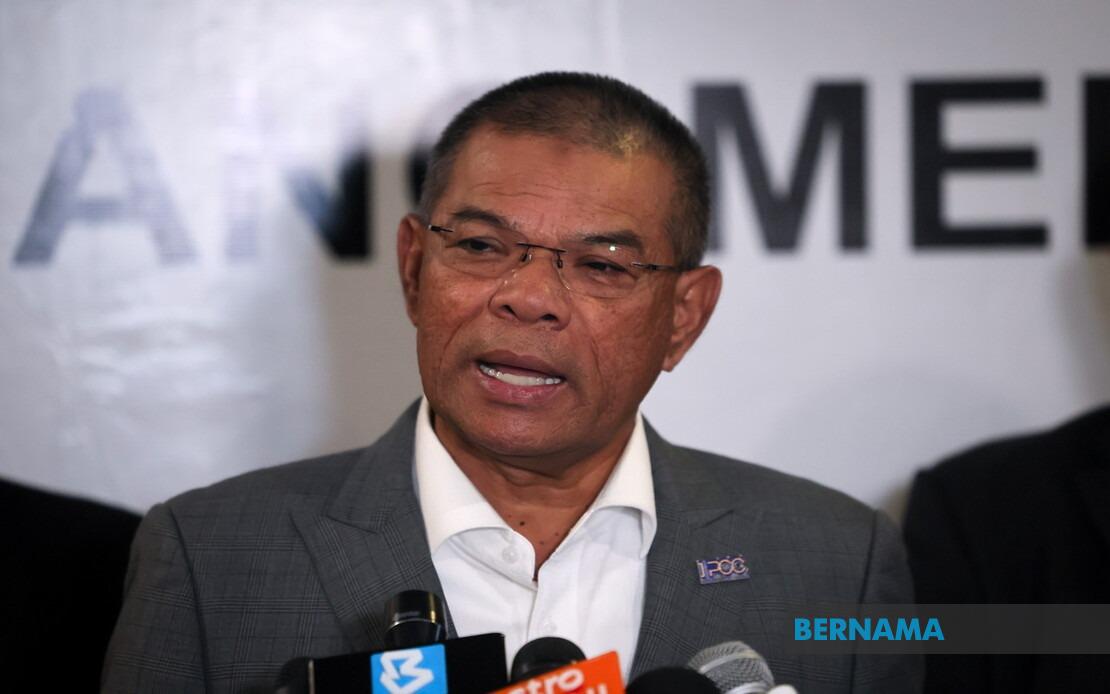
The Independent Police Conduct Commission (IPCC) has established itself as a functional accountability mechanism for Malaysia's police force, having processed 1,635 public complaints since commencing operations in 2023 through July 24 this year. Home Minister Datuk Seri Saifuddin Nasution Ismail presented these figures at a Putrajaya press conference following the Home Ministry's monthly assembly, underscoring what the government views as growing public willingness to utilize formal channels for reporting police misconduct.
Resolution rates demonstrate the IPCC's operational capacity, with 844 complaints—representing 76 per cent of the total caseload—successfully concluded. The remaining complaints remain either under investigation or are awaiting further action, reflecting the inherent delays in formal complaint processing. This year alone has generated 372 complaints as of late July, indicating sustained public engagement with the oversight body and suggesting that awareness of the IPCC's existence has penetrated Malaysian society reasonably well since its establishment.
The nature of complaints reveals patterns in public grievances against police conduct. According to Saifuddin Nasution, the most frequently raised issue involves complainants experiencing communication breakdowns with police—specifically, individuals who lodged reports but received no subsequent feedback or updates on their cases. This particular complaint category highlights a systemic challenge within police administration: the gap between initial complaint receipt and follow-up communication often frustrates members of the public and erodes confidence in the system's responsiveness, even when investigations may be proceeding normally behind the scenes.
Understanding the IPCC's operational scope proves essential for interpreting these statistics accurately. The commission functions as a filtering and routing mechanism rather than a standalone investigative authority. When complaints contain indications of corruption, the IPCC redirects cases to the Malaysian Anti-Corruption Commission (MACC) rather than investigating internally. This collaborative approach prevents duplication and ensures that corruption-related matters receive specialist attention from Malaysia's dedicated anti-corruption enforcement agency.
Among the unresolved complaints, a significant portion stems from complainants dissatisfied with how police investigations concluded or complainants awaiting responses after initially reporting to police departments. These categories underscore the distinction between IPCC intake and ultimate case resolution—the commission receives complaints comprehensively, but their resolution trajectories depend on whether cases involve specific IPCC investigative responsibilities or whether they require police internal review or MACC involvement.
Investigation metrics reveal the IPCC's focused capacity. Twenty-two investigation papers have been formally opened since 2023, with five initiated during the current year. Of these, eleven investigations have reached completion while eleven remain active. The ratio of formal investigations to total complaints received—approximately 1.3 per cent—suggests that most complaints are categorized as unsuitable for IPCC investigation based on preliminary assessment or are routed to other agencies. This filtering process is normal for independent complaints bodies globally, as many submissions prove peripheral to core misconduct investigations.
Saifuddin Nasution characterised the complaint volume as modest yet meaningful, interpreting the numbers as validation of public confidence in having an independent avenue separate from internal police mechanisms. This framing attempts to counter potential criticism that 1,635 complaints over three years represents insufficient public engagement with an oversight institution. The government's perspective emphasizes that the existence of an accessible complaints channel itself constitutes progress, particularly given Malaysia's institutional history before the IPCC's 2023 establishment.
Strategic communications efforts aim to expand IPCC awareness throughout Malaysia's diverse population. The Home Ministry coordinated a formal handover of IPCC complaint posters during the press conference, marking what officials described as manifestation of government commitment to police integrity and accountability. These posters will be distributed to Royal Malaysia Police (PDRM) information corners nationwide, representing a partnership approach wherein the police institution itself participates in promoting oversight mechanisms—a potentially paradoxical situation reflecting efforts to normalize independent accountability within police culture.
Concurrent developments within the PDRM reinforce messaging around internal discipline. The arrest of twelve police personnel suspected of extorting RM2 million from a Vanuatu national received specific ministerial emphasis as evidence of the force's stated zero-tolerance stance toward internal misconduct. These officers, ranging across various ranks, were apprehended following investigation into extortion allegations, with Dang Wangi police chief ACP Sazalee Adam confirming the arrests. Such high-profile internal disciplinary actions serve complementary messaging purposes alongside IPCC promotion—they demonstrate that police leadership will act decisively against proven wrongdoing.
For Malaysian stakeholders and regional observers, the IPCC's operational performance intersects with broader questions about police accountability across Southeast Asia. Malaysia's establishment of an independent commission represents movement toward international standards for law enforcement oversight, placing it alongside other ASEAN nations exploring similar institutional reforms. However, the relatively low percentage of complaints resulting in formal investigations—and the filtering role that external agencies like the MACC play—raises analytical questions about whether the IPCC functions primarily as a public satisfaction mechanism or as a substantive enforcement lever.
The complaint resolution rate of 76 per cent must be contextualised carefully. Resolving a complaint does not necessarily mean finding misconduct or implementing remedial measures; resolution encompasses dismissals, referrals, and cases closed without substantive action. This distinction matters significantly for understanding whether the IPCC genuinely constrains police misconduct or primarily processes public grievances through defined bureaucratic procedures. The modest number of formal investigations opened relative to total complaints suggests that many matters conclude without intensive institutional scrutiny.
Looking forward, the IPCC's trajectory will partly depend on evolving public awareness and willingness to lodge complaints through formal mechanisms. Malaysian civil society organizations and legal aid networks can potentially influence complaint volumes by educating citizens about available channels. Simultaneously, the commission's credibility depends on transparent communication about investigation outcomes and demonstrable impacts on police conduct. Without clear feedback loops showing how complaints generate institutional change, public confidence may plateau despite relatively strong initial uptake.
The Home Ministry's emphasis on IPCC performance reflects government prioritization of perceived accountability and transparency in police administration. For Malaysian citizens navigating police interactions and for international observers assessing Malaysia's governance standards, the IPCC represents a measurable institutional check on law enforcement discretion. Whether this mechanism ultimately proves transformative for police conduct or remains largely symbolic will require sustained monitoring of investigation outcomes, implementation of recommendations, and longitudinal assessment of police misconduct patterns.

