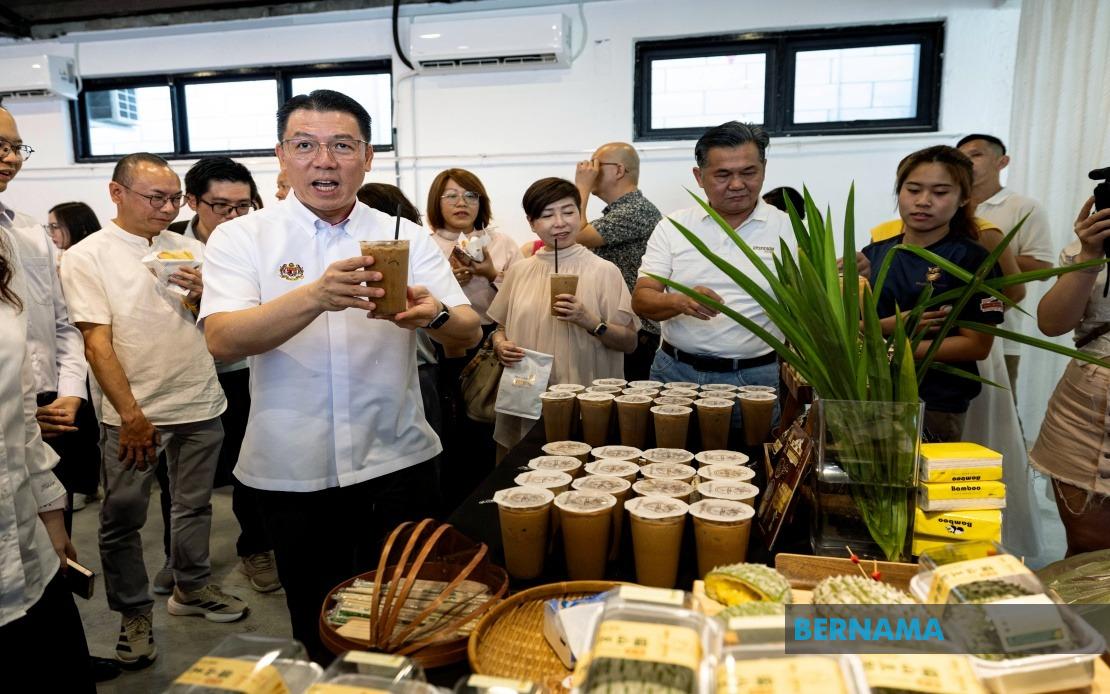
Malaysia's Minister of Housing and Local Government Nga Kor Ming has unveiled plans for the Jom Makan Ipoh 2026 Expo, a food-centred cultural initiative designed to celebrate the country's multicultural heritage through its most universal language: cuisine. Speaking at the programme's pre-launch in Ipoh, the Kepayang assemblyman framed the upcoming festival not merely as a commercial venture or tourism attraction, but as a deliberate statement about the power of shared culinary traditions to strengthen social cohesion across Malaysia's diverse communities.
The three-day festival, scheduled to run from August 28 to 30 from 5 pm to 11 pm at Palo 101, represents a strategic decision to position food alongside Merdeka Month celebrations. By anchoring the event within Malaysia's independence commemorations, organisers underscore a philosophical argument: that national unity is not an abstract political concept but something tangible, experienced, and reproduced through everyday acts of sharing meals. This framing carries particular resonance in Malaysia's current context, where questions of community relations remain central to national discourse.
The expo will feature more than 50 food and agricultural product stalls, with organisers promising comprehensive representation of Ipoh's culinary identity. Twelve Ipoh specialities form the core offering, complemented by selections of street food and regionally-sourced agricultural products. Signature dishes including Laksa Buyong, Ipoh White Coffee, nasi ayam taugeh, and puding taufu will anchor the experience, allowing both domestic visitors and international tourists to access authentic representations of Perak's gastronomic traditions. This emphasis on authenticity distinguishes the expo from generic food festivals, suggesting a curatorial approach that privileges genuine local heritage over commercialised approximations.
Beyond the culinary offerings themselves, the expo incorporates educational and interpretive dimensions through six dedicated Ipoh Food Culture Galleries. These installations will trace historical narratives embedded within the city's food landscape, including exhibits focused on Ipoh White Coffee's commercial development, the tin mining era's influence on local eating practices, the cultural significance of kacang putih, sambal and ulam traditions, and other elements of Ipoh's evolving food heritage. This museum-like component acknowledges that food practices are never merely nutritional but are intrinsically connected to labour histories, environmental conditions, migration patterns, and cultural evolution. For visitors, these galleries offer interpretive frameworks that transform consumption into learning.
The programme incorporates substantial cultural programming throughout its three-day run. Multiple stage performances featuring artists from various ethnic backgrounds will provide entertainment while reinforcing the festival's central messaging about multicultural coexistence. "Food Talks Ipoh" sessions will create space for discussions about culinary traditions, presumably allowing vendors, historians, chefs, and community members to share knowledge and perspectives. The launching of an Ipoh QR Digital Food Map represents a technological integration, enabling visitors to navigate between stalls while accessing contextual information, vendor stories, and historical background through their mobile devices. This digital layer modernises the experience without displacing the fundamentally human interaction between producers and consumers.
Entertainment programming culminates with a fireworks display during the closing ceremony on August 30, a ceremonial flourish that signals the festival's cultural significance. The inclusion of lucky draws throughout the event balances educational and cultural content with elements of chance and excitement, ensuring broad demographic appeal. Organisers anticipate more than 20,000 visitors across the three-day period, a substantial projection that reflects confidence in the festival's drawing power and Ipoh's reputation as a significant culinary destination within Malaysia.
From a regional perspective, the Jom Makan Ipoh Expo reflects broader Southeast Asian trends positioning food as an economic development and soft power tool. Thailand, Vietnam, and Singapore have pioneered food tourism and culinary diplomacy strategies, and Malaysia's initiatives—particularly when linked to national identity messaging—represent attempts to develop competitive advantage within regional tourism markets. For Perak specifically, the expo offers opportunities to diversify the state's economic appeal beyond its historical focus on mining and agriculture, leveraging culinary heritage as a renewable cultural resource.
The initiative also carries implications for how Malaysian government institutions approach community engagement and nation-building. By selecting food as the medium for unity messaging, authorities acknowledge that abstract appeals to patriotism or constitutional principles have limited mobilising force compared to sensory, embodied experiences. Eating together transcends intellectual assent to national values, creating direct physical experience of multicultural coexistence. This represents a sophisticated understanding of how identity and belonging are constructed through everyday practices rather than top-down proclamation.
The partnership structure involving the Kepayang constituency service centre and multiple strategic partners indicates a collaborative governance approach that mobilises resources across public and private sectors. This model, if successfully executed and evaluated, could establish templates for similar initiatives in other constituencies and states, potentially scaling food-centred cultural programming as a standard component of local governance. The designation of August 28-30 during Merdeka Month ensures symbolic alignment with national consciousness, maximising media attention and framing food heritage within patriotic discourse.
Looking forward, the Jom Makan Ipoh Expo 2026 will merit observation as a case study in how Malaysian institutions instrumentalise cultural practices for developmental and political objectives. The festival's success—measured in visitor numbers, economic impact, media coverage, and documented social outcomes—will likely inform decisions about replicating or scaling similar initiatives elsewhere. For Malaysian readers, particularly those in Perak and neighbouring states, the expo represents both a cultural celebration and a visible instance of how food heritage is being strategically mobilised within contemporary nation-building projects.

