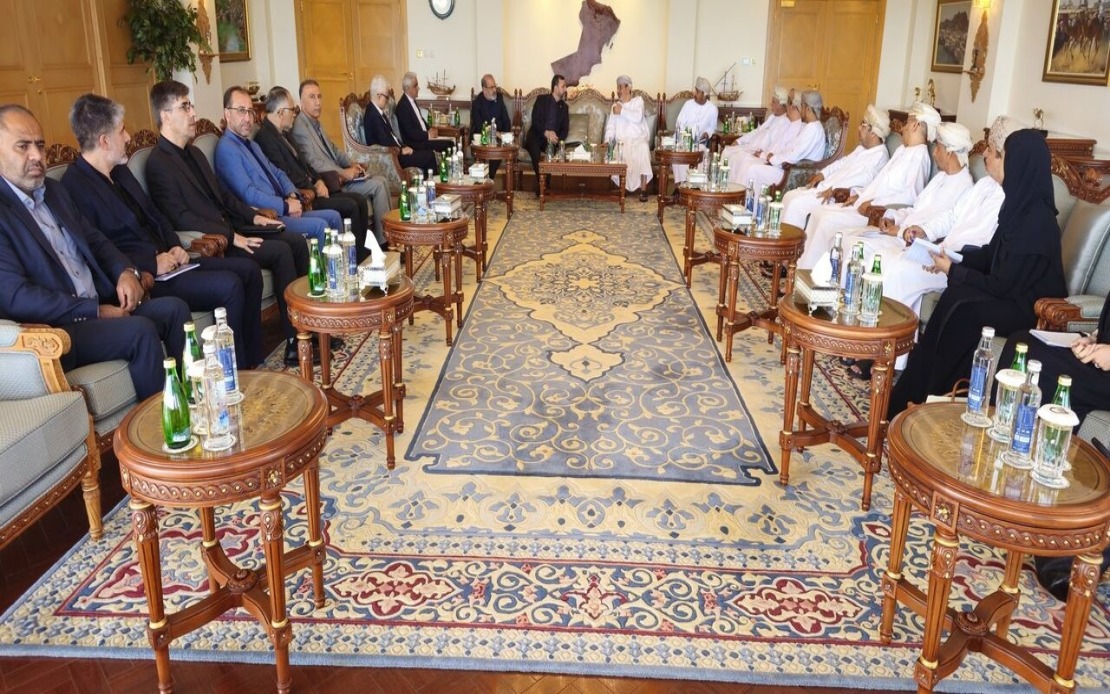
Iran and Oman have taken a significant diplomatic step by convening the first meeting of their Joint Hormuz Committee, underscoring a renewed commitment to bilateral cooperation on one of the world's most strategically vital maritime corridors. The inaugural session, held as part of Iranian Deputy Foreign Minister for Legal and International Affairs Kazem Gharibabadi's visit to Muscat on Monday, brought together senior officials including Oman's Ambassador-at-Large Abdulaziz Al Hinai to examine pressing challenges facing the Strait of Hormuz and chart a collaborative path forward.
The establishment of this formal institutional mechanism reflects a broader diplomatic engagement between Tehran and Muscat that has intensified in recent months. The committee emerged from a joint statement issued by both governments on June 23, which followed a high-level visit to Oman by Iranian Foreign Minister Abbas Araghchi and negotiating head Mohammad Bagher Ghalibaf. That earlier communiqué established the foundational principles guiding the new committee's work, with particular emphasis on respecting the sovereignty and maritime rights of both nations as littoral states bordering this crucial international waterway.
The Strait of Hormuz represents one of the world's most critical energy chokepoints, through which approximately one-third of global maritime petroleum trade transits daily. For Malaysia and other Southeast Asian economies heavily dependent on Middle Eastern oil and liquefied natural gas imports, the stability and unfettered access of this passage directly impacts energy security and economic prosperity. Any framework governing the strait's future management consequently carries significant implications for regional supply chains and pricing stability across Asia-Pacific markets.
During their discussions, both delegations examined the intricate technical and political questions surrounding current operations in the strait. These encompass shipping safety protocols, navigation standards, and the provision of maritime services—all matters that fall within the purview of international maritime law and the sovereign prerogatives of the littoral states that border these waters. The talks were explicitly grounded in Paragraph 5 of the Islamabad Memorandum of Understanding, a foundational agreement that codifies the rights and responsibilities of states in managing shared maritime spaces.
The committee's mandate extends beyond immediate operational concerns to encompass longer-term strategic questions about how the strait should be governed in coming years. Officials agreed that any future arrangements must harmonise with international standards for maritime commerce while simultaneously upholding the legitimate interests and sovereignty of Iran and Oman. This dual focus—respecting both global norms and national prerogatives—reflects a carefully calibrated approach to a issue where geopolitical tensions have historically complicated cooperation.
The timing of this initiative deserves scrutiny within the broader context of Middle Eastern geopolitics. The United States and its allies have long maintained a significant military presence in the Persian Gulf, ostensibly to ensure freedom of navigation and regional stability. However, Iran views such external involvement as infringement on the sovereign authority of littoral states. By establishing a bilateral committee focused on sovereign rights, Tehran and Muscat signal their intention to shape the region's maritime governance framework themselves, reducing reliance on external powers to arbitrate disputes or enforce shipping protocols.
Oman's central role in this arrangement reflects its long-standing position as a diplomatic bridge between Iran and the wider international community. Unlike some neighbours, Muscat has maintained pragmatic engagement with Tehran while preserving relationships with Western powers and Gulf Cooperation Council members. This balanced posture makes Oman an ideal partner for Iran in negotiations aimed at establishing new maritime governance structures, as Omani participation lends legitimacy to any agreements reached.
The Joint Hormuz Committee is also tasked with developing consensus frameworks regarding shipping service provision and associated costs. This practical dimension is crucial, as disagreements over tariffs, toll structures, and service fees can rapidly escalate into diplomatic confrontations. By establishing mechanisms to negotiate these matters bilaterally, Iran and Oman create opportunities to resolve disputes before they escalate into crises that might jeopardise transit security or disrupt commerce.
For Southeast Asian nations, the implications of this committee's work are substantial but not necessarily immediate. Malaysia and its neighbours remain primarily consumers of the stability that emerges from the strait's governance, rather than direct stakeholders in its management. However, regional economies have a vested interest in ensuring that any new arrangements respect international maritime law and the principle of freedom of navigation that undergirds global trade. Disruptions to the strait—whether from conflicts between littoral states, unilateral actions by regional powers, or inadequate governance frameworks—would reverberate across Asian markets through elevated energy prices and supply disruptions.
The committee's commitment to pursuing further discussions signals that Tehran and Muscat view this as an ongoing process rather than a one-time negotiation. Regular engagement through the committee creates institutional channels for dialogue, reducing the likelihood that technical disputes escalate into political crises. This incremental approach to building cooperation, while potentially slower than grand diplomatic breakthroughs, often proves more durable and resilient to the fluctuations of regional politics.
Looking ahead, the committee's effectiveness will depend on whether Iran and Oman can translate their bilateral understanding into frameworks that command broader regional acceptance. The involvement of other littoral states—including Saudi Arabia, the United Arab Emirates, Qatar, Bahrain, and Kuwait—may prove necessary if the committee's work is to achieve lasting legitimacy. However, the current bilateral format allows both countries to develop detailed positions and demonstrate willingness to cooperate, creating a foundation upon which broader multilateral arrangements might eventually be constructed.
The inaugural meeting ultimately represents a measured but significant assertion of regional agency in maritime governance. Rather than accepting external management of the strait's future, Iran and Oman are attempting to establish the terms of debate and negotiate outcomes through bilateral institutions. Whether this approach can generate frameworks that satisfy the diverse interests of all stakeholders—regional states, global shipping interests, and international maritime authorities—remains to be seen. What is clear is that the Strait of Hormuz's governance is transitioning from a domain where external powers exercised decisive influence to one where littoral states claim central roles in shaping their maritime future.

