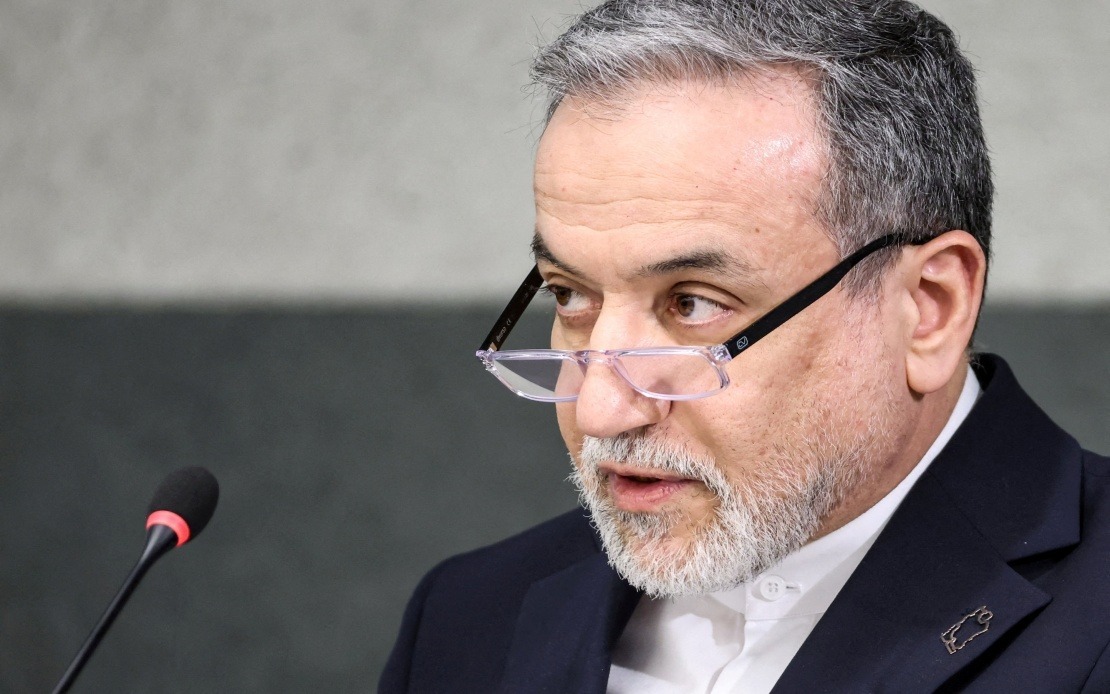
Iran has positioned itself as the rightful guardian of the Strait of Hormuz following US President Donald Trump's announcement that America will impose a 20 per cent fee on vessels transiting the critical waterway. Speaking from Istanbul on Monday, Foreign Minister Abbas Araghchi made clear that Tehran views any toll collection arrangement as fundamentally within Iran's purview, not Washington's, signalling an escalation in rhetorical positioning over one of the world's most strategically important shipping lanes.
Araghchi's statement, delivered via the X social media platform, employed carefully calibrated language that appeared to acknowledge Trump's underlying principle—that entities providing security should receive compensation—while categorically rejecting American authority to implement such a scheme. By agreeing in tone with the concept whilst forcefully asserting Iran's exclusive role, the Iranian diplomat attempted to reframe the dispute as one of jurisdiction rather than principle. The foreign minister stated that whoever guarantees secure passage deserves fair compensation, but used emphatic capital letters to declare that Iran has perpetually been and will eternally remain the strait's guardian.
The Strait of Hormuz represents one of the world's most critical choke points for global energy markets. Roughly 30 per cent of all seaborne traded petroleum passes through this narrow passage between Iran and Oman, making it indispensable to international commerce and the energy security of major economic powers worldwide. Any genuine disruption to shipping through the strait would have immediate ripple effects across global oil prices, inflation, and economic stability—implications that loom large for energy-dependent economies across Southeast Asia, including Malaysia.
Trump's proposal to blockade Iran and simultaneously charge a 20 per cent fee represents an extraordinary assertion of American power projection. The figure itself is substantial: on global shipping traffic valued at hundreds of billions of dollars annually, such a levy would generate enormous revenue whilst simultaneously strangling Iranian commerce and imposing costs on international trade. This aggressive posture reflects the incoming administration's more confrontational approach to Iran compared to the previous approach, though it remains unclear how such a blockade could be militarily enforced given Iran's naval capabilities and geographic advantages.
Araghchi's response, whilst defiant in tone, also contained a pragmatic element. By acknowledging that 20 per cent "is of course too much" and pledging that Iran "will be fair," the foreign minister left room for negotiation whilst maintaining the principled position that Tehran alone possesses legitimate authority over the strait. This rhetorical manoeuvre suggests that beneath the confrontational messaging, Iranian leadership recognises the economic costs of genuine conflict and may be signalling openness to alternative arrangements—provided they preserve Iran's sovereignty and economic interests.
The underlying tension between the two powers has intensified steadily despite a Pakistani-mediated memorandum of understanding that theoretically aimed at de-escalating conflict and establishing a durable peace framework. The existence of such an agreement, coupled with simultaneous exchanges of attacks and hostile declarations, underscores the fragility of the diplomatic architecture constructed to manage US-Iran tensions. For regional powers and trading nations dependent on Hormuz transits, this instability creates perpetual uncertainty regarding freedom of navigation and energy security.
For Malaysia and other Southeast Asian economies, the implications of sustained US-Iran tensions centring on the Strait of Hormuz extend beyond theoretical concerns. Southeast Asia's manufacturing sectors depend on stable energy prices and unimpeded access to global markets. Any genuine disruption or escalation in the strait would immediately affect fuel costs, shipping expenses, and supply chain stability across the region. Malaysian shipping companies, petrochemical industries, and exporters would face elevated operational costs and potential market access challenges if shipping routes become unreliable or subject to arbitrary tolls.
The strategic competition unfolding over the strait also reflects broader questions about international law and freedom of navigation. The United States has historically championed the principle that international waterways should remain open to all vessels regardless of geopolitical disputes. Iran's position, while framed in terms of guardianship and fair compensation, essentially asserts exclusive control over passage through the strait. These competing frameworks will likely define the parameters of negotiation should formal talks occur.
Historically, Iran has periodically threatened to close the Strait of Hormuz during periods of acute tension, though implementation has always stopped short of actual blockade. The current rhetoric, whilst severe, follows familiar patterns of escalation and de-escalation that have characterised US-Iran relations for decades. However, the explicit proposal by a US administration to impose tolls introduces a new dimension to the dispute—one that moves beyond conventional military threats to economic coercion on a grand scale.
The coming months will likely determine whether Trump's fee proposal represents genuine policy intent or negotiating posture designed to extract concessions from Iran. Araghchi's carefully worded response suggests Iranian leadership is monitoring developments closely whilst maintaining flexibility for diplomatic engagement. For Malaysia and the broader region, sustained attention to this dispute remains essential, as any significant disruption to Hormuz transits would reverberate through energy markets and global commerce for months or longer. The stakes in this strategic waterway extend far beyond the immediate combatants.

