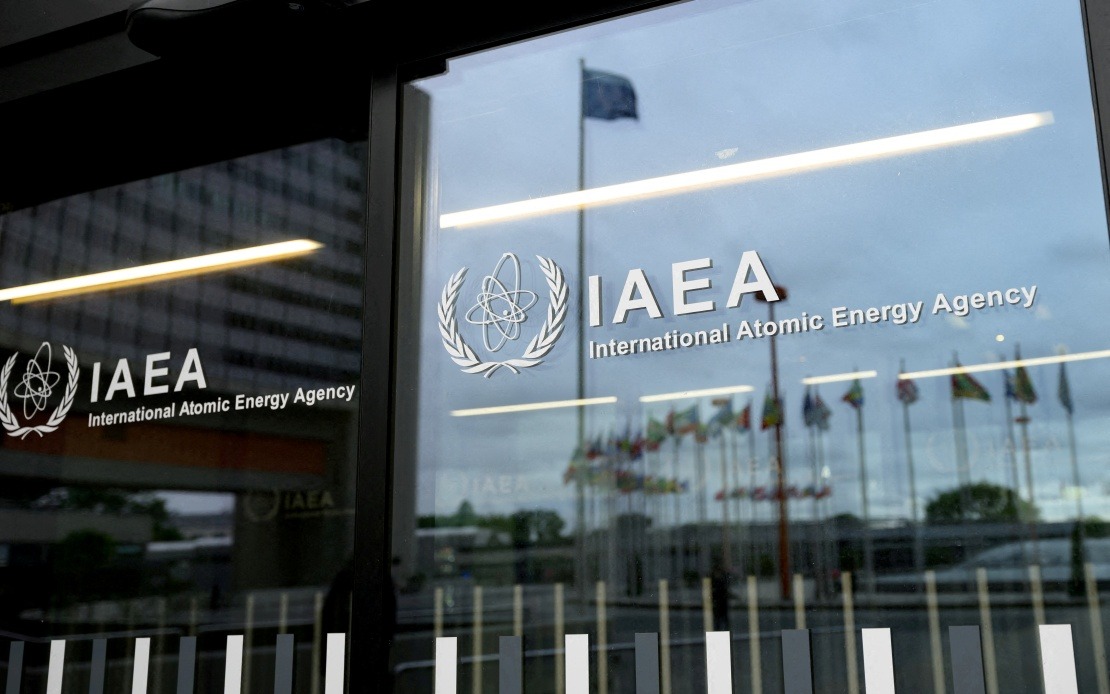
Iran has rejected requests from the International Atomic Energy Agency to conduct inspections at its nuclear facilities, insisting that such access will only be granted once a comprehensive nuclear agreement with the United States is finalised. The decision represents a hardening of Iran's negotiating position as it enters the second week of talks aimed at resolving the standoff that has escalated dramatically over the past eighteen months.
Kazem Gharibabadi, Iran's Deputy Foreign Minister for Legal and International Affairs, made the announcement on social media, stating that questions regarding access to Iranian nuclear sites and materials will be settled exclusively through the framework of a final bilateral accord contingent on the complete lifting of sanctions by Washington. His remarks directly contradicted statements made by IAEA Director General Rafael Grossi, who indicated that the agency would proceed with inspections based on the recently signed peace memorandum between Tehran and Washington.
The June 18 memorandum of understanding between the two nations carved out a 60-day window for intensive negotiations aimed at establishing a permanent resolution to Iran's nuclear programme and the associated international sanctions regime that has crippled the Iranian economy for over a decade. Initial talks commenced in Switzerland on Sunday and Monday, marking the first direct negotiations since military tensions dramatically intensified. The diplomatic window, though narrow, represents a potential breakthrough after months of military escalation in the region.
Gharibabadi also denied that Iran's negotiating delegation met with Grossi during recent days in Switzerland, despite the IAEA chief's apparent request for such a meeting. This rejection of preliminary technical discussions suggests Iran is adopting a maximalist approach, preferring to treat the entire nuclear file as a single negotiating package rather than allowing for incremental confidence-building measures through inspections. Such tactics are common in high-stakes nuclear diplomacy but risk prolonging the negotiation process.
For Malaysian and Southeast Asian observers, Iran's obstructionist stance on inspections presents a concerning signal about the viability of reaching a comprehensive settlement within the 60-day timeframe. The region has significant economic interests in resolving the Iran-US standoff, as it affects global oil markets, shipping lanes through the Strait of Hormuz, and overall geopolitical stability. Southeast Asian nations maintain substantial trade relationships with Iran and have previously called for diplomatic solutions to regional conflicts.
The context behind Iran's hardline position becomes clearer when examining the recent military escalations. Iran's three principal nuclear installations—Fordow, Natanz, and Isfahan—have faced successive waves of military strikes. During a 12-day conflict in June 2025, the United States conducted extensive bombing campaigns against these facilities. The sites again became targets when hostilities reignited on February 28 this year, with coordinated US and Israeli strikes aimed at Iranian nuclear and military infrastructure. These repeated attacks have left Iran deeply sceptical about providing external inspectors access to damaged facilities that could be struck again.
Tehran's strategy appears designed to extract maximum concessions before allowing any form of international verification regime. By conditioning inspections on a final agreement rather than permitting inspectors to gather data throughout negotiations, Iran maintains leverage and prevents the IAEA from documenting any actions Iran wishes to keep confidential. This approach prioritises short-term negotiating advantage over the transparency mechanisms that international observers view as essential for verifying compliance.
The IAEA's role in these negotiations underscores the delicate balance between technical verification and political negotiation. Grossi, as the agency's director general, typically operates as a neutral arbiter gathering factual information about nuclear programmes. However, his statement about carrying out inspections under the memorandum's framework suggests the IAEA expects to resume regular monitoring activities once the political framework is established. Iran's rejection of this timeline indicates divergent interpretations of what the June 18 memorandum actually committed the parties to undertake.
For regional stability, the next several weeks will be critical in determining whether the memorandum represents genuine progress toward denuclearisation and sanctions relief or merely a tactical pause in confrontation. The 60-day window is sufficiently brief that missing early negotiating benchmarks could torpedo the entire process. Iran's current position on inspections, while potentially reflecting legitimate security concerns about facility access, also signals that Tehran may be preparing for talks to fail, thereby justifying future military or nuclear escalation.
Malaysian policymakers should monitor these negotiations closely given their implications for regional security architecture and economic stability. A collapse of talks could reignite military conflict with devastating consequences for global oil supplies and regional commerce. Conversely, a breakthrough offering sanctions relief to Iran would reshape Middle Eastern geopolitics and potentially improve conditions for Southeast Asian investors and traders operating across the broader Indo-Pacific region. The IAEA inspection dispute, while appearing technically narrow, encapsulates the broader trust deficit that threatens to undermine the entire negotiating process.

