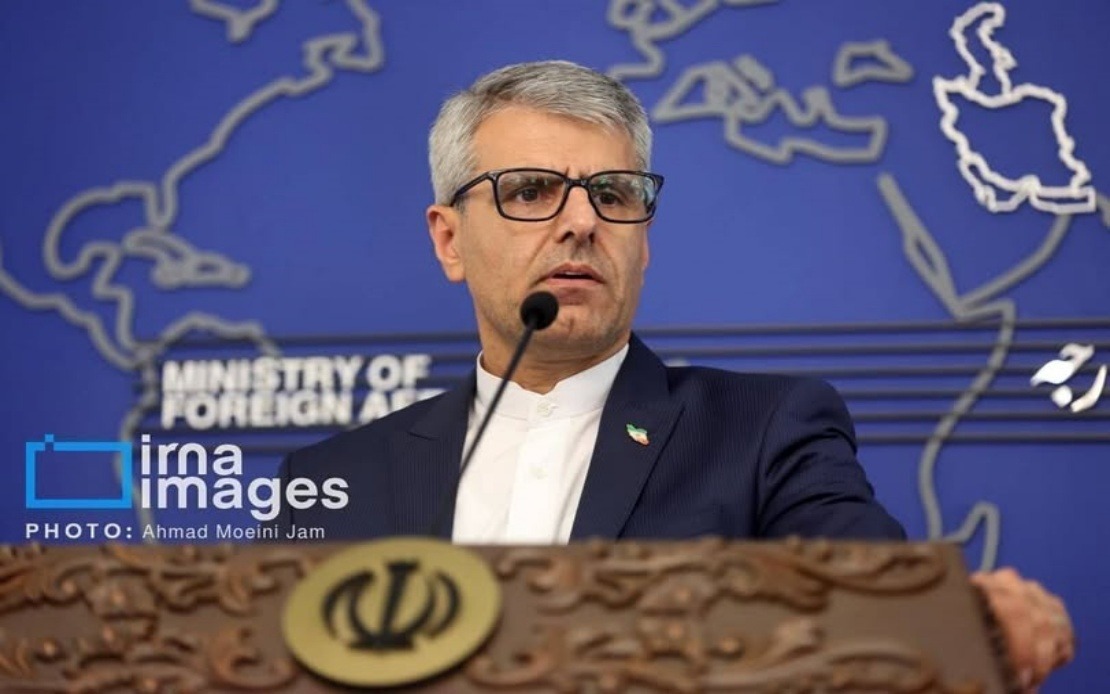
Iran has escalated its diplomatic push, demanding that the United States establish a concrete timetable for Israel's unconditional withdrawal from Lebanese territories occupied during recent hostilities. The demand, articulated through Iran's Foreign Ministry spokesman Esmaeil Baqaei during a briefing in Istanbul, reflects Tehran's determination to anchor Lebanese sovereignty as a cornerstone of any lasting regional settlement.
Baqaei emphasised that ending Israeli military operations against Lebanon and securing the complete withdrawal of occupying forces from all Lebanese territories represents a non-negotiable prerequisite for achieving a final and sustainable agreement capable of restoring stability across the region. This formulation underscores Iran's strategy of linking multiple conflict zones—Lebanon and Iran itself—into a unified negotiating framework that prevents compartmentalisation of regional disputes.
The Iranian government has cast the protection of Lebanese sovereignty and territorial integrity alongside the security and dignity of all Lebanese citizens as cornerstones of any agreement. This rhetorical positioning serves a dual purpose: it appeals to Lebanon's national sentiments while simultaneously elevating Iran's role as a regional protector of Arab state interests against what Tehran characterises as foreign occupation. For Malaysian policymakers observing Middle Eastern dynamics, this approach demonstrates how regional powers leverage nationalist sentiment to strengthen their negotiating positions.
Tehran has consistently prioritised ending hostilities in Lebanon across multiple diplomatic channels. The Foreign Ministry spokesman noted that Iran had placed the cessation of Israeli military operations in Lebanon alongside the termination of conflict directed at Iran itself at the forefront of its demands in both the April ceasefire understanding and the subsequent June 18 memorandum of understanding reached between Tehran and Washington. This bundling of demands reflects Iran's broader strategic objective of creating leverage across multiple issues rather than compartmentalising separate conflicts.
A critical element of Iran's demands involves Washington taking active responsibility for enforcing Israeli compliance. Baqaei specifically called upon the United States to fulfill its commitments under the memorandum and exercise its considerable diplomatic and strategic influence to compel Israel to cease all aggression and military operations throughout Lebanese territories. This demand effectively positions the US as an enforcer of agreements rather than merely a mediator, substantially raising the stakes for American credibility in regional eyes.
Parliament Speaker Mohammad Bagher Qalibaf, who serves as Iran's chief negotiator, reinforced these positions during a telephone conversation with Lebanese Parliament Speaker Nabih Berri. Qalibaf conveyed Tehran's serious commitment to pursuing an end to Lebanon's conflict, noting that discussions during recent talks with American representatives in Switzerland had emphasised restoring Lebanese sovereignty and territorial integrity as core objectives. The involvement of senior parliamentary figures alongside foreign ministry representatives signals Iran's intention to demonstrate broad political consensus behind its negotiating demands.
The establishment of a tripartite conflict-control unit comprising Iran, the United States, and Lebanon represents a significant institutional innovation designed to monitor implementation of peace provisions. According to Iranian media accounts, this mechanism emerged following Iran's objections that existing arrangements violated key provisions of the Islamabad memorandum. The creation of such oversight structures indicates growing recognition that abstract agreements require concrete monitoring mechanisms, particularly given historical skepticism about compliance in Middle Eastern conflicts.
Qalibaf articulated Iran's overarching objective with clarity: terminating the war in Lebanon, facilitating the return of displaced populations to their homes, ending occupation, and securing Israeli withdrawal from Lebanese territory. This formulation encompasses humanitarian concerns alongside political demands, attempting to frame Iranian positions as aligned with universal principles of refugee return and national sovereignty rather than narrow sectarian or strategic interests.
These developments occur within the broader context of a 14-point understanding between Iran and the United States, negotiated following intense regional military escalation and protracted diplomatic engagement. The memoranda represent an attempt to establish a framework addressing multiple interlocking regional conflicts simultaneously—a complex undertaking that requires extensive coordination and frequent clarification of commitments.
For Southeast Asian observers and Malaysian policymakers, Iran's emphasis on embedding Lebanese sovereignty within bilateral agreements with Washington illuminates broader patterns in contemporary Middle Eastern diplomacy. Regional powers increasingly attempt to leverage external actors' interests in stabilising specific theatres to extract concessions on broader strategic questions. The Iranian approach suggests that negotiating leverage derives not from military strength alone but from the capacity to link multiple conflict domains and threaten instability across wider regions unless comprehensive settlements are achieved.
The repeated emphasis on establishing explicit timelines and enforcement mechanisms reflects underlying distrust between negotiating parties. Iran's insistence that the US must not merely encourage Israeli compliance but actively compel it suggests Tehran views American mediation as necessarily provisional and conditional upon demonstrated commitment to enforcing agreements. This posture complicates negotiation dynamics by raising demands for third-party accountability beyond traditional diplomatic practice.
The intensity of Iran's engagement on Lebanese issues reveals Tehran's assessment that developments in Lebanon directly impact Iranian strategic interests and regional standing. By making Lebanese sovereignty a precondition for broader agreements with Washington, Iran attempts to ensure that any eventual settlement reflects its regional influence and protects allied interests. The stakes extend beyond humanitarian considerations for displaced Lebanese populations to encompass fundamental questions about post-conflict balance of power in the Levant.

